Arrive AI is forging ahead in the realm of autonomous delivery by harnessing Nvidia's Isaac Sim and Blackwell GPUs to bolster its AI and robotics capabilities. This strategic move is positioning the company to revolutionize the delivery industry with a highly efficient and scalable autonomous drone network.
What Happened
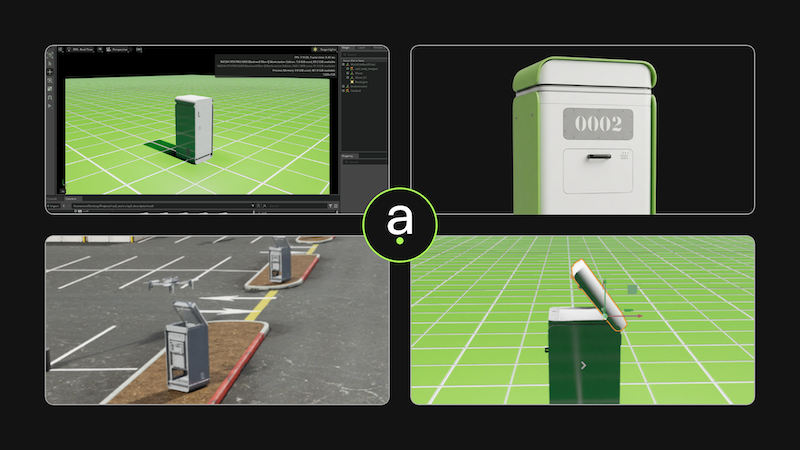
Arrive AI, an autonomous delivery infrastructure company, has announced its adoption of Nvidia Isaac Sim and Blackwell GPUs to enhance its AI and robotics development. Nvidia Isaac Sim is a physics-based simulation platform that provides Arrive AI with the ability to train AI models in digital environments that closely mimic real-world conditions. This includes factors like gravity, friction, and object interactions, all under photorealistic lighting achieved through advanced ray tracing. As a result, the company generates precise data, known as "ground truth" data, to train computer vision models more efficiently. This method significantly reduces the need for manual data collection, cutting development time and costs.
The deployment of Nvidia's Blackwell architecture in Arrive AI's GPU workstations supports the demanding workloads required for training large-scale AI models. These systems boast high VRAM capacity, dedicated ray tracing cores, and energy-efficient performance, enabling Arrive AI to operate complex simulations and training pipelines simultaneously.
Why It Matters for the AECM Industry
The implications of Arrive AI’s advancements are profound for the AECM sectors. The use of simulation-driven AI training can drastically reduce the reliance on physical testing, which traditionally consumes significant resources. This approach enables faster development cycles and more agile responses to real-world challenges, potentially lowering costs and accelerating time-to-market for new technologies. Furthermore, the increased reliability and safety of autonomous systems can enhance logistics operations within construction and manufacturing, optimizing supply chain efficiency and reducing delivery times.
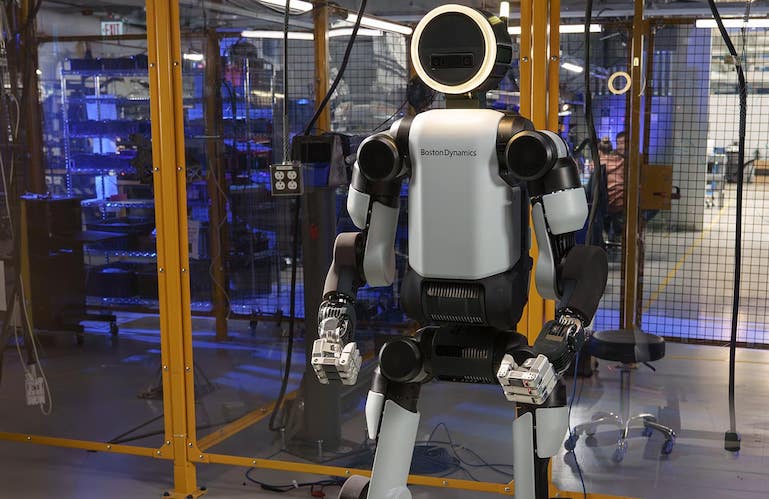
For companies involved in infrastructure development, the ability to integrate such advanced autonomous systems could offer competitive advantages. As the technology matures, Boston Dynamics' Atlas Robot and similar innovations could further transform logistics and operational efficiency.
Is your firm ready for what’s next?
VisioneerIT helps AECM and government contractors modernize operations, achieve compliance, and implement AI.
Explore VisioneerIT Solutions →