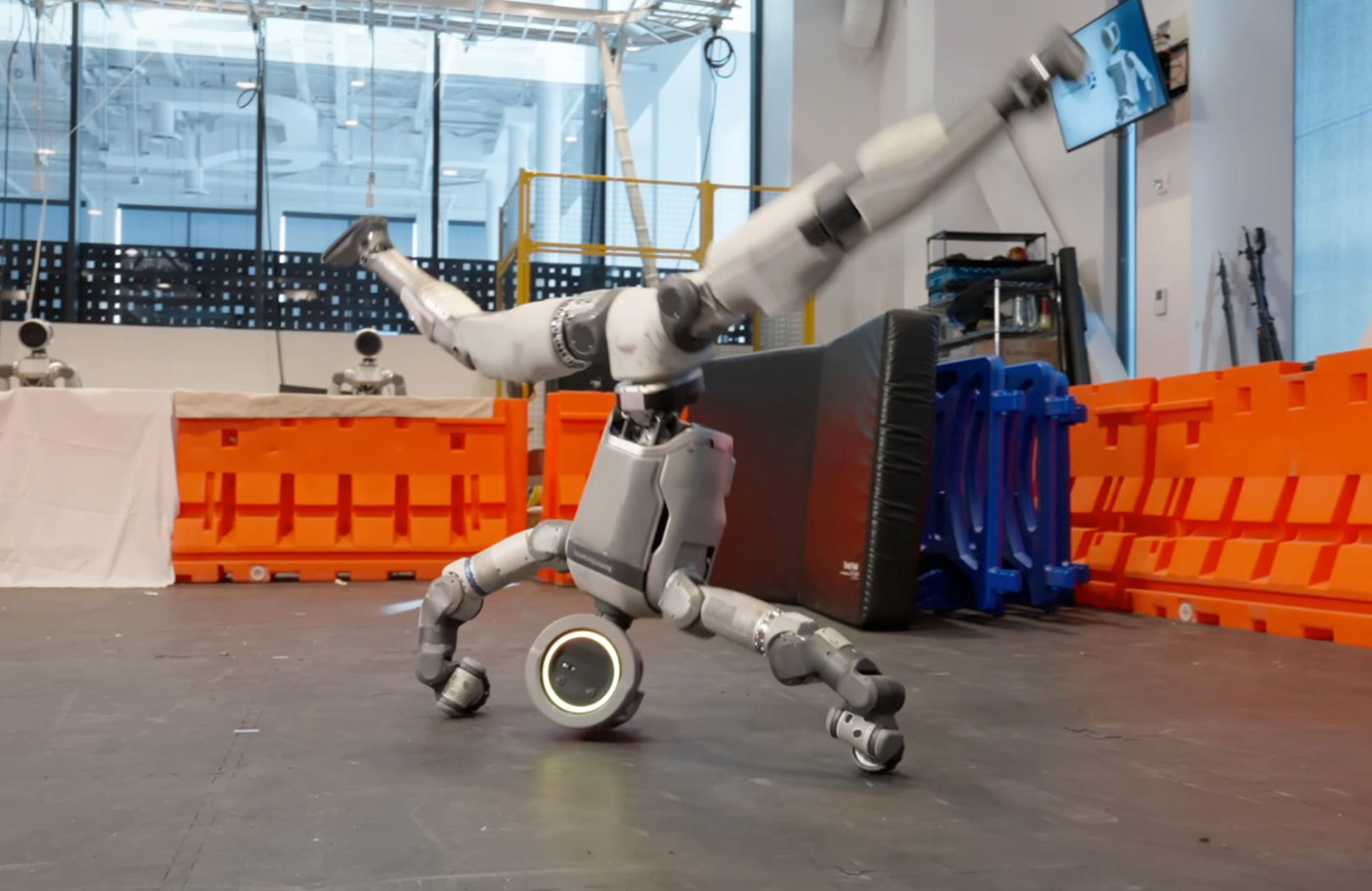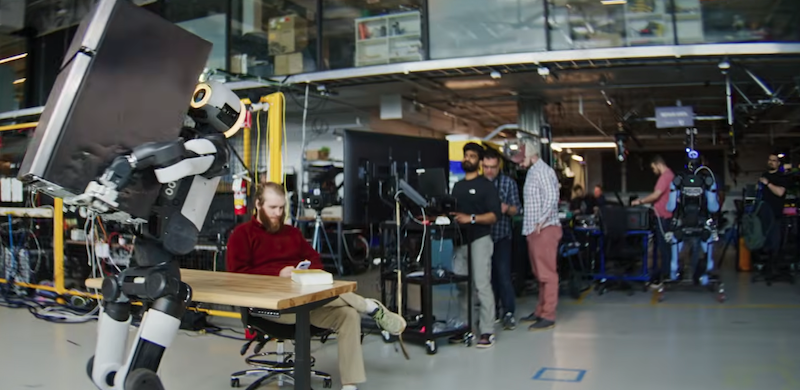
Boston Dynamics has unveiled new capabilities for its Atlas humanoid robot, showcasing its ability to perform heavy lifting tasks, a leap forward in preparing the system for real-world industrial applications. This development is crucial for the AECM industry as it signals a potential shift in how labor-intensive tasks might be approached in construction and manufacturing environments.
What Happened
Boston Dynamics released footage of its latest Atlas robot model lifting and carrying a mini-fridge weighing approximately 50 pounds. The robot has also successfully handled a loaded fridge weighing over 100 pounds in testing. The significant advancement lies not only in the robot's physical strength but in its AI-driven control systems. These systems allow Atlas to adapt to real-world conditions by using whole-body control and bracing for the mass and inertia of heavy objects. Unlike conventional robots that rely on fingertip manipulation, Atlas employs its entire body dynamically, which is a considerable shift in humanoid robotics development.
The company emphasized the importance of reinforcement learning, highlighting that Atlas practiced these tasks for millions of hours in simulation environments on GPUs before transitioning to physical testing. This approach minimizes the "sim-to-real gap"—the difference between performance in simulations versus real-world applications. The new electric Atlas model features simplified hardware, with two actuator types and symmetrical limbs, designed for large-scale manufacturing and deployment, making maintenance more straightforward and cost-effective.
Why It Matters for the AECM Industry
For professionals in the architecture, engineering, construction, and manufacturing sectors, the advancements in Atlas represent a potential game-changer. The ability of humanoid robots to perform complex lifting and manipulation tasks can significantly impact labor costs, safety, and project timelines. With Atlas, tasks traditionally requiring multiple workers and safety precautions could be streamlined, reducing risks and increasing productivity. Additionally, the move towards adaptable, AI-driven robotics in unpredictable environments aligns with the industry's growing focus on automation and efficiency.
The competition in the humanoid robotics sector is fierce, with companies like Tesla, Figure AI, Agility Robotics, and 1X Technologies also pushing for commercial applications in logistics, manufacturing, and warehouses.
Is your firm ready for what’s next?
VisioneerIT helps AECM and government contractors modernize operations, achieve compliance, and implement AI.
Explore VisioneerIT Solutions →