AI and Robotics Coalition Reshapes Manufacturing in 2026
New AI and robotics technologies are transforming manufacturing in 2026, addressing labor shortages and enhancing production efficiency. AECM professionals must adapt to remain competitive.
QNX's advancements in deterministic real-time systems are crucial for the safe integration of robotics into everyday environments, with implications for cybersecurity and compliance in the AECM industry.
South Korea's 2026 Smart Construction Challenge aims to integrate AI and robotics into construction, potentially setting global benchmarks.
GrayMatter Robotics' autonomous systems address labor shortages in defense manufacturing, enhancing readiness and operational capacity.
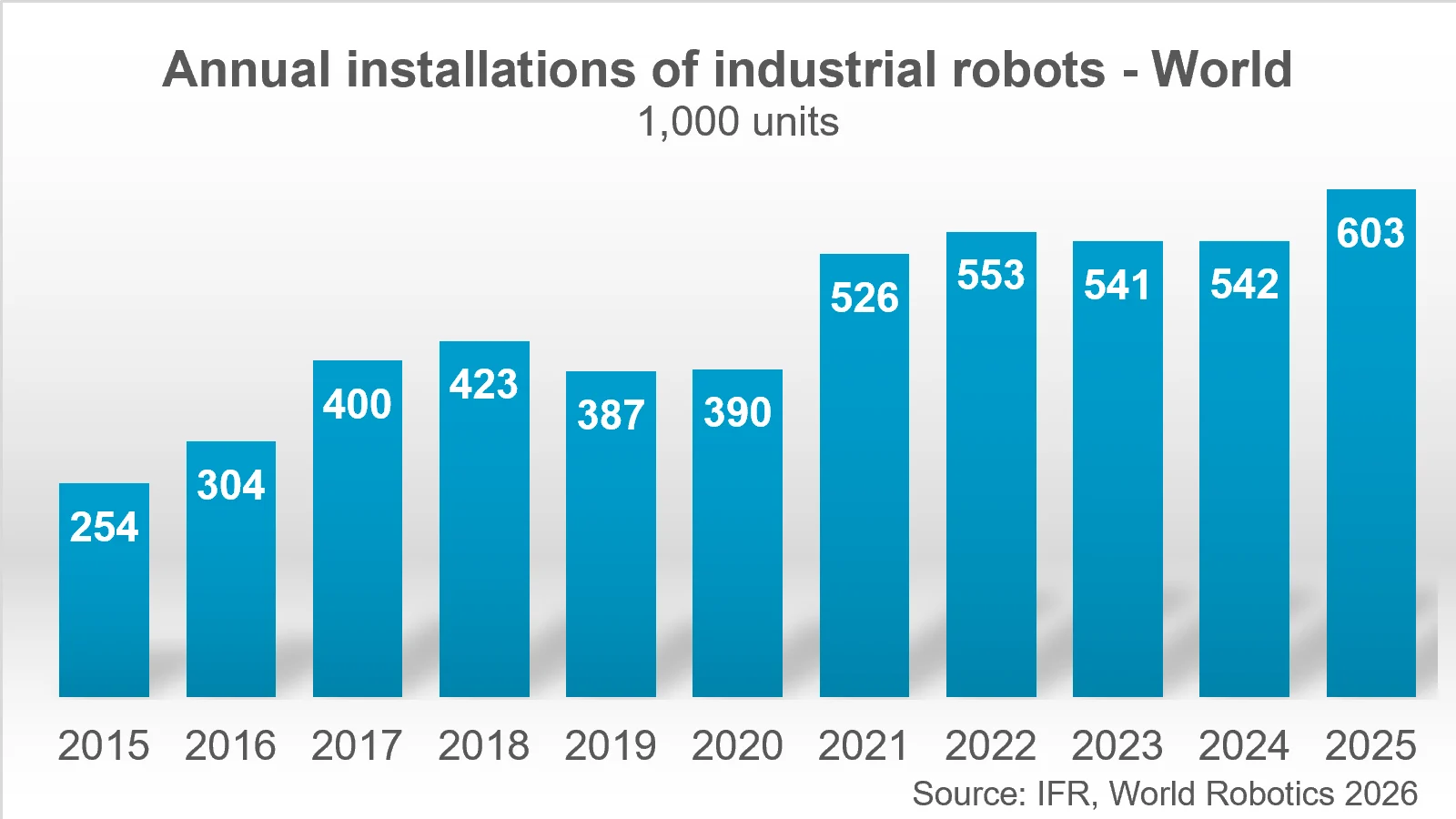
The U.S. robotics industry grew by 11% in 2025, driven by increased demand in sectors like food production. This growth signals a shift in the automation landscape, presenting new opportunities and challenges for U.S. businesses.
Kawasaki Robotics will reveal its latest automation innovations, including an 8-axis robot, at Automate 2026. This development is set to enhance manufacturing efficiencies and quality assurance.
FORT Robotics and NVIDIA have introduced an AI-driven "Outside-In Safety" solution to enhance robot productivity and worker safety, crucial for industries like warehousing and manufacturing.
Intrinsic, an Alphabet subsidiary, has introduced a new AI-powered robotic workcell design to simplify manufacturing processes. This innovation, set for a pilot with Foxconn, could significantly impact the AECM sectors by enhancing efficiency and reducing operational complexities.
Eclipse Automation's RealitySync platform offers a new immersive approach to planning and evaluating factory automation, potentially transforming decision-making processes for manufacturers across various sectors.