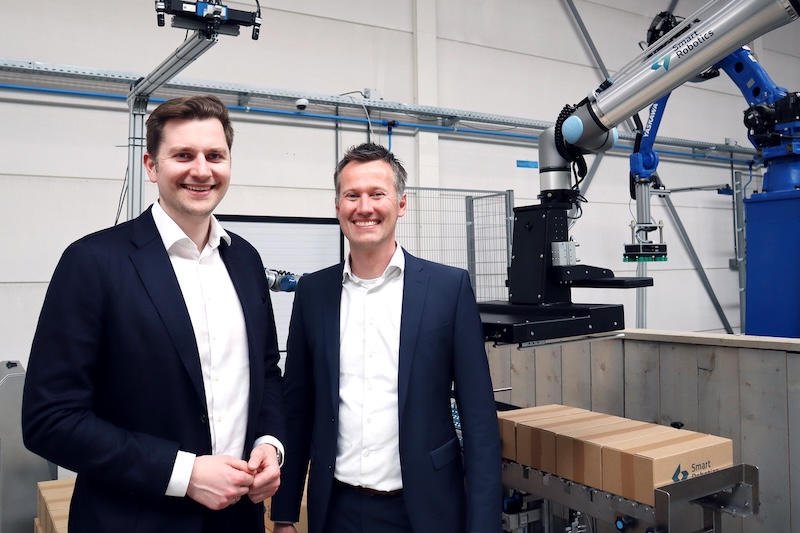
Smart Robotics, a Dutch leader in AI-driven warehouse robotics, has successfully raised €10 million in Series A funding, marking a significant step in its expansion across Europe. This investment, led by Rotterdamse Havendraken and supported by Innovation Industries and Ernij Next, underscores the escalating demand for advanced automation solutions in logistics. As e-commerce continues to surge, logistics operators face mounting pressure to enhance efficiency and overcome labor shortages.
What Happened
Smart Robotics, founded in 2015 and headquartered in Best, the Netherlands, specializes in developing AI-based robotic pick-and-place systems designed for intralogistics operations. The company has already deployed over 120 systems across 15 countries, spanning five industries. These systems have executed over one billion successful robotic picks, contributing to what the company claims is one of Europe’s largest operational datasets for robotic picking. The recent funding will accelerate their European expansion, enhance commercial operations, and further develop their proprietary AI software, which is crucial for handling high-SKU-variability in warehouse operations.
Why It Matters for the AECM Industry
The warehouse automation sector is becoming increasingly vital as logistics operators strive to keep pace with rising e-commerce volumes. For the AECM industry, this trend signifies a shift towards more integrated and automated solutions in logistics, which can lead to cost reductions and efficiency improvements. The penetration of logistics automation, currently estimated at 20% globally, is expected to grow significantly, offering opportunities for engineers and developers involved in robotics and AI integration. Smart Robotics' ability to leverage large-scale operational data provides a competitive edge, enabling continuous improvement of their systems and setting a benchmark for others in the industry.
What's Next
Looking forward, Smart Robotics plans to broaden its market presence through strategic partnerships, such as those recently announced with ProLog Automation. This expansion into larger warehouse automation projects is expected to open new customer segments. Industry professionals should monitor the company’s progress as it continues to innovate in the field of industrial robotics.
Partner Insight · VisioneerIT
As Smart Robotics expands its AI-driven warehouse solutions, VisioneerIT can support such growth through robust software engineering and digital modernization. Our expertise in full-stack development and workflow automation ensures scalable and efficient systems for evolving business needs.
Explore VisioneerIT Cybersecurity →
Is your firm ready for what’s next?
VisioneerIT helps AECM and government contractors modernize operations, achieve compliance, and implement AI.
Explore VisioneerIT Solutions →