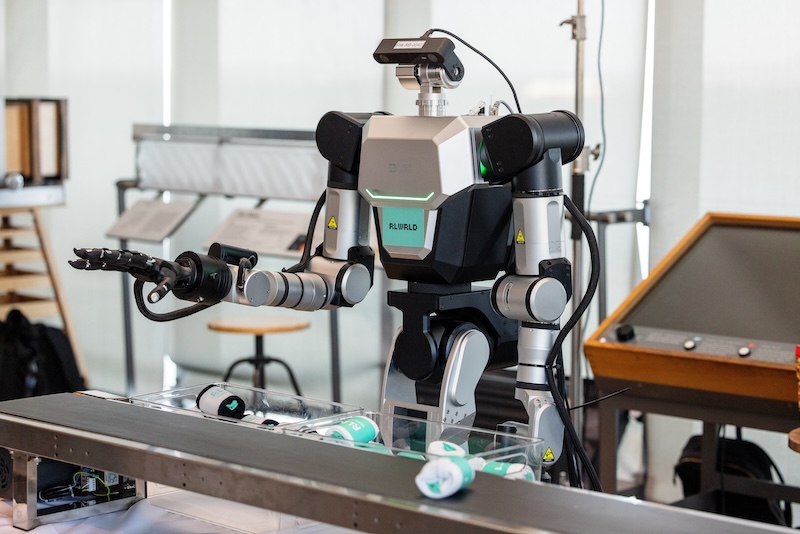
RLWRLD has unveiled RLDX-1, a groundbreaking model designed to enhance the dexterous capabilities of humanoid robots. This announcement is a significant development in the field of robotics, addressing the critical need for robots that can perform complex, contact-rich tasks in various industries.
What Happened
RLWRLD, a leader in physical AI, introduced the RLDX-1 model at their event "Dexterity Night in SF." This model is crafted to improve humanoid robots' ability to perform tasks requiring fine manipulation, such as grasping, pouring, and using tools. During the event, RLWRLD showcased RLDX-1's performance across several benchmarks, including tabletop manipulation, kitchen tasks, and real-world applications like coffee pouring. The model operates on multiple robot platforms, including WIRobotics' Allex humanoid, Franka Research 3, and OpenArm.
The RLDX-1 model was developed using Nvidia's AI infrastructure, integrating technologies such as Nvidia Isaac GR00T, Isaac Lab, and Jetson AGX Thor. The model's architecture, known as Multi-Stream Action Transformer (MSAT), effectively processes vision, language, action, tactile, and memory data streams, enabling precise execution of tasks that involve dynamic weight shifts.
Why It Matters for the AECM Industry
The introduction of RLDX-1 is poised to revolutionize the AECM industry by enhancing the capabilities of robots in environments like factories, kitchens, and warehouses. With improved dexterity, robots can undertake more complex tasks, potentially reducing labor costs and increasing efficiency. This advancement also mitigates risks associated with human labor in hazardous environments. Furthermore, the model's compatibility with various robot platforms encourages collaboration between hardware manufacturers and AI developers, fostering innovation in robotic applications.
What's Next
Looking ahead, RLWRLD plans to continue refining the RLDX-1 model, focusing on further improving its dexterous capabilities. Industry professionals should watch for upcoming collaborations and partnerships that may arise from this development. Additionally, the establishment of global standards for robotic foundation models (RFMs) is anticipated, which could shape the future landscape of humanoid robotics.
Is your firm ready for what’s next?
VisioneerIT helps AECM and government contractors modernize operations, achieve compliance, and implement AI.
Explore VisioneerIT Solutions →