NVIDIA's latest insights into robot policy evaluation may redefine how the AECM industry approaches robotics integration. By addressing critical benchmarking challenges, NVIDIA aims to enhance the reliability and applicability of robotic systems in real-world settings.
What Happened
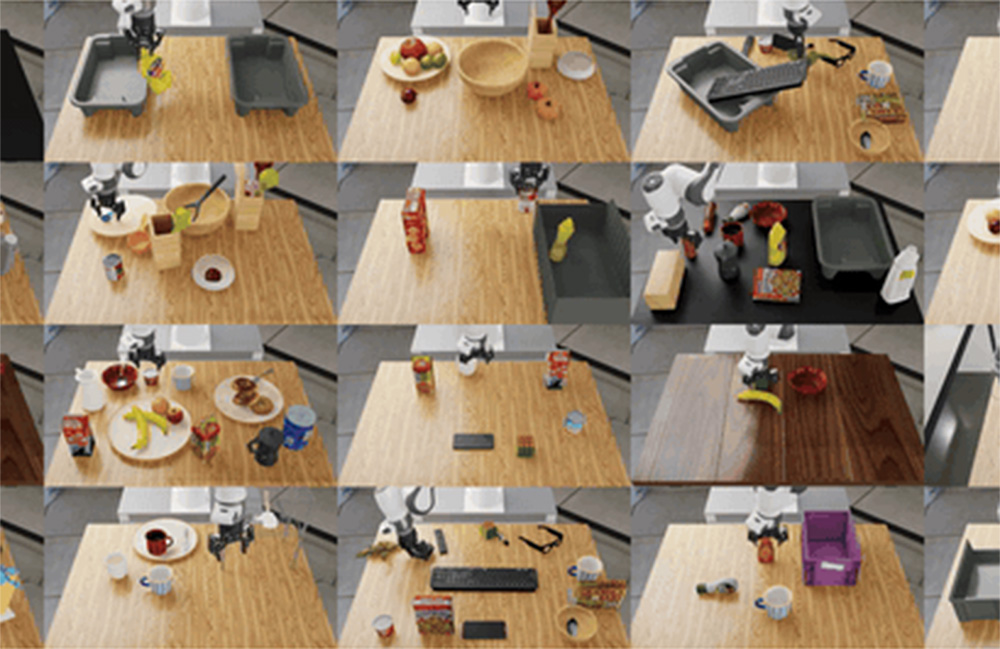
NVIDIA has unveiled a new methodology for evaluating general-purpose robot policies, emphasizing the limitations of current simulation benchmarks. As robotics technology advances, the need for accurate and comprehensive testing has become increasingly urgent. NVIDIA's RoboLab simulation benchmarking platform aims to tackle this issue by providing a more robust framework for testing robotic systems.
Current benchmarks face several challenges, including visual domain overlap, where training and evaluation environments are often identical, leading to memorization rather than genuine capability testing. Additionally, the benchmarks suffer from saturation, with many models achieving similar high scores, making it difficult to discern true performance differences. Diagnostic gaps also exist, as binary success/failure scores do not provide insights into the reasons behind a robot's performance.
NVIDIA's approach involves using real2sim techniques to create photorealistic environments from real-world images, which can address visual quality issues. However, these setups can be time-consuming, taking over an hour per scene, which hampers large-scale testing efforts. Furthermore, NVIDIA highlights the importance of statistical trustworthiness by employing methods like the Clopper-Pearson interval to provide accurate confidence intervals for success rates.
What This Means for Your Business
For AECM professionals, NVIDIA's advancements in robot policy evaluation offer several implications. The enhanced simulation accuracy and diagnostic capabilities could lead to more reliable robotic systems, reducing deployment risks in construction and manufacturing environments. This can translate into improved ROI and operational efficiencies, as companies can make better-informed decisions regarding robotic investments.
Moreover, the ability to differentiate between genuinely capable models and those that merely perform well on static benchmarks can aid procurement directors in selecting the most suitable robotic solutions for specific applications. This is particularly relevant in government contracting, where performance reliability is paramount.
What US Operators Should Watch
Industry professionals should monitor developments in NVIDIA's simulation benchmarking as they may impact future procurement standards and compliance requirements. As the field evolves, keeping abreast of advancements in evaluation methodologies will be crucial for maintaining competitive positioning.
Additionally, US operators should remain vigilant about emerging federal regulations and standards related to robotics technology, as these may influence future procurement and deployment strategies.
---
Source: The Robot Report. Read the original story ->
Is your firm ready for what’s next?
VisioneerIT helps AECM and government contractors modernize operations, achieve compliance, and implement AI.
Explore VisioneerIT Solutions →