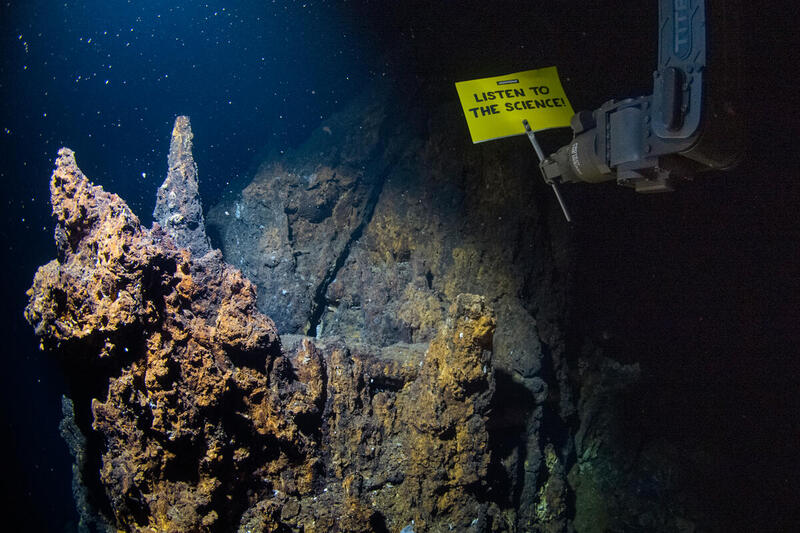
While conducting a scientific survey of the Arctic Mid-Ocean Ridge, Greenpeace made headlines with the deepest seabed protest in history, deploying a remotely operated vehicle (ROV) 2,315 meters below the ocean's surface. The protest, featuring a banner that read “LISTEN TO THE SCIENCE!”, urges global leaders to act on their promises to protect marine ecosystems. This high-profile action highlights the tension between environmental preservation and industrial interests, especially as the threat of deep-sea mining looms large.
What Happened
Greenpeace's Deep Arctic Expedition, led by Dr. Sandra Schöttner, staged a unique protest at Loki’s Castle, a hydrothermal vent field located on the Arctic Mid-Ocean Ridge. The protest used ROV Holly to display a banner urging leaders to adhere to scientific advice and protect the oceans. Loki’s Castle is notable for its black smokers and unique microbial life, which some scientists believe resemble early forms of life on Earth. This protest is part of a broader effort to draw attention to the potential risks of industrial activities like deep-sea mining, which could cause irreversible damage to these fragile ecosystems.
Why It Matters for the AECM Industry
The implications for the Architecture, Engineering, Construction, and Manufacturing (AECM) sectors are significant. The expansion of industrial activities into deep-sea environments presents both opportunities and challenges. On one hand, the demand for raw materials could lead to new engineering and construction projects. However, the environmental risks and potential regulatory changes pose uncertainties. The call for a moratorium on deep-sea mining and the implementation of the UN Ocean Treaty could impact project timelines, increase costs, and necessitate new compliance measures. Companies involved in marine engineering and construction must navigate these evolving dynamics while balancing environmental sustainability with industrial progress.
What's Next
The next steps are critical for industry stakeholders. Greenpeace is urging world leaders to implement the UN Ocean Treaty, aiming to protect 30% of global oceans by 2030. Industry professionals should monitor developments in international policy, especially as discussions around deep-sea mining regulations continue. The halted mining plans in Norway, initiated in 2024 and paused due to environme
Is your firm ready for what’s next?
VisioneerIT helps AECM and government contractors modernize operations, achieve compliance, and implement AI.
Explore VisioneerIT Solutions →