Architecture studio Office for Future is set to transform a former school in Stavyshche, Ukraine, into temporary housing for families displaced by the ongoing conflict in the region. This initiative not only addresses the immediate need for shelter but also aims to foster community integration and social reconstruction.
What Happened
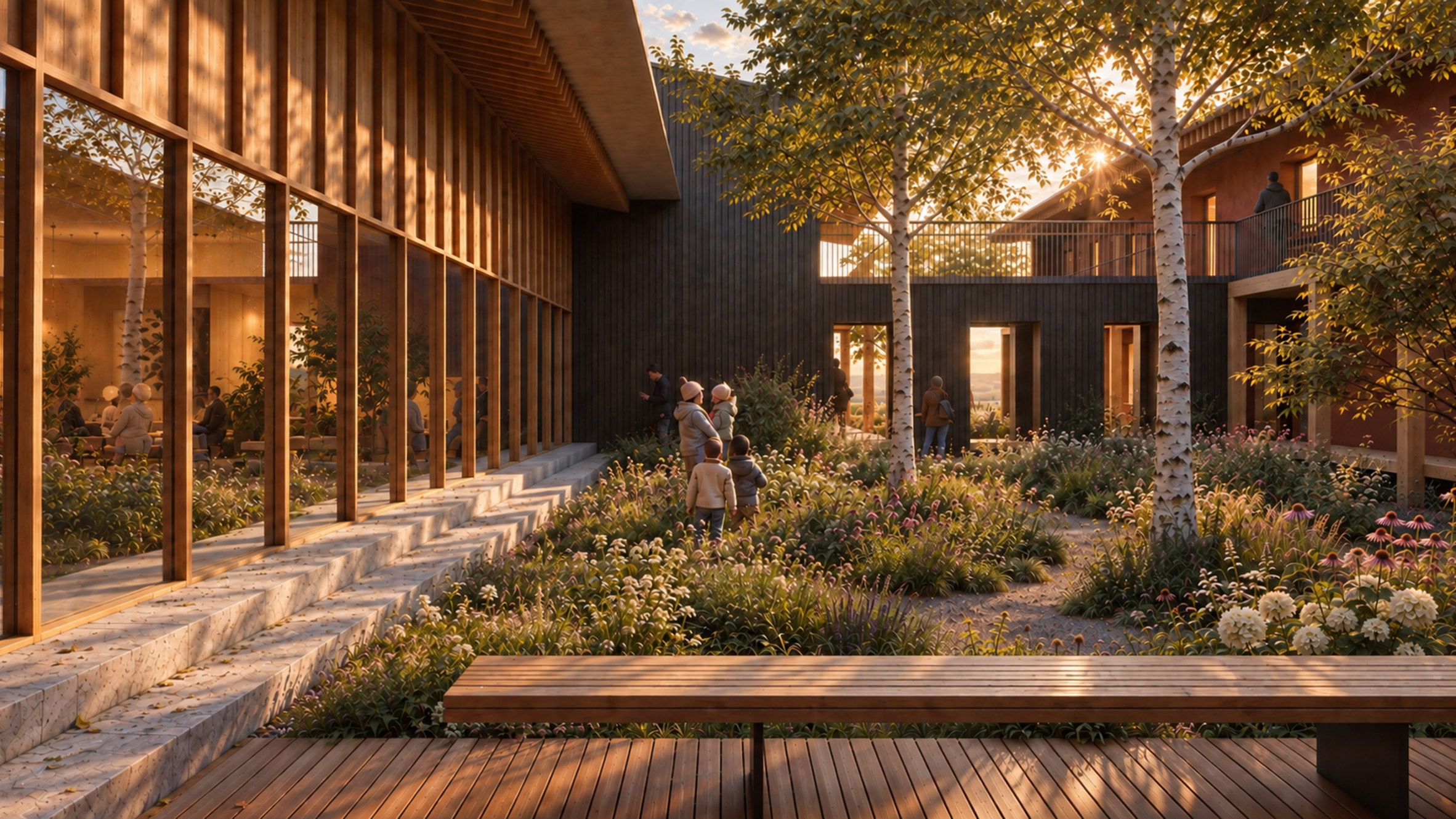
Office for Future, an architecture studio known for innovative community projects, has unveiled plans to remodel a school building in Stavyshche, about 140 kilometers south of Kyiv, into temporary housing for those affected by the war in Ukraine. The project, named Dvir, will provide accommodation for 42 families displaced by the conflict that has persisted since 2022. The transformation involves creating 42 apartments of varying sizes, including accessible units, wrapped around a central courtyard. Supported by the charity Housing for IDP, the design includes shared spaces to enhance social interaction and community cohesion. Office for Future founder Paolo Russo emphasized that the project aims to offer both high-quality private living spaces and public areas to facilitate community engagement. The building will feature a timber roof with photovoltaic panels and wooden walkways connecting the apartments.
What This Means for Your Business
For AECM professionals and government contractors, the Dvir project exemplifies the growing trend of adaptive reuse in architecture, especially in conflict-affected regions. This initiative highlights the potential for architectural solutions to address humanitarian needs while driving social impact. The involvement of photovoltaic panels also underscores the importance of integrating sustainable energy solutions in new developments. Companies engaged in architecture, engineering, and construction can look to similar projects as opportunities to leverage their expertise in retrofitting existing structures for new purposes. Additionally, this project could serve as a model for future public-private partnerships aimed at addressing housing shortages and fostering community resilience.
What US Operators Should Watch
US operators should monitor developments in adaptive reuse projects, particularly those that incorporate sustainable energy solutions and community-focused designs. As global conflicts and displacement issues persist, opportunities may arise for firms to participate in international humanitarian projects. Keeping an eye on federal funding opportunities and grants for sustainable building practices could provide competitive advantages. Additionally, the growing emphasis on community integration in architectural projects may influence future compliance requirements and design standards.
Source: https://www.dezeen.com/2026/10/07/dvir-ukraine-housing-office-for-future/. Read the original story ->
Is your firm ready for what’s next?
VisioneerIT helps AECM and government contractors modernize operations, achieve compliance, and implement AI.
Explore VisioneerIT Solutions →