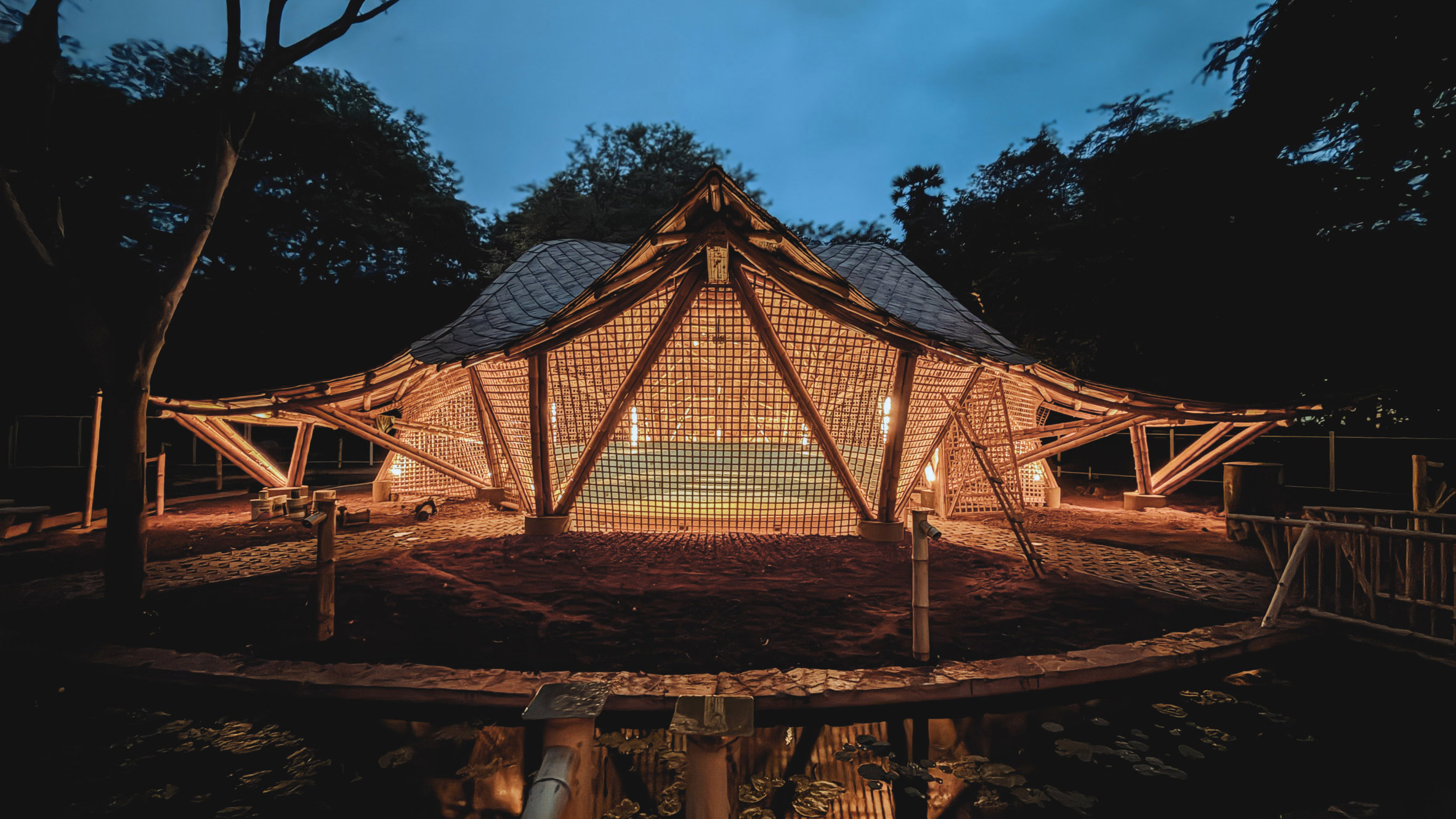
In a bold demonstration of sustainable architecture, the Maestro Ilaiyaraaja Centre for Music Learning and Research in Chennai, India, showcases the potential of bamboo as a primary construction material. Designed by Ekarth Studio and located on the IIT Madras university campus, this innovative project could redefine sustainable building practices in the architecture, engineering, and construction management (AECM) industry.
What Happened
The Maestro Ilaiyaraaja Centre, completed by Ekarth Studio, is a series of dramatic bamboo vaults forming teaching and research spaces. Situated on the 250-hectare IIT Madras campus, it serves as a hub for music-related research involving student musicians, engineers, and mathematicians. The centre is named after Shri Ilaiyaraaja, one of India's most revered composers. The project notably minimizes the use of concrete, opting instead for bamboo—a fast-growing, abundant, and cost-effective grass species—as the primary structural material. This approach challenges conventional institutional architecture by incorporating natural materials, reflecting the centre's values of innovation, environmental responsibility, and interdisciplinary collaboration.
Ekarth Studio's design leverages bamboo's structural strength and ability to form complex geometries, enabling the completion of the project within a highly compressed timeline of just 11 months. The construction process involved local artisans who used basic carpentry tools to split, bend, bundle, and join various forms of bamboo, from engineered versions to cane bundles, all left exposed to highlight the material's versatility.
What This Means for Your Business
For AECM professionals and government contractors, the Maestro Ilaiyaraaja Centre serves as a compelling case study in sustainable building practices. The project's success underscores bamboo's potential as a viable alternative to traditional construction materials, offering a sustainable, cost-effective solution that could influence future procurement decisions. The use of bamboo not only aligns with growing environmental regulations but also positions firms to benefit from increasing demand for green building solutions. By adopting bamboo and similar sustainable materials, businesses can enhance their competitive positioning, meet compliance requirements, and potentially reduce construction timelines and costs.
What US Operators Should Watch
As the AECM industry continues to evolve, US operators should monitor developments in sustainable material use, particularly bamboo, which is gaining traction globally. Key points to track include federal and state-level sustainability mandates and the potential integration of bamboo in LEED certification criteria. Additionally, firms should stay informed about advancements in material engineering and construction techniques that could facilitate the broader adoption of bamboo in large-scale projects. With sustainability at the forefront of industry trends, embracing innovative materials like bamboo could be crucial for maintaining a competitive edge.
Source: https://www.dezeen.com/2026/10/07/ekarth-studio-maestro-ilaiyaraaja-centre/. Read the original story ->
Is your firm ready for what’s next?
VisioneerIT helps AECM and government contractors modernize operations, achieve compliance, and implement AI.
Explore VisioneerIT Solutions →