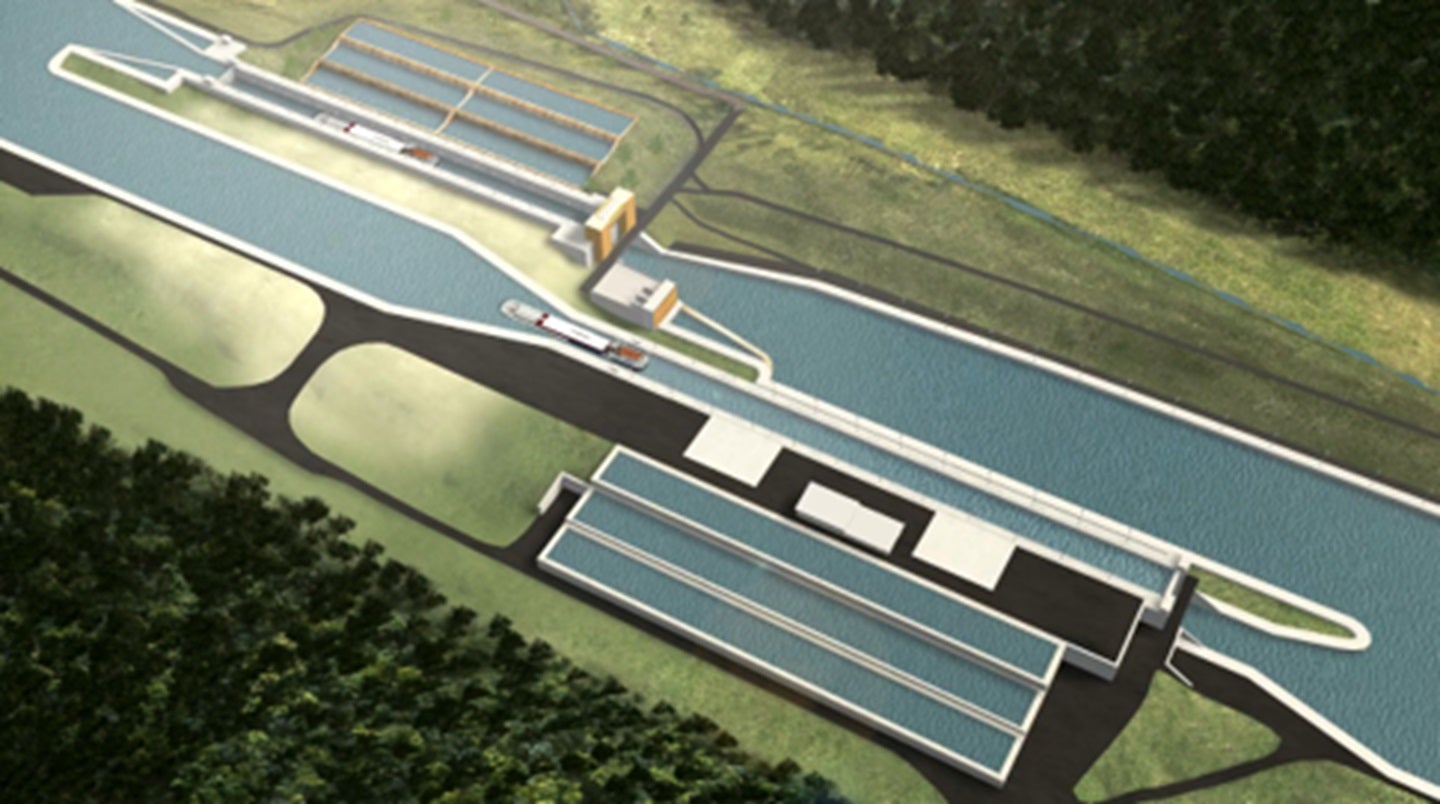
The Züblin consortium, including Bauer Spezialtiefbau, has clinched a €380 million ($441 million) contract to replace the Erlangen lock on the Main–Danube Canal. This significant infrastructure project, commissioned by the Waterways Construction Office Aschaffenburg, is critical for the modernization of Europe's waterways.
What Happened
The existing Erlangen lock, opened in the early 1970s, is beyond refurbishment due to its deteriorating structural condition. The new lock will be constructed approximately 300 meters north of the current facility. The replacement will feature solid concrete construction with minimized structural joints to enhance its longevity. It will have a lock chamber 12.5 meters wide and 190 meters long, slightly larger than the existing structure. Key components of the project include an approach structure, upper head, lock chamber, outlet section, water-saving basins, and a bypass channel to manage water flow efficiently. Notably, the water-saving basins are engineered to reuse about 60% of water per lock operation. Construction is set to maintain continuous operation of the canal, with completion targeted for 2033. Upon completion, the existing lock will be decommissioned, ensuring uninterrupted waterway transport.
Why It Matters for the AECM Industry
This project underscores a crucial investment in sustainable infrastructure, aligning with broader European goals for waterway modernization. For the AECM industry, the Erlangen lock replacement represents a significant opportunity to leverage advanced construction techniques and materials to extend the operational life of critical infrastructure. The project also highlights the importance of maintaining functionality during construction, a key consideration in large-scale civil engineering works. Furthermore, the use of water-saving basins reflects a growing trend towards sustainable water management practices, which could set a precedent for future waterway projects.
What's Next
The construction work for the Erlangen lock is expected to continue until 2033, with full canal operation maintained throughout. Industry professionals should monitor this project as a benchmark for large-scale infrastructure replacements, particularly in terms of sustainability and operational continuity. The consortium's ongoing work at the nearby Kriegenbrunn lock, initiated in 2024, also merits attention.
Is your firm ready for what’s next?
VisioneerIT helps AECM and government contractors modernize operations, achieve compliance, and implement AI.
Explore VisioneerIT Solutions →