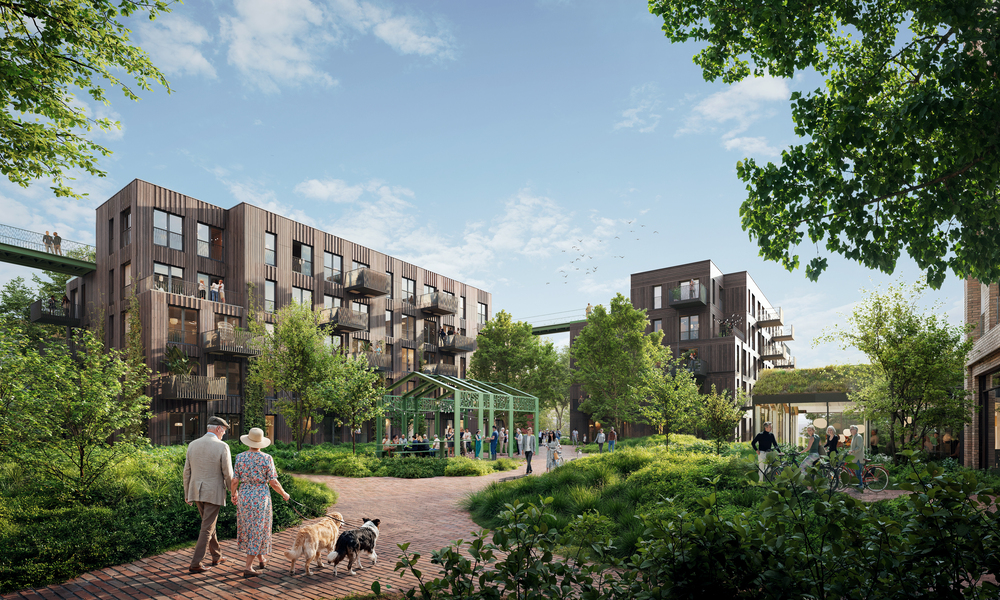
Groundbreaking on a transformative new social housing project in Oss, Netherlands, has begun, converting a former car park into a sustainable residential development. This innovative project, named Linck, is designed by Dutch-Swiss architect KCAP and will feature 198 residential units spread across four interconnected buildings. Over half of these units are allocated to social housing, marking a significant shift in urban development prioritizing community and sustainability.
What Happened
The Linck project in the southern Dutch municipality of Oss represents a pioneering approach to urban redevelopment. The site, once a car park, will now host four buildings connected by bridges at the fourth floor, providing residents with access to communal rooftop terraces, a shared kitchen, game room, fitness decks, and an urban greenhouse. The project includes 52 mid-range rental units, 28 owner-occupied apartments, and 10 shared-tenancy units, emphasizing a diverse housing model.
The development is slated for completion in 2028 and is designed with numerous green features. These include water retention systems, heat pumps, indigenous planting, and an adjustable shading system. The upper floors of two buildings will use cross-laminated timber, while the buildings will feature a "two-sided design" with brick and bamboo-clad façades inspired by local architecture. Vehicle access is limited to 34 underground spaces for electric vehicles, supporting the project's car-free ethos.
What This Means for Your Business
For AECM professionals, the Linck development underscores the growing trend toward sustainable urban housing projects. The integration of green technologies and car-free living spaces aligns with increasing regulatory pressures and market demand for environmentally friendly construction methods. This project could serve as a model for future developments, providing insights into innovative design and construction practices that balance community needs with environmental considerations.
Government contractors and construction firms might find opportunities in similar projects as cities worldwide seek sustainable urban solutions. The focus on social housing also highlights potential shifts in procurement priorities, with governments likely to support projects that address housing shortages while meeting sustainability targets.
What US Operators Should Watch
US operators need to track the trend of integrating green building technologies and sustainable urban planning in housing projects. Understanding the timelines and requirements for implementing eco-friendly solutions, like the ones used in Linck, can be crucial for competitive positioning. Federal funding opportunities may arise for projects that prioritize sustainability and social housing, and staying informed about these trends can help businesses align their strategies accordingly.
Source: https://www.globalconstructionreview.com/car-park-transformed-into-social-housing-across-four-connected-buildings/. Read the original story ->
Partner Insight · VisioneerIT
As urban developments increasingly prioritize sustainability and green technologies, cybersecurity becomes essential in protecting sensitive project data and ensuring compliance with regulations. VisioneerIT's expertise in cybersecurity can help AECM professionals safeguard their projects while embracing innovative construction practices.
Explore VisioneerIT Cybersecurity →
Is your firm ready for what’s next?
VisioneerIT helps AECM and government contractors modernize operations, achieve compliance, and implement AI.
Explore VisioneerIT Solutions →