A 125-ton inverted ribbon truss has been successfully installed at Wrexham AFC's Cae Ras stadium, marking a significant milestone in the construction of the club's new Kop Stand. This development is pivotal as it not only advances the stadium's timeline but also exemplifies the engineering prowess required for such a complex project.
What Happened
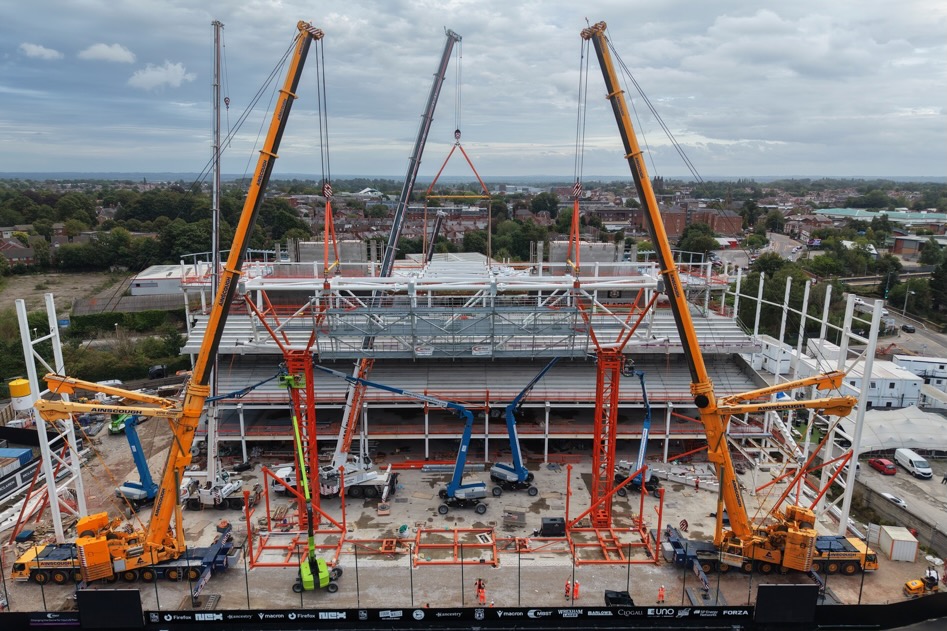
The truss, delivered in five separate pieces, was meticulously assembled on-site before being lifted into place using temporary support structures. This installation was a collaborative effort led by principal contractor McLaren Construction Midlands and North, in conjunction with structural steel specialist J&D Pierce Contracts Ltd. The logistical and engineering planning involved months of preparation, which included coordination with specialist lifting contractors and independent checking engineers. Notably, the project also required collaboration with Network Rail due to the stadium's city-centre location.
The steelwork for the stadium is extensive, comprising over 1,500 tons of steel secured with more than 31,000 structural bolts. This includes the installation of distinctive dolphin beams, which were fabricated and intumescent coated off-site. Significant progress has been made on the upper concrete decks and precast terracing, with all upper floor slabs now completed. The stadium is set to be ready for the 2027/28 season, aiming for a capacity of over 18,000 and compliance with UEFA Category 4 standards.
What This Means for Your Business
For AECM professionals, the successful installation of the truss highlights the need for meticulous planning and collaboration across multiple contractors and stakeholders. The project underscores the importance of working within constrained urban environments, a common challenge in modern construction projects. This development could open opportunities for US contractors interested in European partnerships, particularly those specializing in steel fabrication and urban construction logistics.
The project also illustrates the potential for integrating advanced fabrication techniques and off-site construction methods, which can reduce on-site time and improve safety. US operators might consider similar approaches to enhance efficiency and meet tight deadlines in their domestic projects.
What US Operators Should Watch
US contractors should monitor the progress of Wrexham AFC's stadium redevelopment for insights into managing large-scale projects within urban settings. Additionally, the project's timeline to meet UEFA Category 4 compliance could serve as a benchmark for US stadium projects aiming for similar certifications.
Opportunities for learning and collaboration may arise as the project nears completion, offering a chance to observe best practices in international stadium construction. Staying informed on such projects can provide competitive advantages in securing future contracts either domestically or abroad.
Is your firm ready for what’s next?
VisioneerIT helps AECM and government contractors modernize operations, achieve compliance, and implement AI.
Explore VisioneerIT Solutions →