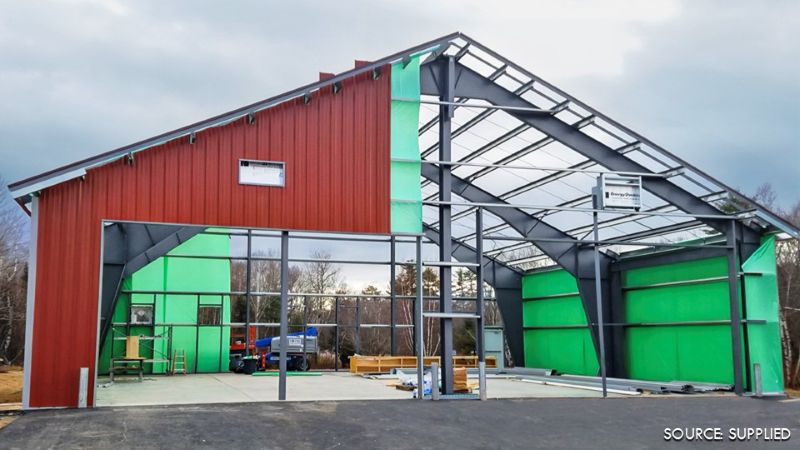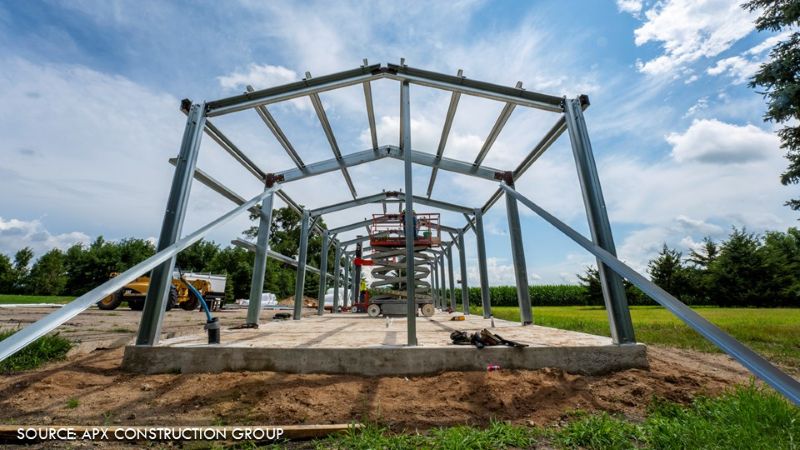
In Winnebago, Minnesota, a transformative project has emerged that could set new standards in construction for specialized facilities across the U.S. Bravo Zulu House, the first all-military sober living home for veterans with PTSD, has opened its doors with a unique healing program called Tails of Hope. This initiative, which pairs veterans with shelter-rescued service dogs, is supported by a state-of-the-art facility built by APX Construction Group and Midwest Steel Erectors using Metallic Hypersteel Buildings.
What Happened
Bravo Zulu House's Tails of Hope program is a groundbreaking initiative designed to provide veterans with PTSD a unique path to recovery. The program pairs each resident with a service dog from local shelters, fostering a nurturing relationship that aids in managing PTSD and sobriety. The facility’s construction, crucial to the program's success, was a collaborative effort involving APX Construction Group, Midwest Steel Erectors, and Metallic Hypersteel Buildings. The kennel system was built to be sanitary, durable, energy-efficient, and cost-effective, ensuring a safe and comfortable environment for both veterans and their canine companions. The use of corrosion-resistant materials and modular designs allows the facility to withstand Minnesota’s extreme weather and adapt to future growth needs.
What This Means for Your Business
For AECM professionals and government contractors, this project highlights the importance of integrating specialized construction techniques to meet unique operational demands. The use of pre-engineered metal systems not only ensures durability and energy efficiency but also offers cost control and scalability—key considerations for nonprofit projects. Companies involved in government contracting and those looking to enter the healthcare or nonprofit sectors can learn from this model to enhance their competitive positioning. Additionally, this project underscores the growing demand for facilities that support mental health and rehabilitation, presenting potential funding opportunities and partnerships for firms in the AECM industry.
What US Operators Should Watch
As federal and state governments continue to invest in mental health infrastructure, AECM professionals should monitor upcoming funding opportunities and procurement windows for similar projects. Keeping abreast of innovations in pre-engineered building systems could provide a competitive edge. Moreover, understanding the evolving compliance requirements for facilities that serve sensitive populations, such as veterans with PTSD, will be crucial for future projects. Firms should also track developments in sustainable construction practices that balance cost, efficiency, and environmental impact.
---
Source: https://www.metalconstructionnews.com/main-slider/built-for-service-designed-for-healing/. Read the original story ->
Is your firm ready for what’s next?
VisioneerIT helps AECM and government contractors modernize operations, achieve compliance, and implement AI.
Explore VisioneerIT Solutions →