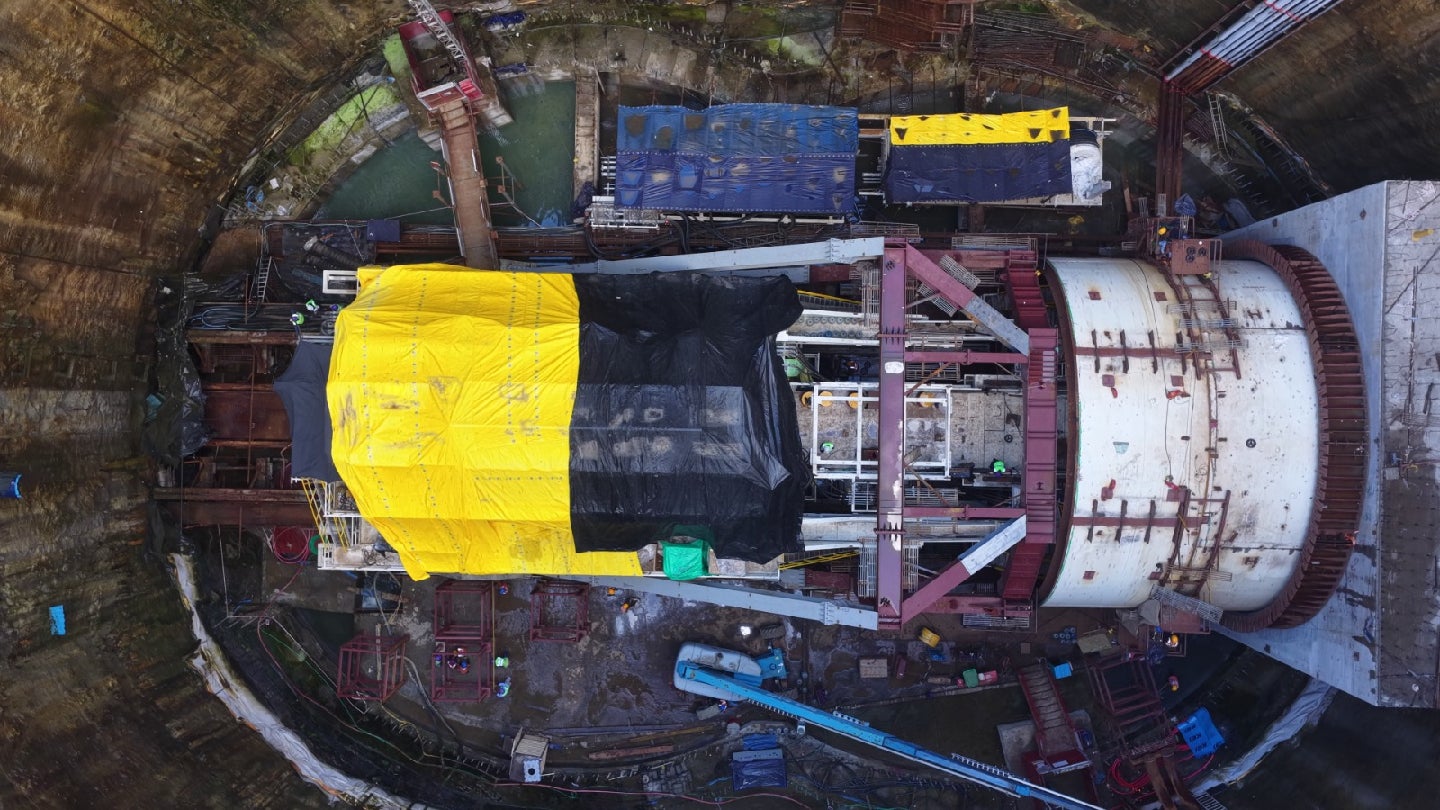
The commencement of tunneling for the Mumbai-Ahmedabad high-speed rail project marks a significant milestone in India's infrastructure development. This ambitious venture, utilizing the largest tunnel boring machine (TBM) in the country, is set to reshape connectivity between two major cities, promising economic growth and technological advancement.
What Happened
Excavation has begun on the Mumbai-Ahmedabad high-speed rail project, a critical component of India’s first bullet train corridor. The National High Speed Rail Corporation Limited (NHSRCL) has deployed India’s largest TBM, featuring a 13.6-meter cutterhead, to excavate a 6km single-tube tunnel from the Vikhroli shaft towards the under-construction Mumbai Bullet Train station. This project includes a 21km underground stretch in Mumbai, with 16km to be completed using TBMs and the remaining 5km already excavated using the New Austrian Tunnelling Method (NATM). The TBM is designed to navigate complex urban environments, operating beneath multi-storey buildings, roads, and rivers like the Mithi River. The Mixshield TBM system, chosen for this phase, uses pressurised bentonite slurry to stabilise the tunnel face and minimise ground settlement, ensuring safety in densely populated areas. NHSRCL has established comprehensive on-site infrastructure, including water and slurry treatment plants, power substations, and a ready-mix concrete facility. Real-time monitoring devices, such as surface settlement points and seismographs, are in place to ensure operational safety. Additionally, a casting yard in Thane district is manufacturing the estimated 77,000 concrete segments needed for the tunnel lining.
What This Means for Your Business
For US operators in the AECM and government sectors, this project highlights key opportunities and challenges in large-scale infrastructure developments. The use of advanced TBM technology and real-time monitoring systems underscores the importance of integrating cutting-edge solutions in construction projects. Companies involved in manufacturing, engineering, and technology development can explore collaborations and partnerships, especially in areas like tunneling technology, safety systems, and sustainable construction materials. The project’s reliance on Japanese Shinkansen technology and funding from the Japan International Cooperation Agency (JICA) emphasizes the potential for international cooperation and investment in similar large-scale projects. Understanding the procurement processes and compliance requirements for such projects can provide US firms with a competitive edge in securing contracts.
What US Operators Should Watch
US business decision-makers should closely monitor the progress of the Mumbai-Ahmedabad high-speed rail project, particularly the operational target for the first section between Surat and Vapi in August 2027. Staying updated on technological advancements in TBM systems and real-time monitoring innovations can enhance competitive positioning in the market. Additionally, tracking international funding opportunities and partnerships, like those involving JICA, could open new avenues for investment and collaboration in high-speed rail and other infrastructure projects worldwide.
Source: https://www.worldconstructionnetwork.com/news/tunnelling-begins-mumbai-ahmedabad-train/. Read the original story ->
Is your firm ready for what’s next?
VisioneerIT helps AECM and government contractors modernize operations, achieve compliance, and implement AI.
Explore VisioneerIT Solutions →