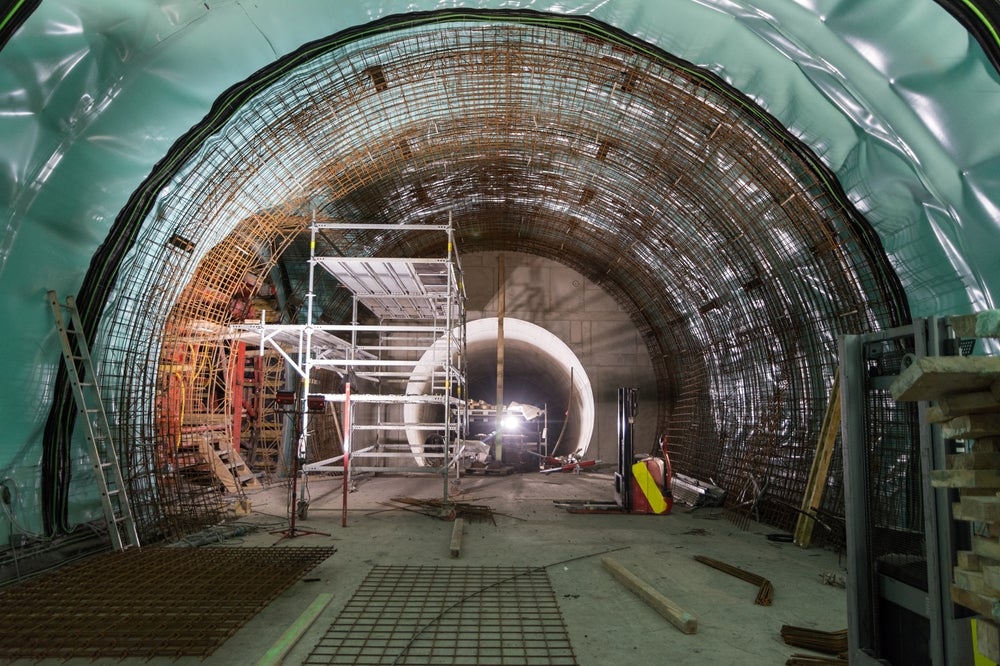
An unprecedented $538 billion investment in tunnel construction is reshaping the global infrastructure landscape, with a dominant focus on rail projects. This trend is critical for AECM professionals as it presents both challenges and opportunities in procurement and strategic planning.
What Happened
The world's largest tunnel construction projects are seeing a significant concentration of investment in rail infrastructure. Out of the top 20 projects, 14 are dedicated to railway tunnels, accounting for $383.17 billion, or over 71% of the total investment. This leaves other sectors such as roads, water infrastructure, and energy vying for a smaller portion of the market. Leading this charge is Japan's $72.27 billion Tokyo to Osaka Maglev Railway Line, followed by the UK’s $65.99 billion Hinkley Point C Nuclear Power Station electricity transmission tunnels. China's $57.7 billion Gwadar to Kashgar Railway Line and the $47.19 billion Sichuan-Tibet Railway: Ya’an-Nyingchi Section also rank among the top five, highlighting the strategic importance of rail infrastructure globally.
The focus on rail is further emphasized by other mega-projects like the UK's High Speed 2 Rail Link, valued at $45.43 billion. These projects are part of long-term corridor programs that offer extensive opportunities for civil engineering and systems integration. Notably, 12 of these 20 projects, representing $341.29 billion, are already underway, indicating a robust pipeline of work that is moving beyond theoretical planning into active execution.
What This Means for Your Business
For AECM industry leaders, this trend signifies a potential pivot in procurement strategies and resource allocation. The focus on rail corridors could necessitate a shift towards specialized tunneling expertise and equipment. Companies positioned to supply such services may find themselves at a competitive advantage. However, the concentration of investment in rail also means that other sectors might face increased competition for funding and resources.
The long-term nature of these corridor programs ensures a more predictable order book for contractors involved, offering stability in a market that often deals with fluctuating demand. Moreover, this focus could drive innovation in tunneling technology and construction methodologies, presenting opportunities for firms that can adapt and lead in these areas.
What US Operators Should Watch
US AECM stakeholders should monitor developments in global rail infrastructure closely, as similar trends could influence domestic projects. The $30 billion Countywide Stormwater Conveyance Tunnels and the $20.1 billion Sacramento to San Joaquin River Delta Conveyance System are key projects to watch for potential shifts in investment focus.
Additionally, firms should stay attuned to federal procurement windows and compliance requirements that could impact their ability to participate in these large-scale projects. Understanding the timelines and regulatory frameworks surrounding these investments will be crucial for maintaining a competitive edge.
Source: https://www.worldconstructionnetwork.com/analysis/top-20/largest-tunnel-construction-projects/. Read the original story ->
Is your firm ready for what’s next?
VisioneerIT helps AECM and government contractors modernize operations, achieve compliance, and implement AI.
Explore VisioneerIT Solutions →