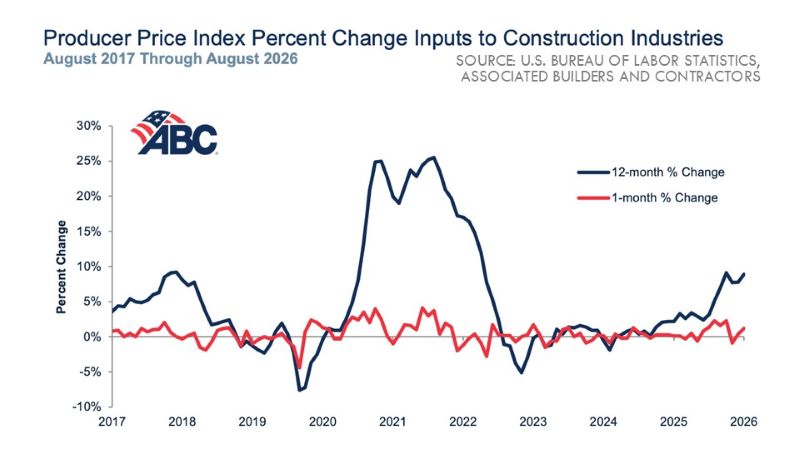
Construction material prices continue to rise, with significant increases observed in August 2026. This trend, highlighted by Anirban Basu of the Associated Builders and Contractors (ABC), poses potential profitability challenges for contractors.
What Happened
Construction input prices surged by 1.2% in August 2026 compared to July, according to an analysis by the Associated Builders and Contractors (ABC) based on U.S. Bureau of Labor Statistics’ Producer Price Index data. The increases were widespread across various materials, including iron, steel, softwood lumber, switchgear, and copper wire and cable, with some materials experiencing year-over-year price hikes exceeding 10%.
The breakdown of the data reveals specific sectors facing varying levels of escalation. Nonresidential construction input prices mirrored the overall increase of 1.2%. Meanwhile, prices for steel mill products rose by 1.7% in August and have escalated 23.4% over the past year. Iron and steel prices climbed 0.9% for the month and 17.9% year over year, demonstrating a significant upward trend since February 2020, with increases of over 80%.
What This Means for Your Business
The continuous rise in construction input costs underscores the need for strategic procurement and contract management in the AECM sector. These price hikes, fueled by the ongoing trade tensions with Canada and surging oil prices above $100 per barrel, may compress profit margins for contractors despite their current optimism. Businesses must consider incorporating price escalation clauses in contracts to mitigate risks associated with volatile material costs.
Moreover, the persistent inflationary pressure on construction inputs necessitates a reevaluation of project budgets and timelines. C-suite executives and procurement directors should prioritize robust supply chain strategies and explore alternative materials to maintain competitive positioning and ROI.
What US Operators Should Watch
AECM professionals should keep a close eye on the evolving trade policies and oil market dynamics, as these factors significantly impact material costs. Staying informed about potential changes in tariffs or trade agreements with key partners like Canada is crucial. Monitoring federal procurement windows for infrastructure projects could provide opportunities to secure contracts before further price escalations.
Additionally, operators should prepare for potential compliance adjustments related to the Cybersecurity Maturity Model Certification (CMMC) and other regulatory updates, as these could affect project planning and execution timelines.
Source: https://www.metalconstructionnews.com/news/construction-materials-prices-continue-their-ascent-in-august-2026/. Read the original story ->
Is your firm ready for what’s next?
VisioneerIT helps AECM and government contractors modernize operations, achieve compliance, and implement AI.
Explore VisioneerIT Solutions →