Open-source collaboration is revolutionizing the robotics industry, transforming what was once a niche field into a cornerstone of modern industrial technology. This shift matters now more than ever as industries worldwide strive for efficiency and innovation.
What Happened
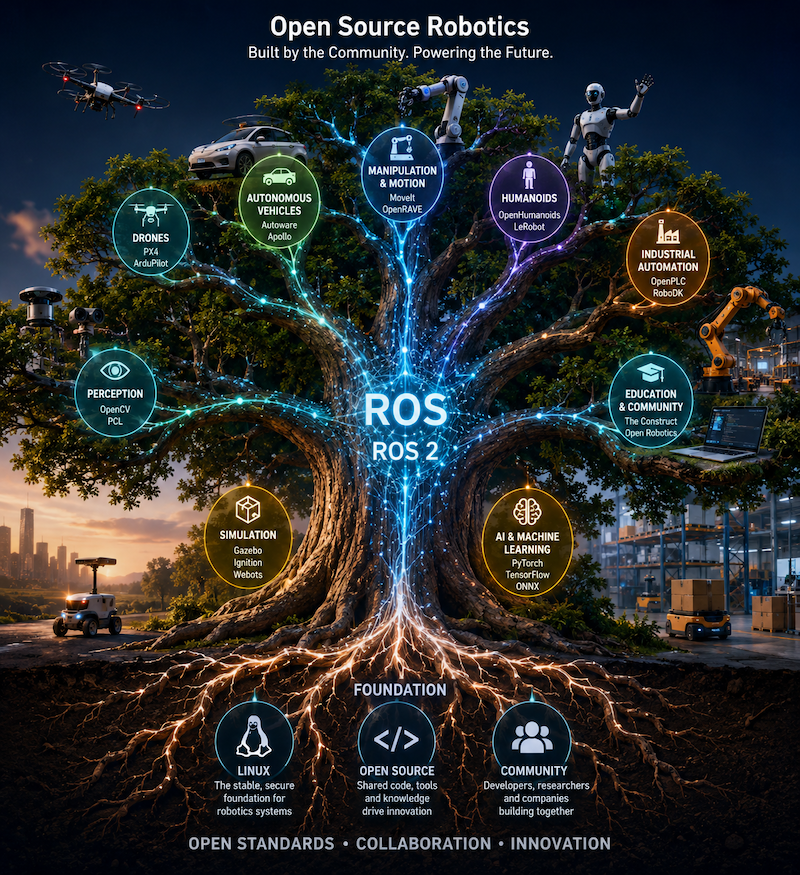
Open-source software, particularly the Robot Operating System (ROS), has become a pivotal tool in the robotics industry. Originally developed at Stanford Artificial Intelligence Laboratory and expanded by Willow Garage, ROS introduced a modular software architecture that allowed for unprecedented collaboration and code sharing. Before ROS, robotics development was fragmented, with companies and researchers creating proprietary software stacks that hindered cooperation and innovation. Today, ROS and its successor, ROS 2, underpin a significant portion of the global robotics ecosystem, enabling companies like Nvidia, Amazon, ABB, and Bosch to join open robotics communities.
The Construct, a company founded in Spain, further democratized robotics by developing a browser-based ROS development and simulation environment. This platform alleviated the technical barriers that previously deterred students and developers from entering the field, such as installation difficulties and hardware compatibility issues.
Why It Matters for the AECM Industry
The integration of open-source robotics into the AECM industry can lead to substantial cost savings and increased innovation. By leveraging shared software tools and frameworks, companies can reduce development costs and accelerate project timelines. This collaboration also mitigates risks by fostering a community-driven approach to problem-solving and innovation.
For manufacturers, the ability to rapidly prototype and deploy robotics solutions can enhance production efficiency and adaptability. Construction firms can benefit from autonomous systems for tasks like site surveying and material handling, reducing labor costs and improving safety. Architects and engineers can use robotic systems to explore new design possibilities and automate repetitive tasks, leading to more sustainable and innovative projects.
What's Next
As open-source robotics continues to evolve, professionals in the AECM industry should monitor developments in ROS 2 and related technologies. Upcoming advancements in AI integration, simulation capabilities, and hardware compatibility will further expand the potential applications of robotics in the industry.
Is your firm ready for what’s next?
VisioneerIT helps AECM and government contractors modernize operations, achieve compliance, and implement AI.
Explore VisioneerIT Solutions →