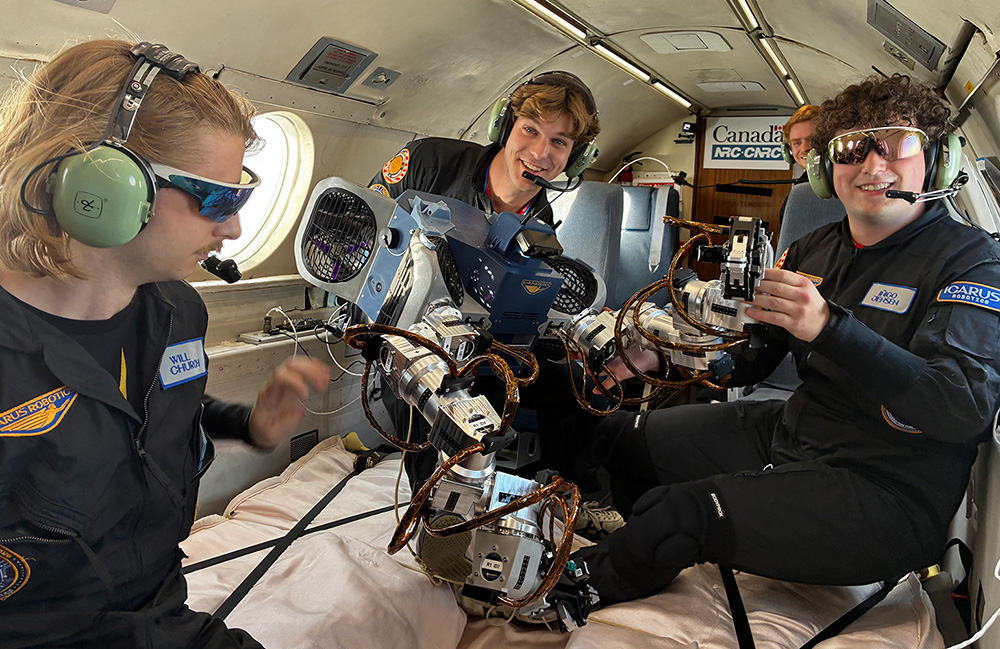
Icarus Robotics has successfully tested its free-flying robot, Joy, in microgravity conditions, marking a significant step towards its deployment on the International Space Station (ISS) by 2027. This advancement is crucial for the Aerospace, Engineering, Construction, and Manufacturing (AECM) sectors as it showcases the future of robotics in space missions, potentially shifting operational dynamics and opening new business avenues.
What Happened
Icarus Robotics conducted a series of tests on their free-flying robot, Joy, across four parabolic flights from September 9 to 11, 2023. These tests involved 66 parabolas, providing a total of two minutes of weightlessness. Joy, equipped with robotic arms and finger pinch grippers, is designed to navigate the pressurized interior of the ISS and manage cargo and logistics tasks that currently require significant astronaut involvement. The successful tests were the final major evaluation before Icarus finalizes Joy’s flight hardware, scheduled for handover to NASA in January 2024. The Brooklyn-based startup, which secured $6.1 million in seed funding last year, aims to enhance the efficiency of space missions by allowing astronauts to focus on higher-value research and mission objectives.
What This Means for Your Business
For businesses in the AECM sectors, the successful testing of Joy represents a shift towards increased automation in space operations. This development offers potential opportunities for companies involved in robotics, aerospace engineering, and manufacturing. The innovation could lead to new contracts for developing similar technologies or integrating advanced robotics into existing systems. Furthermore, it underscores the importance of compliance with emerging standards in robotics and aerospace technologies, particularly for firms aiming to enter or expand their presence in the space industry. The successful deployment of Joy could also influence competitive positioning, as firms that adapt quickly to these technological advancements may gain a competitive edge.
What US Operators Should Watch
US operators should monitor the timeline leading up to Joy's deployment on the ISS in 2027, particularly the handover of flight hardware to NASA in January 2024. This milestone will be critical for assessing the readiness of similar technologies and their potential impact on future space missions. Additionally, staying informed about developments in NASA's procurement processes and any related federal funding opportunities will be essential for businesses looking to capitalize on this technological advancement. Monitoring the evolution of compliance requirements, such as those related to cybersecurity and zero trust architectures, will also be crucial for maintaining competitiveness and ensuring successful integration into the space sector.
Source: The Robot Report. Read the original story ->
Is your firm ready for what’s next?
VisioneerIT helps AECM and government contractors modernize operations, achieve compliance, and implement AI.
Explore VisioneerIT Solutions →