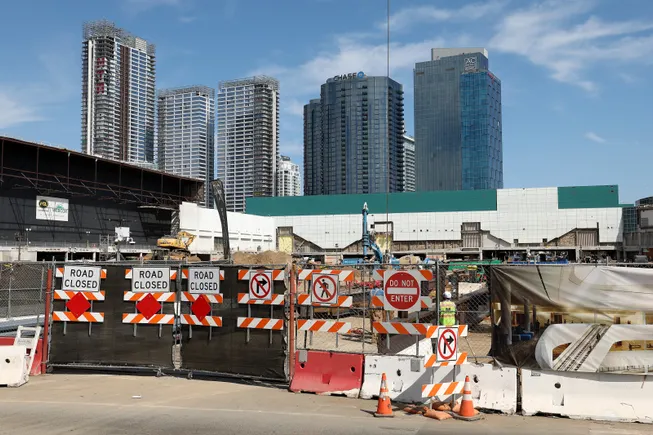
The $721 million rehabilitation of Connecticut's Gold Star Memorial Bridge is underway, marking a significant investment in the state's infrastructure. This project promises to revitalize a vital transportation link on I-95, which facilitates the movement of over 60,000 vehicles daily between New London and Groton. For AECM professionals and government contractors, this project underscores the potential for lucrative contracts and innovative engineering solutions in large-scale infrastructure projects.
What Happened
The Connecticut Department of Transportation (CTDOT) has embarked on an ambitious rehabilitation project for the Gold Star Memorial Bridge, with a total contract value of $721,348,812.07 awarded to MSR Gold Star Bridge Partners. This tri-venture consists of MLJ Contracting Inc., SPS New England Inc., and Railroad Construction Co. Inc. The project began in early 2026 and is expected to conclude by fall 2030. Funding includes a $158.2 million grant from the federal Bridge Investment Program, supplemented by federal and state resources.
The northbound bridge, featuring five lanes, and the southbound bridge, with four lanes, are both undergoing extensive upgrades. Originally opened in 1943, the bridge is crucial for regional mobility and commerce, spanning the Thames River and intersecting major railways and local roads. The renovation aims to enhance structural capacity, allowing oversized vehicles to cross and improving the bridge's condition rating to 39 percent, classified as satisfactory.
What This Means for Your Business
For businesses in the architecture, engineering, and construction sectors, this project represents a substantial opportunity to engage with state and federal infrastructure initiatives. The contract's magnitude highlights the potential for high-value procurement and subcontracting opportunities. The use of advanced materials like ultra-high-performance concrete and polyester polymer concrete for the Exodermic deck replacement demonstrates a trend towards employing cutting-edge technology in infrastructure projects.
Compliance with modern safety standards, such as MASH-compliant barriers and stainless-steel mesh fencing, reflects the growing importance of adhering to stringent regulatory requirements. Companies involved in the project will need to ensure compliance with federal guidelines, including CMMC and NIST standards, to secure contracts and maintain competitive positioning.
What US Operators Should Watch
Key milestones and deadlines will be crucial for stakeholders to monitor. The project is divided into two primary stages, with Stage 1 focusing on the outer sections of the northbound bridge deck from summer 2026 through spring 2028. Stage 2 will address the center section starting in spring 2028. Traffic management strategies, including lane reductions and traffic crossovers, will be implemented to minimize disruptions.
Operators should track the completion of the southbound bridge's four-year project phase, which began last summer, to align with the broader project timeline. Additionally, the integration of technologies and materials used in this project could inform future infrastructure development strategies, offering lessons in efficiency and innovation.
Is your firm ready for what’s next?
VisioneerIT helps AECM and government contractors modernize operations, achieve compliance, and implement AI.
Explore VisioneerIT Solutions →