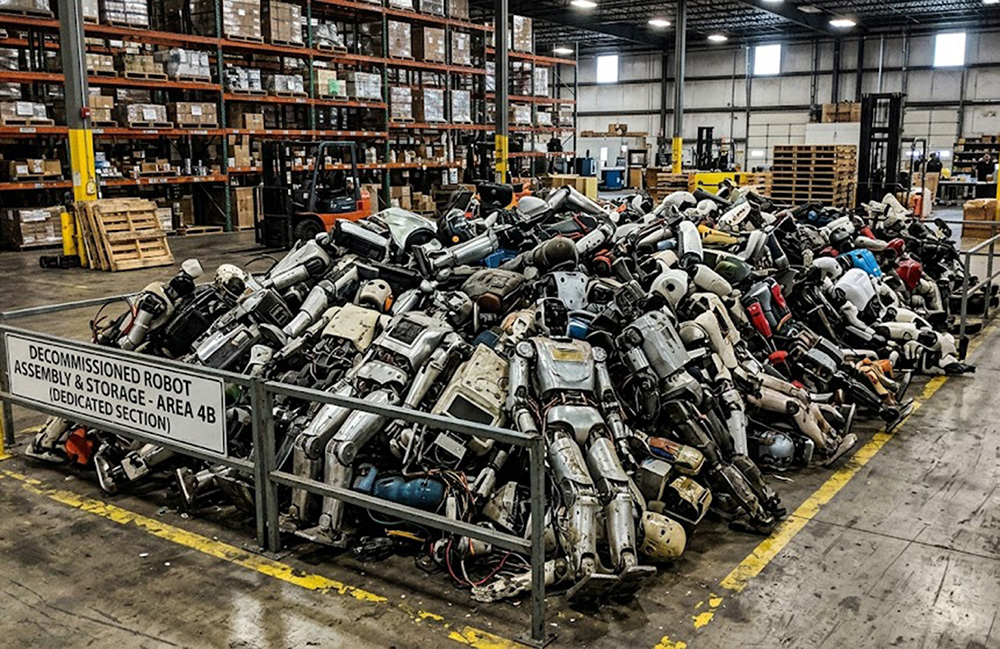
The race to mass-produce humanoid robots is in full swing, but a looming question remains: what happens when these complex machines reach the end of their lifecycle? As the industry scales production, the decommissioning of humanoid robots emerges as a critical challenge, presenting unique technical and economic implications for the AECM sector.
What Happened
The humanoid robot industry is rapidly evolving, with each unit comprising 10,000 to 15,000 components. These include 200 to 500 major sub-components categorized into systems like actuation and motion, kinematic skeletons, artificial nervous systems, and semiconductor cores. The complexity of these systems poses significant challenges for recycling and disposal. A typical humanoid contains 20 to 40 electric motors, 30 to 50 structural elements, and up to 80 semiconductor devices. Furthermore, the units house 3.5 to 4 kg of rare-earth neodymium magnets, which are difficult to extract safely.
End-of-life processing is fraught with risks, including potential data breaches from stored memory, hazardous materials like lithium-ion batteries, and the difficulty of reclaiming rare-earth metals without contamination. The disassembly of these robots is not straightforward; it requires skilled technicians to safely extract components without causing environmental harm or risking worker safety.
What This Means for Your Business
For companies involved in the design, manufacture, and deployment of humanoid robots, understanding these decommissioning challenges is crucial. The potential for data breaches necessitates robust data protection strategies, including cryptographic erasure of storage devices. The safe disposal of batteries and structural components calls for advanced recycling techniques and partnerships with specialized e-waste processors.
Moreover, the extraction of rare-earth magnets presents both a challenge and an opportunity. Developing efficient methods for recovering these materials could offer a competitive edge, given their scarcity and value. Companies must also consider the regulatory implications of robot decommissioning, as compliance with environmental and safety standards will be essential.
What US Operators Should Watch
As the industry matures, operators should monitor developments in recycling technologies and regulatory frameworks. Federal guidelines on e-waste management and data protection will likely evolve, impacting compliance strategies. Additionally, procurement teams should anticipate potential cost implications associated with the decommissioning process, from specialized labor to advanced recycling methods. Staying informed about these changes will be crucial for maintaining competitive positioning and ensuring sustainable operations.
Is your firm ready for what’s next?
VisioneerIT helps AECM and government contractors modernize operations, achieve compliance, and implement AI.
Explore VisioneerIT Solutions →