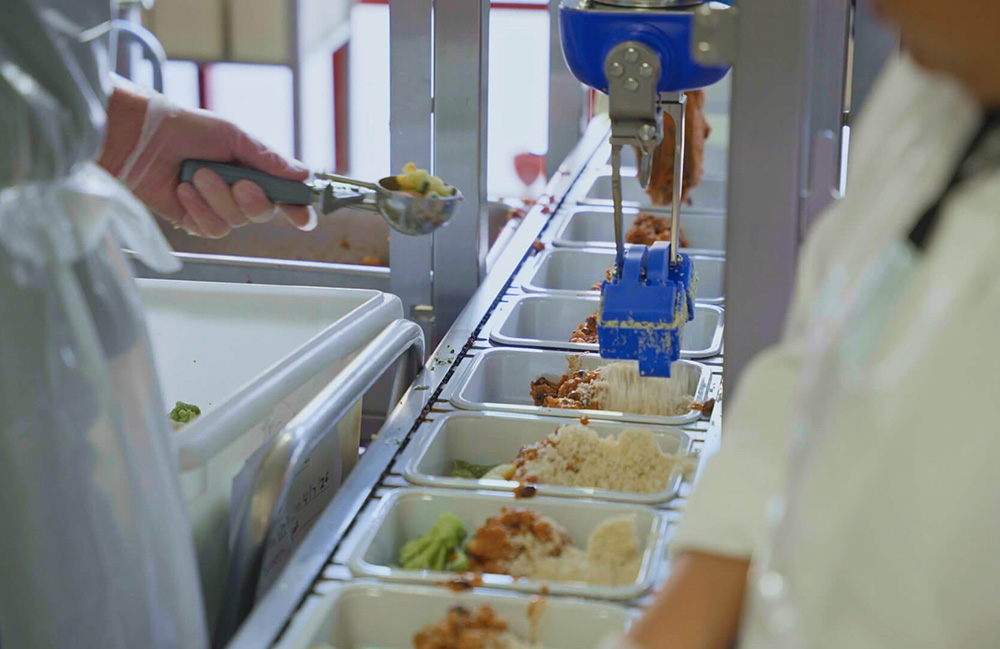
Food processing has emerged as a formidable challenge for physical AI, and Chef Robotics is at the forefront of tackling this issue. The company has developed a sophisticated robotic system capable of handling high-mix food preparation, aiming to transform the way food manufacturing operates. This technological leap is significant for the AECM industry as it showcases the potential for AI to revolutionize complex processes that involve deformable materials.
What Happened
Chef Robotics has built an extensive real-world dataset to train its Food Foundation Model (FFM), a framework that allows its robots to adapt to new ingredients with minimal retraining. The company has already completed over 118 million servings in production, operating across multiple food manufacturing facilities in North America and Europe. This achievement is a testament to the progress made in addressing the challenges posed by food's variable nature—such as its deformability, inconsistent weight and texture, and temperature sensitivity.
At the upcoming RoboBusiness 2026 event in Santa Clara, California, Chef Robotics' CEO Rajat Bhageria will discuss the intricacies of food preparation as a benchmark for physical AI. His session will delve into the sensor-fusion challenges and force-control precision required to handle diverse food materials. Bhageria will also highlight how the solutions developed for food AI can be applied to other industries dealing with deformable materials, such as medical devices and agriculture.
What This Means for Your Business
For businesses in the AECM sector, the advancements made by Chef Robotics present new opportunities in automation and process optimization. The company's work in developing adaptive grasping and tactile feedback integration can inform strategies for improving efficiency and reducing waste in food manufacturing. Moreover, the transferability of these techniques to other domains opens up possibilities for innovation in various sectors, including flexible packaging and agriculture.
Investing in such AI-driven solutions could lead to significant ROI by streamlining operations and enhancing product quality. Additionally, businesses can position themselves competitively by adopting cutting-edge technology that addresses the complexities of handling deformable materials.
What US Operators Should Watch
Operators should pay attention to the outcomes of RoboBusiness 2026, particularly the insights shared by industry leaders like Bhageria. Keeping track of advancements in AI applications for deformable material handling will be crucial for staying ahead in the competitive landscape. Businesses should also monitor any federal funding opportunities or grants that support the integration of AI in manufacturing and other related sectors. As AI continues to evolve, staying informed about technological developments and regulatory changes will be essential for making strategic decisions.
Source: https://www.therobotreport.com/learn-why-food-is-physical-ai-hardest-problem-chef-robotics-robobusiness/. Read the original story ->
Partner Insight · VisioneerIT
The advancements in physical AI, as highlighted by Chef Robotics, are paving the way for innovative solutions in various sectors, including construction and manufacturing. VisioneerIT's expertise in software engineering and digital modernization can help businesses leverage these technologies effectively.
Explore VisioneerIT Cybersecurity. →
Is your firm ready for what’s next?
VisioneerIT helps AECM and government contractors modernize operations, achieve compliance, and implement AI.
Explore VisioneerIT Solutions →