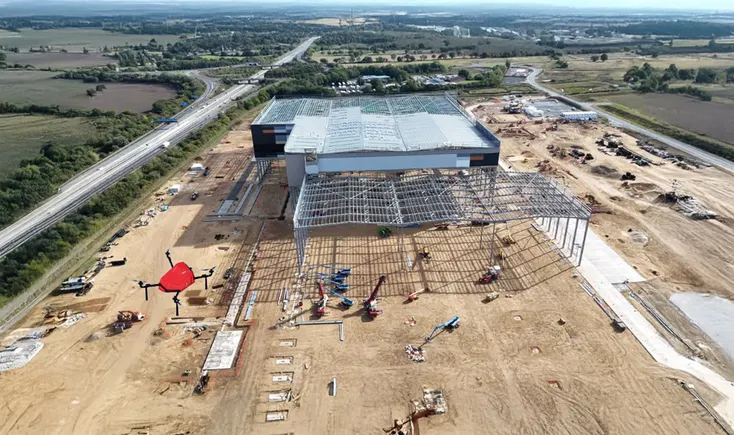
Boston Global Investors recently completed 10 World Trade, a 570,000-square-foot tower in the Seaport District, without securing any tenants—a stark indicator of the current challenges in Boston’s lab space market. This development comes at a time when lab vacancies in the region have soared to 32.7 percent, a significant increase from the near-zero vacancy rates seen when the project broke ground in 2022.
What Happened
Boston Global Investors (BGI) embarked on the construction of 10 World Trade with optimism in 2022, buoyed by strong demand for lab space and a vacancy rate of just 1 percent. However, the landscape has shifted dramatically, leaving the state-of-the-art building without a single tenant upon its completion. The project, which secured over $540 million in financing from PGIM Real Estate and Wheelock Street Capital, was designed by Sasaki and features unique architectural elements like asymmetrical facades and triple-pane electrochromic windows.
The building is not alone in its predicament. The Seaport District hosts several other vacant or underutilized lab and office buildings, including 601 Congress Street, 2 Harbor, and 19 Fid Kennedy Avenue. While there was interest from potential tenants last year, the economic climate in 2026 has cooled leasing activity considerably. Despite this, analysts believe that 10 World Trade will eventually lease out ahead of its competitors once demand rebounds, noting that biotech funding and investments are beginning to rise again, albeit slowly.
What This Means for Your Business
For AECM professionals and government contractors, the situation underscores the importance of aligning new construction projects with market realities. The speculative nature of projects like 10 World Trade highlights risks that can impact return on investment and cash flow. As market conditions fluctuate, it's crucial for developers and contractors to maintain flexible project plans and adaptive reuse strategies, particularly when dealing with specialized spaces such as labs.
Compliance with evolving standards, such as the use of sustainable materials and smart technologies, remains essential. The inclusion of a $10 million smart glass system and rooftop solar panels at 10 World Trade demonstrates how high-tech features can position properties at the top of the market even during downturns. For contractors, understanding these elements can provide a competitive edge in bids and negotiations.
What US Operators Should Watch
Stakeholders should monitor the recovery of the biotech sector closely, as an uptick in funding and investment could signal increased demand for lab spaces. Additionally, staying informed about changes in federal funding opportunities and incentives for sustainable building practices can provide pathways to mitigate current market challenges.
Moreover, keeping an eye on leasing trends and tenant movements in the Boston area will be critical. The performance of 10 World Trade and similar properties could serve as a bellwether for broader market shifts in the coming months.
Source: https://propmodo.com/spec-lab-buildings-face-extended-vacancies-as-boston-market-resets/. Read the original story ->
Is your firm ready for what’s next?
VisioneerIT helps AECM and government contractors modernize operations, achieve compliance, and implement AI.
Explore VisioneerIT Solutions →