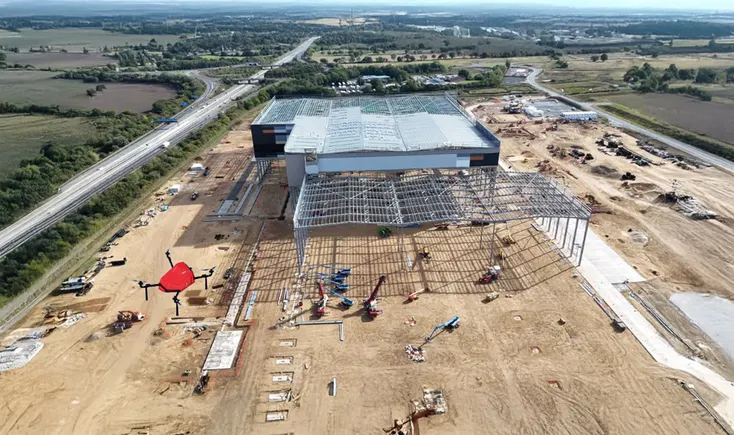
Drones have become an enticing technological advancement for the construction industry, promising enhanced efficiency and data collection. However, a new report highlights the complexities and challenges involved in drone ownership, leading many firms to reassess their strategy.
What Happened
The Associated Builders and Contractors (ABC) released a report in May 2026 indicating that only 36% of its members currently use drones on construction sites. The primary barriers to broader adoption include regulatory and compliance issues, training and staffing challenges, and a limited range of practical use cases. Recent regulatory changes have further complicated the landscape. In December 2025, the Federal Communications Commission (FCC) added certain foreign-made drones to its Covered List, barring their sale in the U.S. This affects many contractors who rely on these drones for essential tasks such as mapping and inspections. Additionally, the American Security Drone Act restricts the use of drones from covered foreign manufacturers on federally funded projects, impacting both direct users and third-party drone services.
The need for specialized equipment and expertise further complicates drone adoption. Effective aerial data collection for construction purposes requires advanced payloads like RTK or PPK positioning, LiDAR or photogrammetry, and sophisticated data processing capabilities. Establishing an in-house drone program demands certified pilots, regular maintenance, airspace authorizations, and data management expertise, all at a time when the industry faces a skilled labor shortage.
What This Means for Your Business
For construction firms, these challenges present both a risk and an opportunity. The evolving regulatory environment means that investing in a drone fleet could lead to potential obsolescence or non-compliance, particularly for those engaged in federally funded projects. Instead, companies might consider adopting a 'Drone as a Service' model, which offers on-demand, pay-per-use solutions. This approach includes access to licensed pilots, FAA-registered drones, and comprehensive data management services, allowing firms to receive processed deliverables ready for integration into their existing workflows without the burden of ownership. This model not only mitigates compliance and obsolescence risks but also aligns with the industry's increasing demand for flexibility and cost efficiency.
What US Operators Should Watch
Decision-makers should closely monitor FCC regulations and the implications of the American Security Drone Act, especially concerning the use of foreign-manufactured drones. Furthermore, staying informed about technological advancements in drone payloads and data processing software is crucial for maintaining competitive advantage. Firms should also consider the potential benefits of partnerships with service providers that offer scalable and compliant drone solutions.
Source: https://www.constructiondive.com/spons/solving-the-jobsite-blind-spot-why-buying-drones-is-not-always-the-solutio-1/830239/. Read the original story ->
Is your firm ready for what’s next?
VisioneerIT helps AECM and government contractors modernize operations, achieve compliance, and implement AI.
Explore VisioneerIT Solutions →