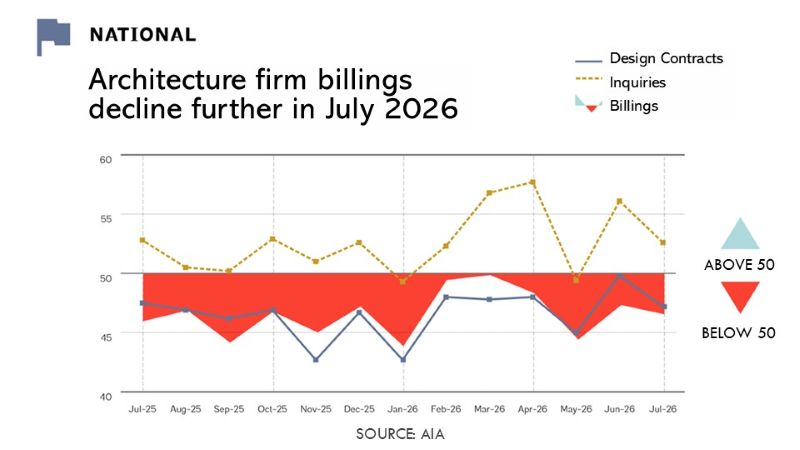
The Architecture Billings Index (ABI) revealed a troubling trend for the commercial and industrial architecture sectors, with billings failing to grow for four consecutive years as of July 2026. This persistent downturn signals potential challenges ahead for the construction industry.
What Happened
The American Institute of Architects (AIA) and Deltek's Architecture Billings Index (ABI) for July 2026 reported a score of 46.6, down slightly from June's 47.3, indicating a continued contraction in architecture firm billings. The ABI, a crucial economic indicator, predicts nonresidential construction activity 9 to 12 months in advance. A score below 50 suggests declining billings, and the current figures highlight a nearly four-year struggle for growth, particularly in firms specializing in commercial and industrial projects. Despite a rise in project inquiries, the value of new design contracts has declined, reflecting ongoing business challenges across all regions in the U.S., with the Northeast experiencing the weakest conditions.
What This Means for Your Business
For AECM professionals and government contractors, the current ABI trends suggest a cautious approach to future projects. The stagnation in billings could lead to fewer contracts and delayed construction starts, impacting revenue streams. Companies should closely monitor their pipeline and consider diversifying into multifamily residential and institutional sectors, which showed slight growth earlier this year. Compliance with standards such as CMMC and NIST remains crucial as firms seek to secure federal contracts amidst tightening budgets. Additionally, understanding federal funding opportunities could provide a lifeline for firms navigating these challenging conditions, especially as government infrastructure spending becomes a focal point for economic recovery.
What US Operators Should Watch
Decision-makers should track upcoming federal procurement windows and deadlines, particularly as the government allocates funds for infrastructure projects. Staying informed about CMMC audit dates and regulatory changes will be vital for maintaining compliance and eligibility for federal contracts. The ongoing decline in architecture services employment, which dropped by 100 positions in June and has seen a total loss of 900 jobs since January, underscores the need for strategic workforce planning in anticipation of market fluctuations.
Source: https://www.metalconstructionnews.com/news/commercial-and-industrial-architecture-billings-havent-grown-in-four-years/. Read the original story ->
Is your firm ready for what’s next?
VisioneerIT helps AECM and government contractors modernize operations, achieve compliance, and implement AI.
Explore VisioneerIT Solutions →