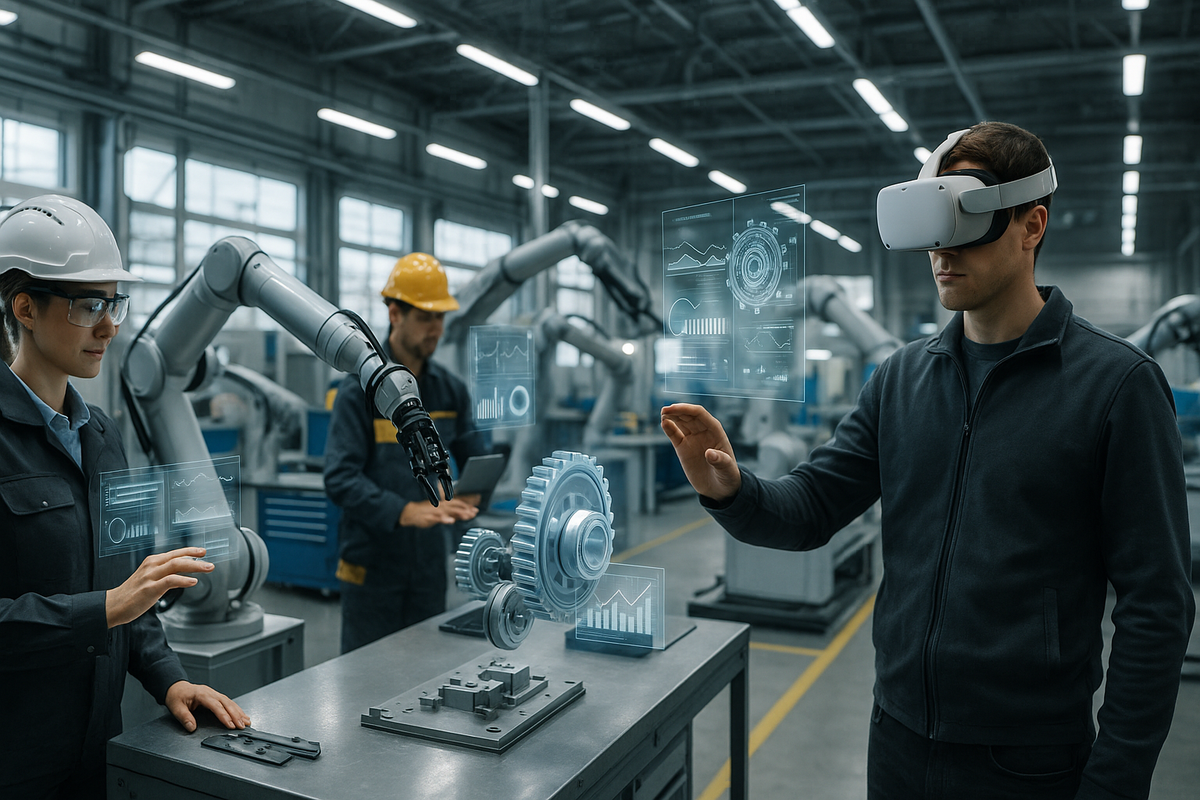
Artificial intelligence, virtual reality, and robotics are converging to revolutionize manufacturing, tackling complex challenges that individual technologies cannot address alone. For professionals in the Architecture, Engineering, Construction, and Manufacturing (AECM) industry, these innovations represent a significant shift in how products are designed, tested, and produced, promising improved efficiency and reduced costs.
What Happened
Recent advancements in AI, VR, and robotics have created a synergy that is transforming the manufacturing landscape. AI's ability to process vast amounts of data and provide insights is now being combined with VR's immersive design capabilities and robotics' precision and efficiency. This convergence allows for more sophisticated simulations and testing in virtual environments before any physical prototypes are made, leading to significant cost savings and accelerating time-to-market. Robotics, enhanced by AI, can adapt to new tasks on the fly, increasing flexibility on production lines and reducing downtime.
Why It Matters for the AECM Industry
For the AECM industry, the integration of these technologies means more than just cutting-edge manufacturing; it heralds a new era of project execution and management. AI-driven analytics can optimize supply chains, predicting demand and adjusting orders in real-time to avoid overproduction and waste. VR can assist architects and engineers in visualizing complex structures, identifying potential design flaws before construction begins, reducing rework and saving both time and resources. Robotics, with enhanced AI capabilities, can automate repetitive tasks, freeing up skilled labor for more strategic roles and addressing labor shortages that have long plagued the industry. The combined impact of these technologies can lead to more sustainable practices, as projects can be planned and executed with greater precision and less material waste.
What's Next
As these technologies continue to advance, professionals in the AECM sector should prepare for further integration into their workflows. Companies that invest in AI, VR, and robotics now will likely gain a competitive edge, as these tools become essential for staying rel
Is your firm ready for what’s next?
VisioneerIT helps AECM and government contractors modernize operations, achieve compliance, and implement AI.
Explore VisioneerIT Solutions →