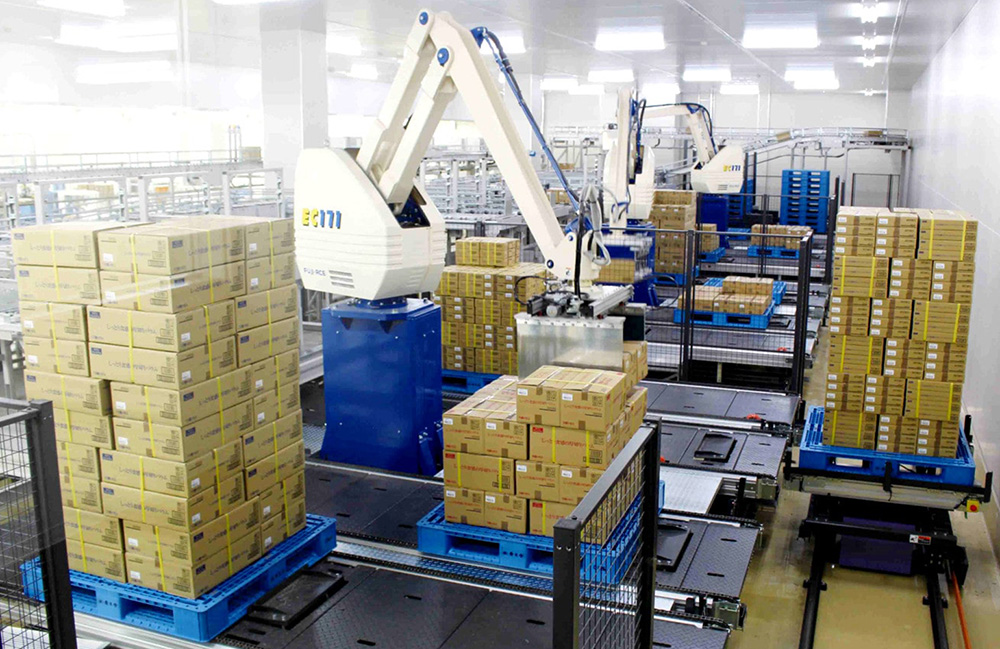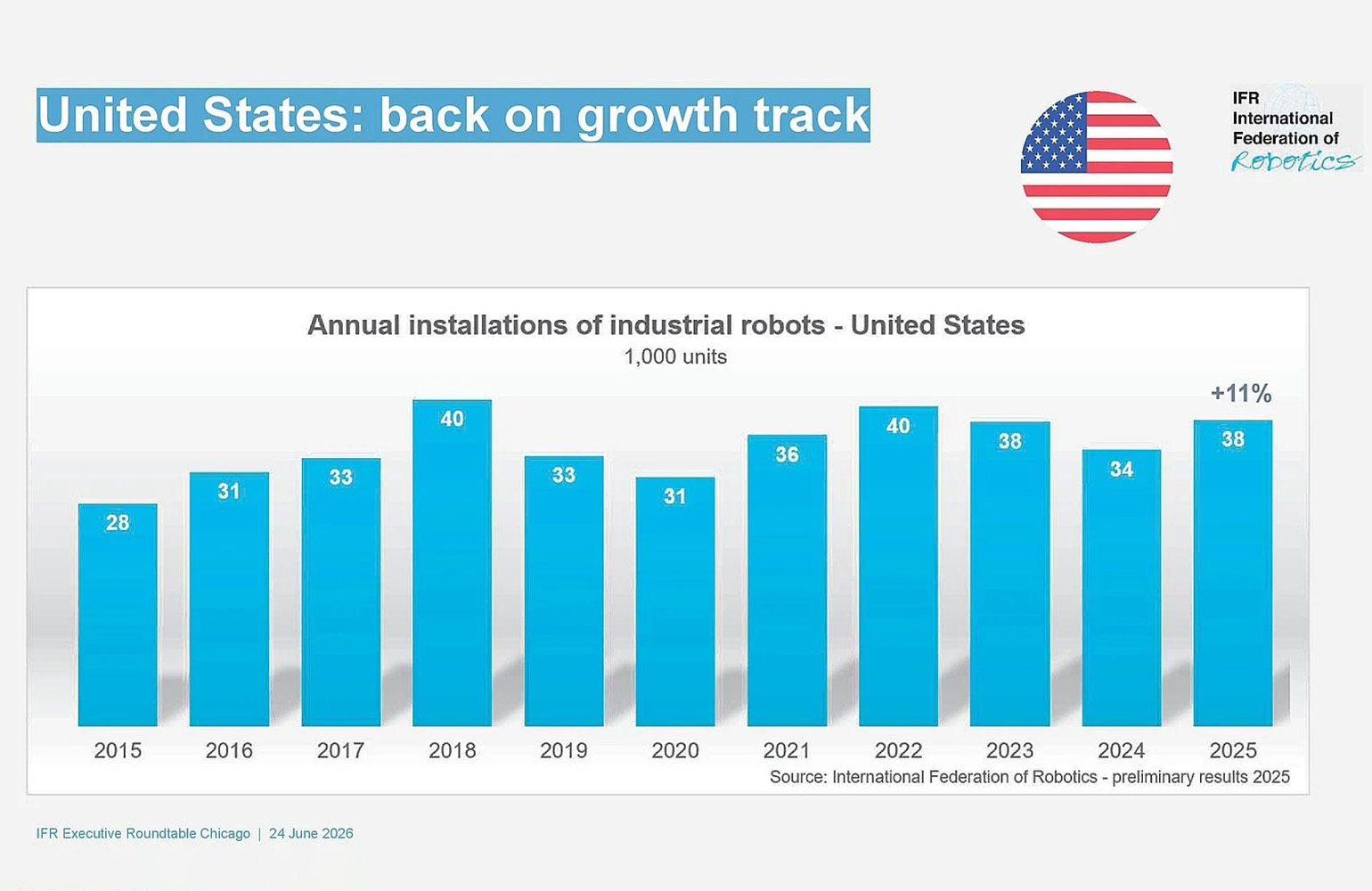
The U.S. robotics industry has experienced a significant 11% growth in industrial robot installations in 2025, according to the International Federation of Robotics (IFR). This growth marks a pivotal moment for U.S. manufacturing and non-manufacturing sectors, driven by increased demand for automation in industries like food production. The IFR’s data underscores a critical shift in the automation landscape, with potential implications for competitiveness and strategic positioning in the global market.
What Happened
The IFR reported that the United States saw 38,000 industrial robot installations in 2025, reflecting robust year-over-year growth. This expansion was notably fueled by a 30% surge in the food industry, highlighting a diversifying demand for flexible automation solutions. Despite this diversification, the automotive sector remains a major player, with 13,500 units installed, maintaining its position as the largest adopter of robotics technology.
In terms of global positioning, the U.S. now ranks eighth worldwide in robot density, with 307 industrial robots per 10,000 manufacturing employees. While still trailing behind leading countries like South Korea, Germany, and Japan, the U.S. has improved its standing by two positions from the previous year.
Meanwhile, China continues to dominate the global market with 295,000 installations in 2024, driven by its comprehensive national robotics strategy. This strategy has placed robotics at the center of China’s industrial policy, aiming to leverage AI for economic growth through physical applications.
What This Means for Your Business
For U.S. businesses, the burgeoning robotics industry presents significant opportunities and challenges. The increase in automation investments, particularly in non-traditional sectors, suggests a shift towards more diversified and flexible manufacturing processes. Companies should consider integrating advanced robotics to mitigate workforce shortages and enhance production efficiencies.
Additionally, the Association for Advancing Automation (A3) has advocated for a U.S. national robotics strategy, which could lead to new policy frameworks supporting public-private partnerships, tax incentives, and workforce retraining programs. These initiatives aim to harmonize federal research efforts and accelerate domestic robotics technology deployment, potentially offering lucrative opportunities for businesses engaged in automation and manufacturing.
What US Operators Should Watch
U.S. operators should closely monitor developments regarding the proposed national robotics strategy. If enacted, this could introduce market-driven incentives and updated safety standards that may affect procurement and compliance processes. Companies should prepare for potential federal mandates focused on purchasing domestic robotics technology, which could reshape competitive dynamics and investment priorities.
Furthermore, as the IFR projects continued growth in automation driven by reshoring initiatives and labor shortages, U.S. firms should remain vigilant about federal funding opportunities and regulatory changes that could impact their strategic planning and operational capabilities.
Source: The Robot Report. Read the original story ->
Is your firm ready for what’s next?
VisioneerIT helps AECM and government contractors modernize operations, achieve compliance, and implement AI.
Explore VisioneerIT Solutions →