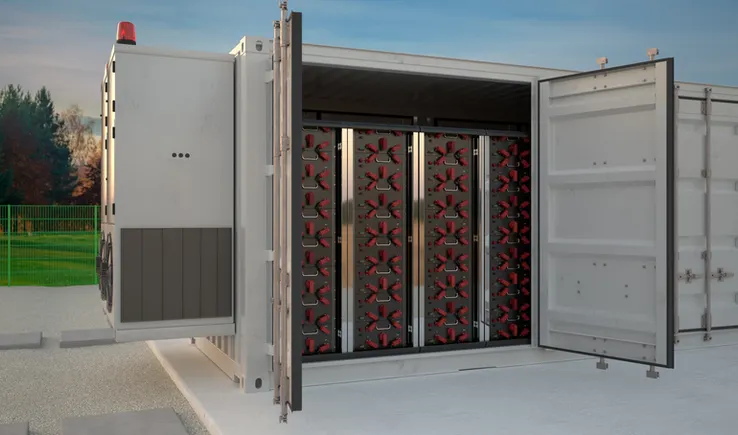
Facilities are increasingly leveraging Section 48E federal investment tax credits to implement energy-efficient projects, particularly those involving battery storage systems. This trend is reshaping how organizations manage their energy consumption and costs, with significant implications for the construction and manufacturing sectors.
What Happened
Facilities across the United States are tapping into Section 48E tax credits to finance energy projects that include battery storage systems. These systems allow organizations to store lower-cost electricity for use during peak rate periods, effectively lowering their overall energy expenses. A recent example is a rural hospital in Colorado that is opting for a combination of renewable technologies, including geothermal and solar energy, paired with battery storage, instead of traditional full-building generators. This project, valued at $65 million, stands to benefit from $4 million to $8 million in tax credits, according to Matthew Noll, COO of Alliant, a tax-credit consulting firm.
The tax credits are not only beneficial to for-profit entities but also to nonprofits and public facilities, which can receive direct payments from the Treasury if they do not require the credit for tax purposes. Moreover, private companies with surplus credits can sell them to others, with the market offering between 85 and 93 cents on the dollar.
What This Means for Your Business
The ability to offset significant portions of energy project costs through tax credits can lead to substantial savings and enhanced competitiveness. For construction and manufacturing firms, incorporating battery storage systems can drastically reduce energy footprints and operational costs, making projects more financially viable. With the improvements in battery technology, these systems are becoming more reliable and present fewer risks, such as fire hazards, than in the past.
The eligibility of solar energy, when paired with storage, further incentivizes facilities to invest in renewable energy projects. This is particularly crucial for small manufacturing plants that can store cheap nighttime electricity to power high-energy machinery during the day, reducing costs and enhancing market competitiveness.
What US Operators Should Watch
Decision-makers should note the availability and timelines for Section 48E tax credits to optimize their energy projects. Monitoring the market for trading tax credits can also provide additional financial strategies. Additionally, keeping an eye on advancements in battery storage technology will be vital in maintaining competitive advantage and ensuring compliance with evolving energy standards.
Source: https://www.facilitiesdive.com/news/facilities-using-48e-credits-to-make-energy-projects-pencil-out/831522/.
Is your firm ready for what’s next?
VisioneerIT helps AECM and government contractors modernize operations, achieve compliance, and implement AI.
Explore VisioneerIT Solutions →