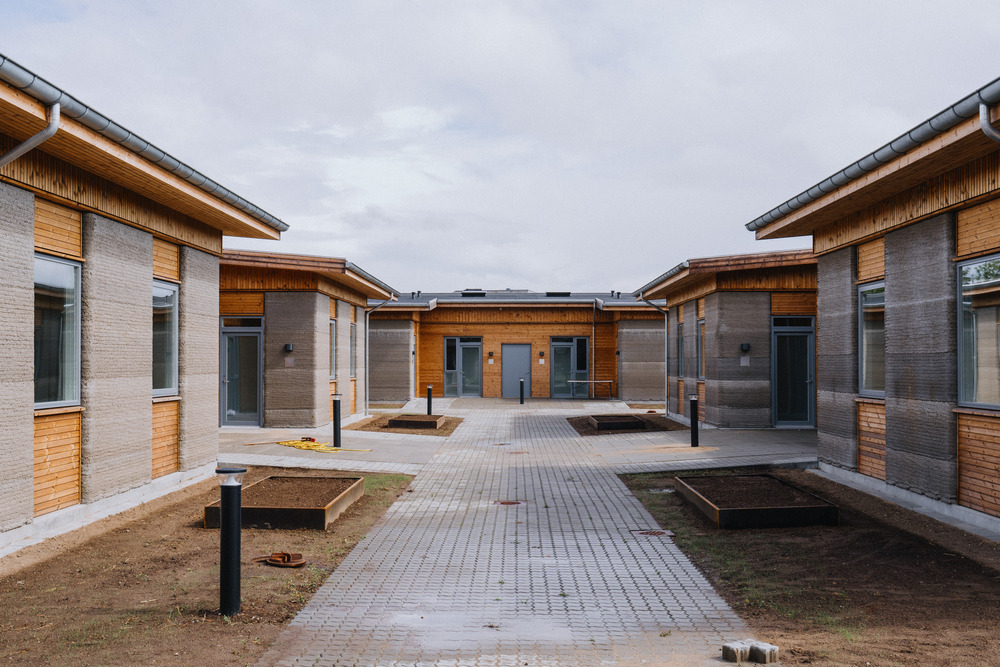
Students are moving into the Skovsporet housing project in Holstebro, Denmark, Europe's largest 3D-printed residential development. This ambitious venture, comprising six buildings with 36 apartments, showcases the potential of large-scale 3D-printed construction. Developed by NordVestBO and built by 3DCP Group, the project represents a significant leap in the application of 3D printing for permanent housing solutions.
What Happened
Skovsporet, Danish for “The Forest Trail,” is a landmark project developed for VIA University College. The housing cluster spans 1,650 sq m and includes apartments ranging from 38 to 50 sq m. The project was executed by Denmark's 3DCP Group, a pioneer in 3D-printed construction, using a Cobod printer. The construction cost was €1,880 per sq m, aligning with Norway's statutory budget for subsidized housing. Remarkably, the project utilized locally sourced concrete, incorporating cement that emits up to 30% less carbon dioxide than traditional cement, demonstrating a commitment to sustainability. The architectural design by Saga Space Architects and MS+ strategically preserved the natural landscape, removing only 10% of the trees on site.
What This Means for Your Business
For AECM professionals, Skovsporet signals a transformative shift in construction methodologies. The project's success within regulated financial frameworks indicates that 3D printing can compete with traditional construction methods, offering cost-effective and environmentally friendly alternatives. This development opens up new avenues for contracts and procurement, especially in the realm of affordable housing. The ability to rapidly print structures with minimal labor—walls for six apartments were printed in just four days with a crew of three—could significantly reduce project timelines and labor costs, enhancing ROI for developers and investors.
What US Operators Should Watch
US operators should closely monitor advancements in 3D printing technology and its integration into standard construction practices. The potential for this technology extends beyond housing to include offices and commercial buildings, offering a versatile solution for diverse construction needs. As regulatory bodies begin to adapt to these new methodologies, staying informed on compliance requirements and federal funding opportunities related to sustainable construction will be crucial. Decision-makers should also track developments in materials technology, particularly in reducing carbon emissions, to align with growing sustainability mandates.
Source: Global Construction Review. Read the original story ->
Is your firm ready for what’s next?
VisioneerIT helps AECM and government contractors modernize operations, achieve compliance, and implement AI.
Explore VisioneerIT Solutions →