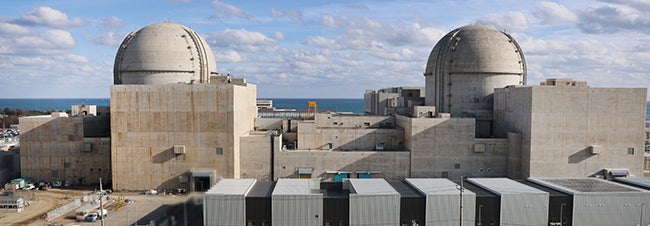
Saeul 3, South Korea’s latest nuclear reactor, has finally reached a significant milestone, commencing its first self-sustaining chain reaction on April 12, 2026. This event marks a pivotal moment in the reactor's journey, which has been fraught with delays and policy shifts. For the architecture, engineering, construction, and manufacturing (AECM) sectors, Saeul 3’s story is a testament to the challenges and triumphs of large-scale infrastructure projects.
What Happened
Saeul 3 is part of South Korea's APR1400 nuclear reactor program, a series of advancements in nuclear technology that has been in the works since December 2008. Located in Ulsan, on South Korea's southeastern coast, Saeul 3 is the fifth APR1400 reactor built for the South Korean grid and the ninth globally. This 1,400-MW pressurized water reactor (PWR) was initially known as Shin Kori Unit 5. Its development was initially outlined in the country's Fourth Basic Plan for Long-Term Electricity Supply and Demand, marking a significant phase in South Korea’s nuclear strategy.
The project faced numerous hurdles, including a pause in construction and a comprehensive national debate over nuclear energy policy, which involved 471 citizens. Despite these challenges, construction resumed, integrating newer safety designs and undergoing an exhaustive five-year operating-license review. These efforts culminated in the reactor achieving its 'first start'—a criticality milestone that indicates the reactor is ready for commercial operation.
Saeul 3 is expected to be fully operational by October 2026, contributing approximately 1.7% of South Korea's total electricity generation and 37% of Ulsan's electricity demand. Despite not yet having an operational track record, the unit has successfully completed its initial fuel loading, first criticality, and several months of power-ascension testing.
What This Means for Your Business
For AECM professionals, Saeul 3's journey underscores the importance of adaptability and resilience in project execution. The project highlights the need for robust compliance with evolving safety regulations and the integration of advanced engineering solutions. Companies involved in similar projects can learn from the challenges faced by Saeul 3, particularly in how to manage regulatory reviews and public opinion effectively.
The project's success also signals opportunities for U.S. companies in the nuclear supply chain. With the APR1400 design proving its viability, there may be increased international interest in collaborating with South Korean entities. This could open up avenues for U.S. firms specializing in nuclear safety systems, construction, and engineering services.
Furthermore, as the global energy landscape shifts towards sustainable and reliable energy sources, nuclear power remains a crucial component. For decision-makers, investing in nuclear technology and infrastructure may offer a competitive edge, with potential returns from both domestic and international markets.
What US Operators Should Watch
U.S. operators and contractors should keep an eye on upcoming international nuclear projects, particularly those involving the APR1400 design, as they could represent potential business opportunities. Additionally, monitoring regulatory developments in nuclear safety and licensing processes could provide insights into future project requirements and compliance practices.
With Saeul 3 set to become fully operational in October 2026, U.S. firms should prepare for potential collaborations or competition in the international nuclear market. Staying informed about technological advancements and regulatory changes will be crucial to maintaining a competitive position in this evolving industry.
Is your firm ready for what’s next?
VisioneerIT helps AECM and government contractors modernize operations, achieve compliance, and implement AI.
Explore VisioneerIT Solutions →