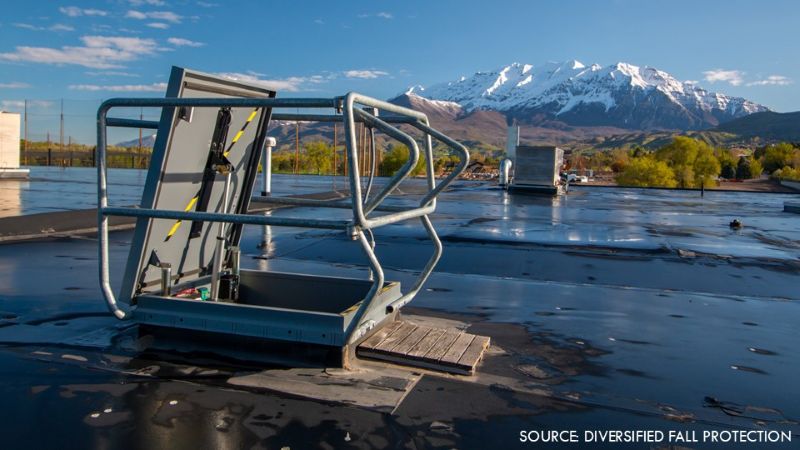
Safety-conscious owners are increasingly adopting automatic roof hatch openers that can be operated both from above and below the hatch, a move that aims to enhance worker safety on rooftops. This shift is crucial as it addresses the growing concerns about fall hazards associated with roof hatch systems, which are common in many building designs.
What Happened
Roof access methods vary significantly depending on a facility's design, but they often include internal stairways, exterior fixed ladders, or internal ladders leading to a hatch door. While these systems are convenient for developers and minimize disruption to rooftop equipment layouts, they pose significant risks to workers accessing rooftops. The Occupational Safety and Health Administration (OSHA) has specific mandates for fall protection concerning roof hatch systems. According to OSHA 1910.28, employers must provide a "hinged floor-hole cover" and guardrails to protect employees from falling through an open hatch. If the guardrail needs removal for operations, like passing materials through the hatch, employers are required to implement a travel restraint or personal fall arrest system.
Various solutions are available to mitigate these risks, including roof hatch safety railing kits and fall restraint systems. Railing kits are affordable and easy to install, offering self-closing swing gates for safe access while enclosing the hatch area. Fall restraint systems involve a fixed-length lanyard connected to an anchorage, limiting a worker's movement to prevent falls, though they can reduce mobility and productivity. Many employers opt for personal fall arrest systems, which are OSHA-compliant but pose a higher risk of injury if not used correctly.
What This Means for Your Business
For businesses in the AECM sector, these developments highlight the need for compliance with OSHA regulations, particularly OSHA 1910.28, to avoid penalties and ensure worker safety. Investing in roof hatch safety solutions can also improve productivity by minimizing accidents and injuries, which, in turn, reduces downtime and potential liability costs. Companies should consider the cost-benefit analysis of installing safety railing kits or fall restraint systems versus the risk of fines and injuries. Moreover, selecting the appropriate fall protection system, whether restraint or arrest, is crucial for maintaining compliance and protecting employees.
What US Operators Should Watch
US operators should monitor any updates to OSHA regulations regarding fall protection to stay compliant. They should also be aware of the availability of new safety technologies, such as automatic roof hatch openers, that can further enhance safety measures. Regular training and audits should be conducted to ensure that workers are using fall protection equipment correctly and that all safety protocols are up to date.
Source: https://www.metalconstructionnews.com/articles/hatching-a-plan-to-protect-rooftop-workers/. Read the original story ->
Is your firm ready for what’s next?
VisioneerIT helps AECM and government contractors modernize operations, achieve compliance, and implement AI.
Explore VisioneerIT Solutions →