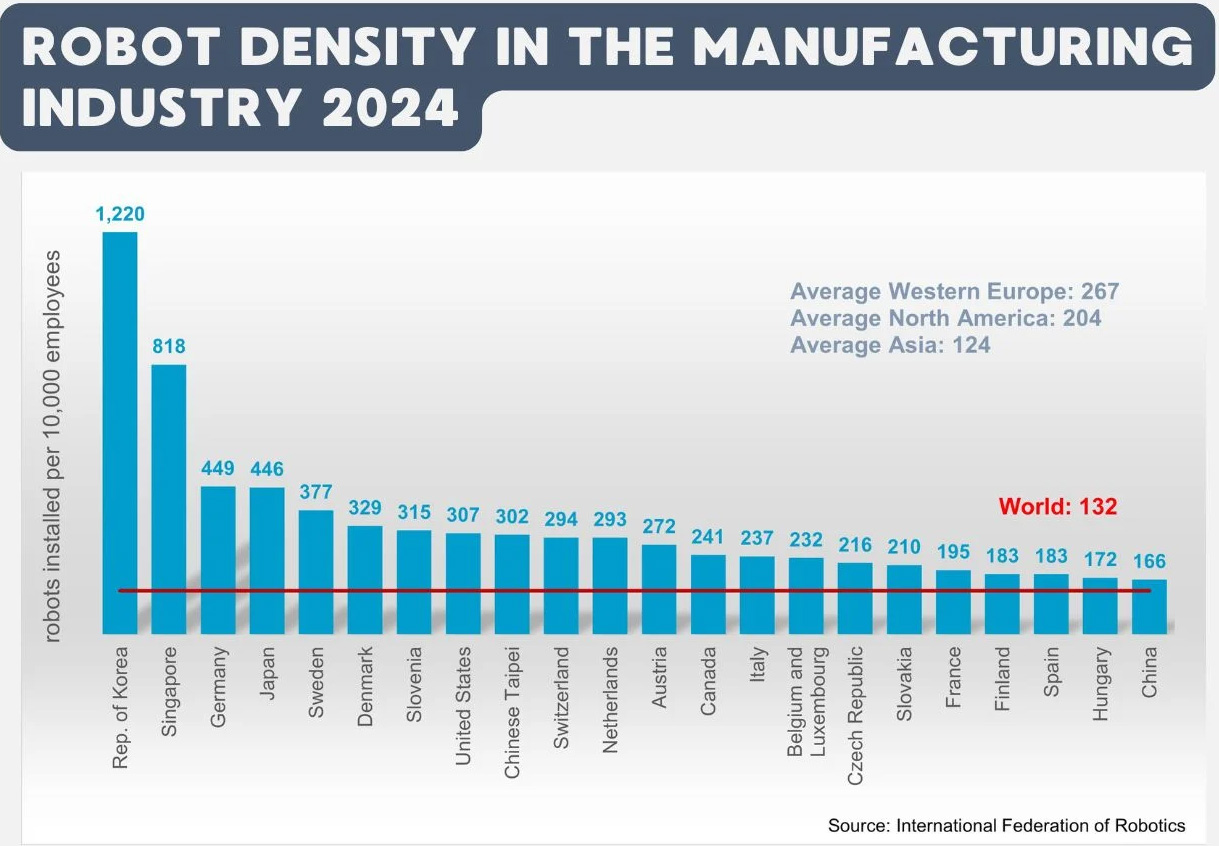
Industrial robot density rose significantly worldwide in 2024, with Western Europe leading at 267 units per 10,000 employees, according to the International Federation of Robotics (IFR). North America followed with 204 units, driven by the U.S. at 307 units, while Asia averaged 131 units, boosted by a 17% increase in China. The IFR's "World Robotics 2025" report highlights a doubling of global robot density since 2014, reflecting increased automation in manufacturing sectors, especially automotive.
What Happened
The IFR reported a 3% year-over-year increase in robot density in Western Europe, with nine countries ranking in the global top 20. North America saw a 4% rise, with the U.S. ranking eighth globally. Asia's robot density grew 11%, with South Korea, Singapore, Japan, and Chinese Taipei among the top 10 most automated. China, with 2 million operational robots, accounted for 54% of global installations in 2024.
Why It Matters for the AECM Industry
The rise in robot density signals growing automation in manufacturing, impacting material specifications, construction timelines, and integration of robotic systems in plant design. Project managers must account for increased automation when planning factory layouts and infrastructure. Engineers and architects should anticipate higher demands for precision and flexibility in manufacturing environments.
What's Next
Manufacturers are expected to continue investing in robotics to address labor shortages and boost productivity. The IFR anticipates sustained growth in robot deployments, with upcoming reports detailing sector-specific automation trends and regional developments.
Is your firm ready for what’s next?
VisioneerIT helps AECM and government contractors modernize operations, achieve compliance, and implement AI.
Explore VisioneerIT Solutions →