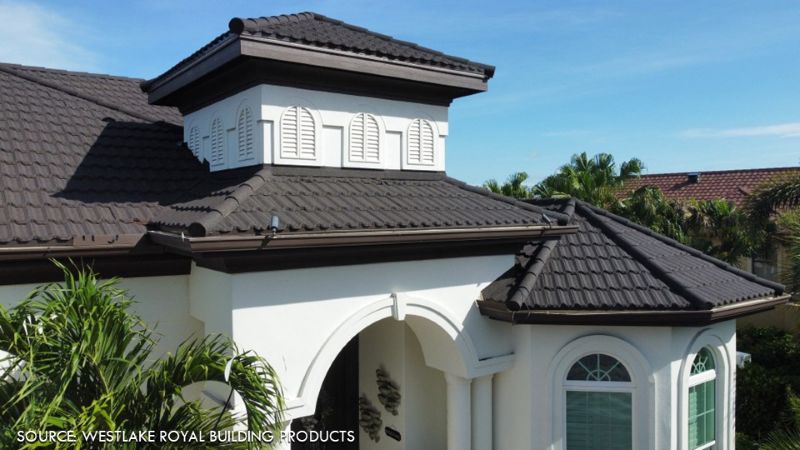
Specifying cool roof-rated colors, such as the stone-coated steel option shown here, can help keep homes cooler in hot weather, reducing reliance on air-conditioning. As energy performance expectations rise, roofing contractors are increasingly being asked to balance durability, style, and thermal performance within a single roof assembly. Roofing systems designed to better manage heat transfer can help reduce cooling demand, save on energy costs, and support long-term building performance. Metal roof systems are often specified for energy-conscious homes, thanks to their reflectivity and resiliency. However, thermal performance is influenced by more than just the roofing material itself. While reflective roofing surfaces are an important component, factors such as ventilation, airflow, and overall roof assembly design can have an equally important impact on thermal performance.
What Happened
Reflective roofing surfaces are gaining attention as a cost-effective solution to improve thermal performance in buildings. The Cool Roof Rating Council (CRRC) provides a list of products that have been rigorously tested for solar reflectance and thermal emittance, key indicators of a roof's ability to reduce heat flow into a building. The Solar Reflectance Index (SRI) combines these two metrics to assess how effectively roofing products stay cool under the sun. For example, a standard white roofing material may have a high SRI of 100, reflecting 80% of solar energy, while a standard black material reflects only 5%, with an SRI of 0. High-performing roofing materials in cool roof colors, such as stone-coated steel, can reflect up to 53% of solar energy, significantly reducing reliance on air-conditioning and lowering energy costs.
Additionally, ventilated roofing assemblies further enhance thermal regulation. These systems may include reflective stone-coated steel panels, thermally insulating underlayment, elevated battens for air circulation, and continuous ridge vents for effective airflow management. For instance, the Summergate condominium project in Orlando, Florida, utilized stone-coated steel with a cool roof-rated color in their re-roofing project, yielding notable improvements in energy efficiency and reducing heat-related stress on the roof assembly.
What This Means for Your Business
For AECM professionals, the integration of reflective and ventilated roofing systems presents an opportunity to meet rising energy performance expectations while offering clients cost savings and operational benefits. Specifying CRRC-rated materials can enhance competitive positioning by providing measurable energy efficiency improvements. These systems not only lower energy costs but also extend the lifespan of HVAC systems, offering a compelling ROI for building owners. Compliance with CRRC standards and leveraging the latest advancements in roofing technology can position contractors as leaders in sustainable construction practices.
What US Operators Should Watch
Industry professionals should monitor developments in CRRC standards and any updates to the CRRC-1 Roof Product Rating Program Manual. Additionally, staying informed on federal incentives for energy-efficient building practices can provide strategic advantages in bidding processes. As federal and state regulations increasingly emphasize sustainability, being proactive in adopting advanced roofing technologies will be crucial for maintaining compliance and gaining a competitive edge in the market.
Source: https://www.metalconstructionnews.com/articles/cooler-by-design-how-reflective-surfaces-and-ventilated-assemblies-can-improve-roof-thermal-performance/. Read the original story ->
Is your firm ready for what’s next?
VisioneerIT helps AECM and government contractors modernize operations, achieve compliance, and implement AI.
Explore VisioneerIT Solutions →