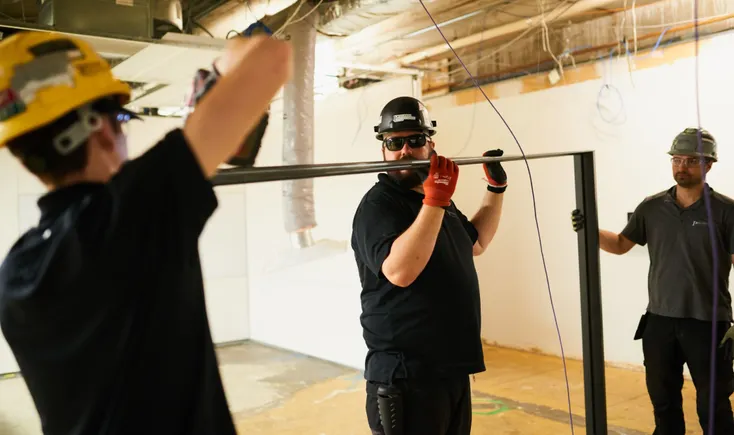
Interior construction, often the most time-consuming phase of building projects, can now be expedited through the use of prefabricated components. This shift is particularly significant for contractors facing tight deadlines and labor shortages.
What Happened
In traditional interior construction, tasks must often be completed sequentially, which can extend timelines significantly. However, prefabricated construction allows for multiple components to be built concurrently in a controlled manufacturing environment. This method reduces the need for extensive coordination among various trades since a single project team manages the work. Such a streamlined process not only minimizes the ripple effect of any changes but also helps in recovering time lost due to unexpected project modifications.
A recent study showed that 27.7% of change orders in construction involve adding or deleting items from the original design. These changes, along with personnel shifts and site conditions, often lead to delays. Prefabrication offers a solution by allowing construction elements to be manufactured off-site, thereby compressing schedules by 10-30%. For example, companies like DIRTT utilize digital design and manufacturing processes to produce custom components within 21 days, significantly cutting down on lead times.
What This Means for Your Business
For AECM professionals and government contractors, the adoption of prefabricated construction methods can lead to significant cost savings and increased efficiency. By reducing the dependency on labor-intensive on-site work, businesses can mitigate the impacts of labor shortages and material availability issues, which currently delay 45% of projects. Furthermore, the reduced need for coordination among different trades can lead to lower administrative costs and a more streamlined procurement process.
Embracing prefabricated construction aligns well with compliance requirements like CMMC and NIST, as the controlled manufacturing environment supports stringent quality and security standards. For companies involved in government contracting, this method can enhance competitive positioning by ensuring timely project delivery, which is often a critical factor in winning bids.
What US Operators Should Watch
As prefabrication becomes more prevalent, AECM professionals should keep an eye on advancements in digital design and manufacturing technologies that support this trend. Monitoring federal funding opportunities and incentives for adopting innovative construction methods could also present lucrative prospects. Additionally, staying updated on any changes in compliance requirements related to prefabrication will be essential to maintain competitive advantage and ensure adherence to industry standards.
Source: [Construction Dive]. Read the original story ->
Is your firm ready for what’s next?
VisioneerIT helps AECM and government contractors modernize operations, achieve compliance, and implement AI.
Explore VisioneerIT Solutions →