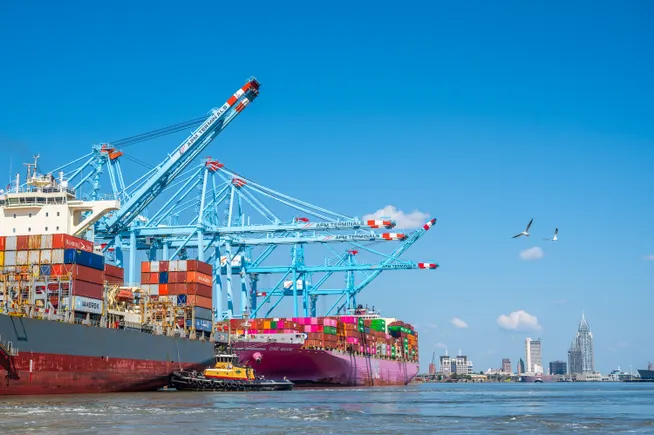
The Port of Mobile, a critical logistics hub in Alabama, has suspended operations in anticipation of Hurricane Isaias, a Category 3 storm threatening the southeastern United States. The Alabama Port Authority announced the closure on October 9, 2026, citing safety concerns as the storm is expected to bring heavy rainfall and gale-force winds to the region.
What Happened
The Port of Mobile has ceased vessel and terminal operations at public berths, following the establishment of Port Condition ZULU by the U.S. Coast Guard. This condition indicates that sustained gale-force winds are expected within 12 hours. The National Hurricane Center has forecasted that Hurricane Isaias will bring maximum sustained winds of up to 120 mph, with potential fluctuations near major hurricane strength upon landfall.
With heavy rainfall projected—between 4 to 8 inches across southern Alabama, the Florida Panhandle, and southwestern Georgia—the port has taken precautionary measures to secure its facilities, personnel, cargo, and equipment. The port, which boasts a container terminal managed by APM Terminals capable of handling 600,000 TEUs annually, will remain closed until further assessments are made post-storm.
What This Means for Your Business
For businesses reliant on the Port of Mobile, this shutdown underscores the importance of emergency preparedness and supply chain resilience. The port's closure not only affects maritime logistics but also automotive and bulk cargo operations, given its role in handling significant volumes of vehicle imports and exports. Companies should anticipate potential disruptions and delays, particularly in the automotive sector, which relies heavily on the port's AutoMobile International Terminal.
Businesses should evaluate alternative logistics strategies, including rerouting shipments to other ports or increasing inventory levels to buffer against supply chain interruptions. Additionally, this event highlights the need for robust compliance with CMMC and NIST guidelines to ensure that operational disruptions do not compromise data integrity or lead to security vulnerabilities.
What US Operators Should Watch
Operators should monitor updates from the Alabama Port Authority and the U.S. Coast Guard regarding the reopening of the port. The Coast Guard's assessments post-storm will dictate when vessel traffic can resume. Furthermore, the storm's impact could influence federal disaster relief efforts, presenting potential funding opportunities for infrastructure repairs and enhancements.
Staying informed about the storm's trajectory and potential regulatory changes in the aftermath will be crucial for maintaining competitive positioning and minimizing operational costs. Companies should also be aware of any shifts in federal transportation policies that may arise as a response to this and future weather-related disruptions.
Source: Supply Chain Dive
Is your firm ready for what’s next?
VisioneerIT helps AECM and government contractors modernize operations, achieve compliance, and implement AI.
Explore VisioneerIT Solutions →