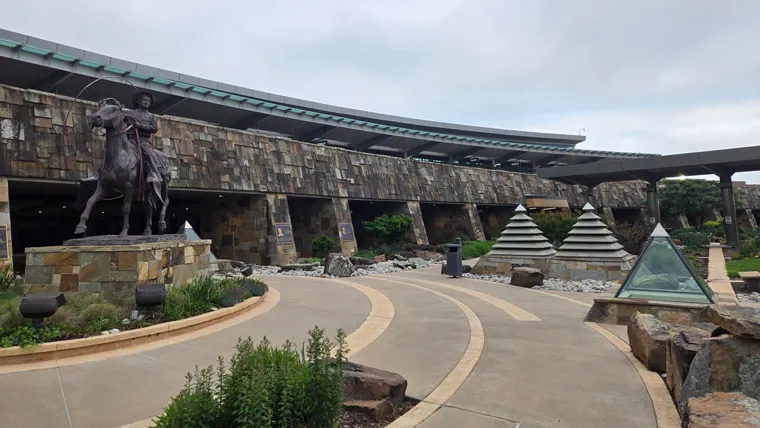
Oklahoma City has unveiled a bold 25-year plan to expand Will Rogers International Airport into a major hub capable of handling up to 20 million passengers annually. This transformative initiative, dubbed “Cleared for Takeoff,” is poised to significantly enhance the region's infrastructure and economic potential.
What Happened
Will Rogers International Airport in Oklahoma City announced a sweeping multibillion-dollar expansion plan on October 13, 2026. The project is structured into three phases, aimed at accommodating up to 20 million passengers annually, a substantial increase from the current 4.6 million. According to Jeff Mulder, Oklahoma City’s director of airports, the expansion will address current deficiencies in terminal capacity and parking while preparing for future growth. Immediate upgrades are already in progress, including terminal flooring replacements and rehabilitation of the terminal drive.
The first phase of the expansion will increase passenger capacity to 6 million annually. This phase entails the addition and demolition of parking garages and significant terminal renovations. Subsequent phases will expand the terminal concourse from 17 to 40 gates and introduce a light rail connection to downtown Oklahoma City. The Oklahoma City Airport Trust has engaged Mead & Hunt, an architecture, engineering, and construction services firm, to assist with terminal programming and cost estimating for this ambitious project.
What This Means for Your Business
For businesses in the architecture, engineering, construction, and manufacturing sectors, this project represents a significant opportunity. With its multibillion-dollar scope, the expansion will likely involve numerous contracts for construction, design, and engineering services. Companies that can offer innovative solutions to improve airport efficiency, passenger experience, and sustainability will be well-positioned to benefit.
Compliance with federal standards, including the Cybersecurity Maturity Model Certification (CMMC) and National Institute of Standards and Technology (NIST) guidelines, will be crucial for contractors. Firms should also be prepared to integrate advanced technologies, such as zero trust architectures, into their proposals to meet evolving security requirements.
Additionally, the expansion offers potential for public-private partnerships, particularly in the development of the proposed light rail connection. Companies with experience in large-scale transportation projects should monitor developments closely for potential collaboration opportunities.
What US Operators Should Watch
Key timelines for this project include the phased rollouts of construction and terminal enhancements. Businesses should stay informed about federal funding opportunities that could support infrastructure projects, as recently demonstrated by the FAA’s $1.1 billion allocation for airport upgrades.
Operators must also track regulatory timelines related to CMMC compliance, as adherence will be essential for securing contracts. With the expansion positioned to elevate Oklahoma City’s status as a transport hub, the project offers a strategic entry point for firms looking to establish a foothold in the region’s growing market.
Source: Construction Dive
Is your firm ready for what’s next?
VisioneerIT helps AECM and government contractors modernize operations, achieve compliance, and implement AI.
Explore VisioneerIT Solutions →