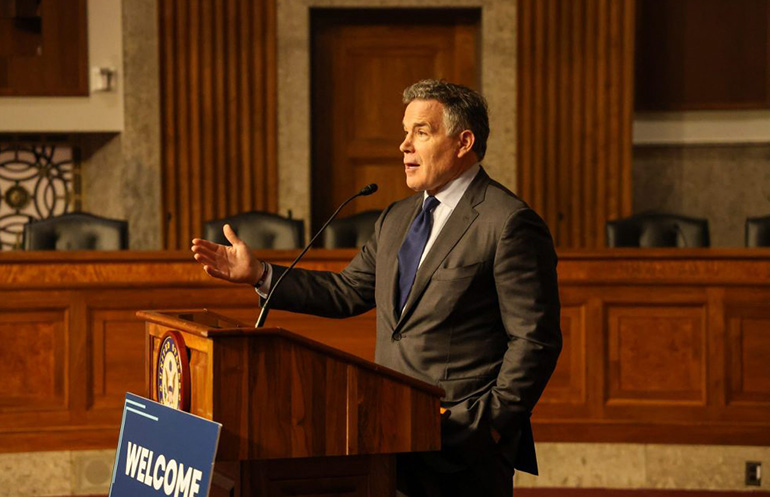
The U.S. Congress has taken a significant step towards establishing a National Commission on Robotics, a move poised to bolster the nation's competitive edge in a rapidly evolving global market. The bipartisan bill, co-sponsored by Senators Dave McCormick (R-Pa.), John Hickenlooper (D-Colo.), Todd Young (R-Ind.), and Martin Heinrich (D-N.M.), aims to create an independent body dedicated to evaluating U.S. competitiveness in robotics and recommending strategies to maintain technological leadership.
What Happened
The proposed National Commission on Robotics Act, introduced in the Senate and with a companion bill in the House (H.R. 7334), seeks to address critical areas affecting the U.S. robotics landscape. The commission's mandate would include assessing the nation's competitive stance in robotics, evaluating domestic market strength, and identifying strategic partnerships that could enhance economic competitiveness and manufacturing capabilities. Additionally, the commission would explore workforce development opportunities, supply chain risks, and policies to increase domestic manufacturing of robotics.
According to the International Federation of Robotics (IFR) and the Association for Advancing Automation (A3), both orders for industrial automation and robot density have risen in North America since 2024. Despite this growth, the U.S. faces increasing competitive pressure from China, which reportedly deploys more robots than the rest of the world combined. Aaron Prather, director of the Robotics & Autonomous Systems Program at ASTM International, emphasized the need for a national strategy that aligns research, workforce, standards, and deployment efforts. Robert Little, chief of robotics strategy at Novanta Inc., highlighted the importance of coordination between industry, government, academia, and the public sector to ensure the U.S. does not rely on foreign technology to remain competitive.
What This Means for Your Business
For AECM industry professionals, the establishment of a National Commission on Robotics could signal a shift in federal priorities that may impact procurement strategies, compliance requirements, and competitive positioning. The commission's recommendations cou
Is your firm ready for what’s next?
VisioneerIT helps AECM and government contractors modernize operations, achieve compliance, and implement AI.
Explore VisioneerIT Solutions →