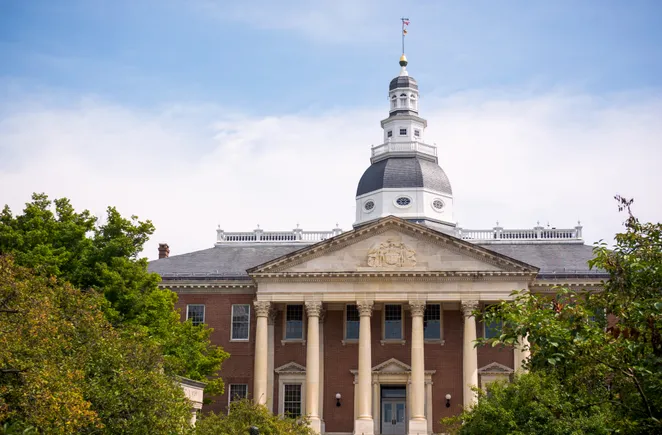
Maryland's $103 million grant initiative aims to boost energy efficiency and electrification in commercial and governmental buildings, aligning with new building performance standards.
What Happened
The Maryland Energy Administration has launched a $103 million grant program to support building decarbonization through energy efficiency upgrades, electrification, and the development of renewable energy projects. Announced last week, the initiative targets commercial buildings, nonprofits, and government facilities, offering financial assistance for installing electric appliances, upgrading building systems, and implementing renewable energy technologies. Eligible projects include the installation of heat pumps, water heaters, building controls, insulation, and the integration of microgrids.
This funding effort is part of Maryland’s compliance with its Climate Solutions Now Act, SB 528, which mandates that commercial and state-owned properties 35,000 square feet or larger achieve a 20% reduction in net direct greenhouse gas emissions by 2030, with a goal of net-zero emissions by 2040. Failure to meet these standards could result in compliance fees of $230 per metric ton of excess CO2 emissions.
The grant initiative is segmented into five funding tracks: $48 million for private commercial buildings, $18 million for local government buildings, $33 million for local education agencies, $400,000 for mechanical insulation, and $4.5 million for community resilience projects. The deadline for grant applications is December 9.
What This Means for Your Business
For AECM professionals, this grant program represents a significant opportunity to secure funding for energy efficiency and electrification projects. With substantial allocations for private commercial buildings, government facilities, and educational institutions, businesses involved in construction, engineering, and project management can leverage these funds to enhance competitive positioning and drive innovation in sustainable building practices.
Compliance with Maryland’s building performance standards could also mean avoiding costly penalties, thereby improving ROI for operators. Engaging in projects that qualify for these grants could not only offset initial costs but also provide long-term savings through reduced energy consumption and lower emissions.
What US Operators Should Watch
Operators must track the December 9 application deadline for Maryland’s grant program to capitalize on this financial opportunity. Additionally, staying informed about compliance timelines for the Climate Solutions Now Act will be crucial to avoid penalties. The act requires annual energy use benchmarking and a 20% reduction in emissions by 2030, advancing to net-zero by 2040. Monitoring these regulatory milestones will be essential for strategic planning and maintaining compliance.
Is your firm ready for what’s next?
VisioneerIT helps AECM and government contractors modernize operations, achieve compliance, and implement AI.
Explore VisioneerIT Solutions →