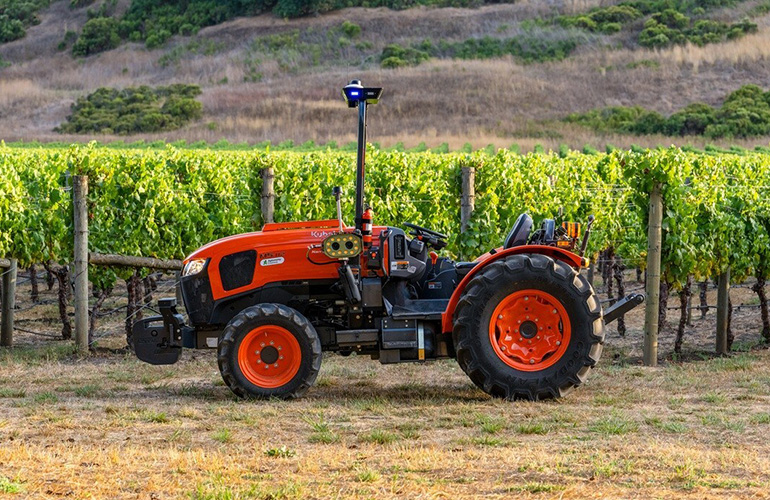
Kubota’s launch of the M5 Narrow diesel specialty tractor at CES 2026 marks a significant milestone in the integration of AI into heavy machinery, addressing critical labor shortages in agriculture and construction.
What Happened
Kubota has unveiled its integrated, autonomous M5 Narrow diesel specialty tractor, designed specifically for the demanding environments of vineyards and orchards. This move is part of a broader trend in the industry to integrate physical AI into heavy machinery, enabling these machines to operate autonomously in complex and challenging environments. These tractors are equipped with perception systems, edge computing, and autonomy software, allowing them to navigate and operate in real-time without relying solely on GNSS, which can be unreliable in certain conditions. The technology allows for precise operations around high-value crops, threading through trellises and under canopies, and navigating mixed traffic with humans and other machines.
What This Means for Your Business
For businesses in the AECM sector, this development highlights the increasing importance of integrating AI-driven solutions into operations to address labor shortages. The average age of U.S. farmers is nearly 60, with a significant portion over 65, and the construction industry faces similar challenges, needing to attract hundreds of thousands of new skilled workers by 2026. Automation, through physical AI, becomes a critical solution in maintaining productivity and efficiency. This shift not only ensures continuity in operations but also enhances ROI by reducing dependency on skilled labor, which is becoming increasingly scarce. Companies investing in such technologies can position themselves competitively, ensuring they remain viable and efficient in the face of structural labor shortages.
What US Operators Should Watch
AECM professionals should monitor the deployment and adoption of AI-integrated machinery closely. The timeline for full integration and the availability of these technologies will be crucial for planning and investment decisions. Additionally, staying informed about advancements in autonomy software and perception systems will be important for understanding the potential capabilities and limitations of these machines. Businesses should also track regulatory developments and compliance requirements associated with deploying autonomous machinery to ensure smooth implementation and operation.
Source: The Robot Report. Read the original story ->
Is your firm ready for what’s next?
VisioneerIT helps AECM and government contractors modernize operations, achieve compliance, and implement AI.
Explore VisioneerIT Solutions →