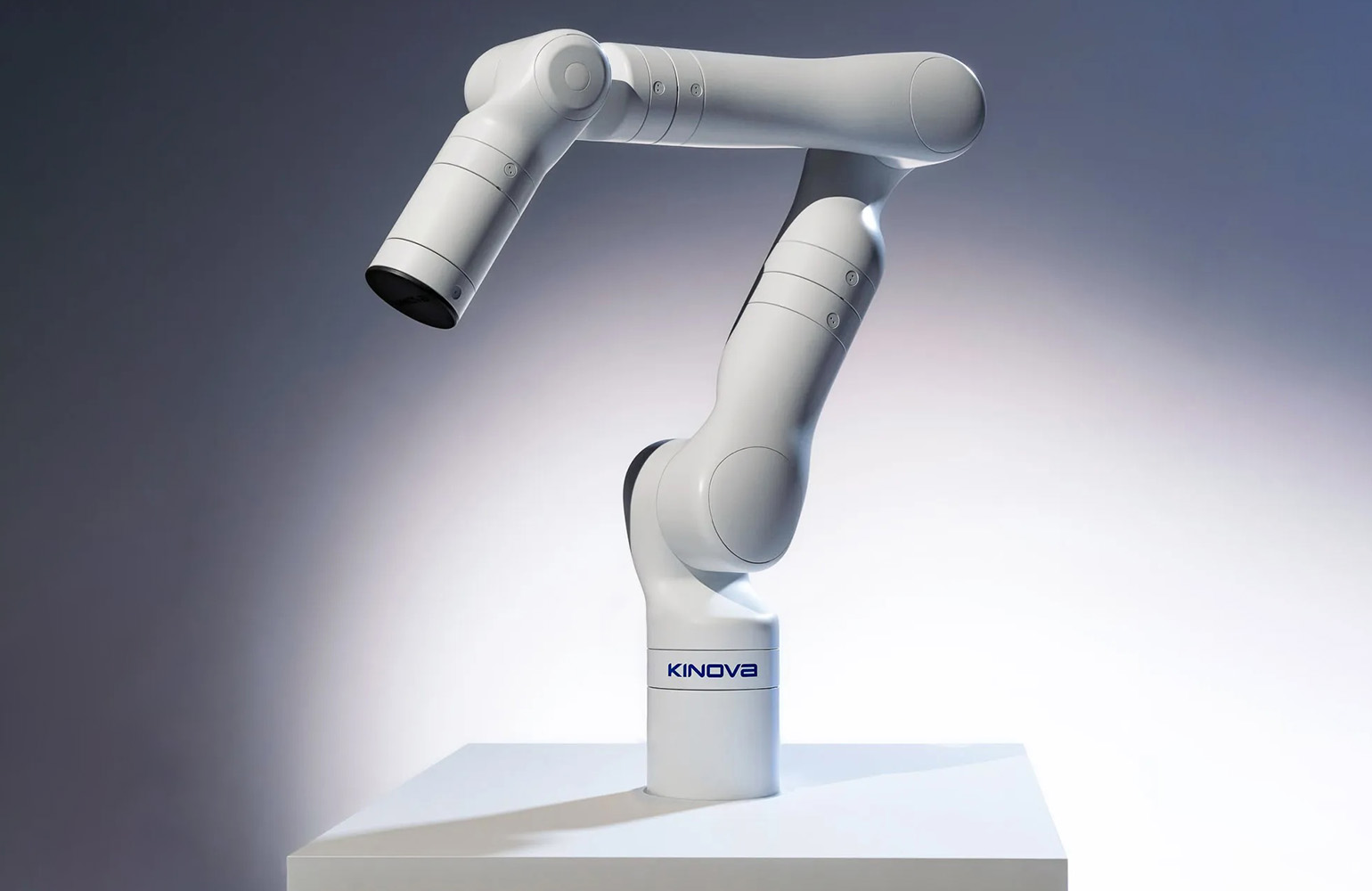
Designed for precision-driven surgical robotics, KIMA combines calibrated accuracy, repeatable motion control, and compact clinical integration. | Source: Kinova
Opening
Kinova Inc., a pioneer in assistive and collaborative robotics, has launched KIMA, a cutting-edge medical robotic arm engineered for clinical environments. This launch, coinciding with the company's 20th anniversary, signifies a pivotal move in the medical robotics landscape, promising enhanced efficiency and precision in surgical procedures.
What Happened
Kinova, a company established in 2006 and headquartered in Boisbriand, Quebec, has made a significant stride with the introduction of KIMA. This robotic arm is specifically designed for a wide array of medical applications, including endoscopy, bronchoscopy, and complex surgical interventions. François Boucher, Kinova's Vice President of Strategic Growth, emphasized that KIMA is a benchmark in the evolution of medical robotics, crafted to meet the stringent demands of clinical environments.
KIMA's design is tailored for modern operating rooms, which are often crowded with multiple robots and advanced medical devices. The robot's compact form factor optimizes space while maintaining high performance standards. KIMA is built from the ground up for clinical use, integrating IEC 62304 Class C software and ISO 14971 safety standards. Weighing under 13 kg and with a 3 kg payload, it is engineered to eliminate bulky control boxes, featuring redundant torque sensors for enhanced monitoring and safety.
Kinova's open architecture design utilizes EtherCAT communication protocols, offering seamless integration into existing medical platforms. This modular platform is supported by a network of partners such as QNX, RTI, MedAcuity, MPE, and Acontis, which helps reduce integration complexity and accelerates the development of advanced clinical solutions.
What This Means for Your Business
For AECM and government contracting professionals, the introduction of KIMA signifies a new frontier in medical robotics that could reshape procurement strategies and project planning. The arm's advanced integration capabilities and adherence to stringent safety standards make it a compelling option for hospitals and medical facilities looking to upgrade their surgical robotics. KIMA's efficient design could result in reduced operational costs and improved ROI for healthcare operators, presenting opportunities for contractors involved in healthcare infrastructure and technology deployment.
Moreover, KIMA's modular and open architecture allows for customization, enabling businesses to tailor the robotic arm to specific clinical needs. This flexibility is crucial for maintaining competitive positioning in a rapidly evolving market. The integration with partners also suggests potential collaborations and partnerships for businesses aiming to expand their footprint in medical robotics.
What US Operators Should Watch
AECM professionals should closely monitor the adoption rate of KIMA across healthcare facilities, as this could signal broader shifts in medical technology procurement. Understanding how KIMA's integration impacts existing clinical workflows will be essential for contractors involved in healthcare facility design and management.
Additionally, staying informed about regulatory updates related to medical robotics, such as changes in safety standards or certification processes, will be critical. As KIMA aligns with IEC and ISO standards, any shifts in these regulations could affect compliance requirements and project timelines for businesses.
Source: The Robot Report
Is your firm ready for what’s next?
VisioneerIT helps AECM and government contractors modernize operations, achieve compliance, and implement AI.
Explore VisioneerIT Solutions →