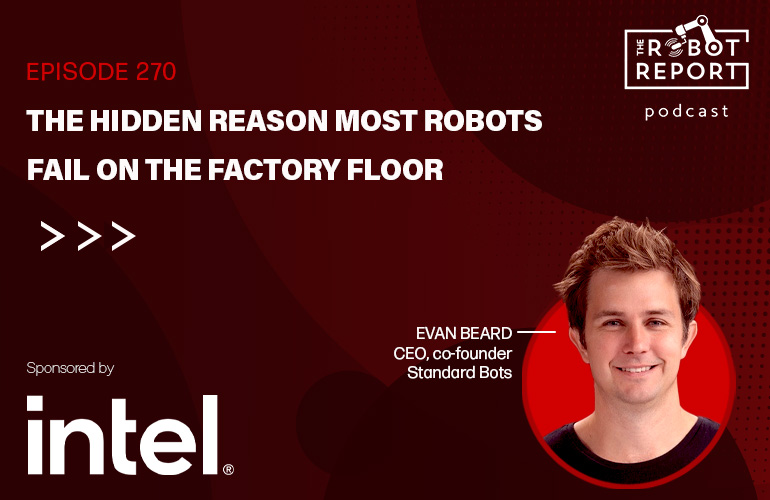
In the rapidly evolving landscape of industrial robotics, a critical issue is emerging that could hinder progress: the high failure rate of robots on the factory floor. Evan Beard, CEO and co-founder of Standard Bots, highlights this challenge in a recent discussion, emphasizing the need for a cohesive U.S. robotics strategy to overcome these hurdles.
What Happened
Standard Bots, a prominent player in the U.S. industrial robotics sector, is pioneering efforts to address the failure of robots in practical applications. Founded on the principle that the nation leading in robotics will spearhead future manufacturing, Standard Bots develops its robotics stack entirely in-house. This includes hardware, software, and AI components, all assembled at their Glen Cove, New York facility. The company aims to establish a fully domestic manufacturing operation, reinforcing the importance of a national strategy in robotics.
Evan Beard, an advocate for a coordinated U.S. robotics strategy, has testified before Congress twice, underscoring the necessity of a unified approach to advance the industry. The discussion also touches on innovations such as AI-native robots and the integration of AI inference, sensing, and real-time control, which are crucial for overcoming the current limitations of industrial robots.
What This Means for Your Business
For businesses in the architecture, engineering, construction, and manufacturing sectors, the implications are significant. The push towards a domestic, fully integrated robotics industry could lead to new federal funding opportunities and contracts for companies involved in robotics and AI development. Embracing AI-native robotics solutions can enhance operational efficiency and competitive positioning while ensuring compliance with evolving cybersecurity standards like CMMC and NIST.
Moreover, the integration of advanced Physical AI and real-time control systems can reduce operational costs and increase ROI by minimizing the downtime associated with robot failures. Businesses should consider investing in partnerships with companies like Standard Bots to leverage these innovations, which are poised to transform industrial operations.
What US Operators Should Watch
U.S. operators should keep a close eye on federal policy developments and funding initiatives that support the domestic robotics industry. Deadlines for compliance with cybersecurity standards such as CMMC and NIST are critical, as non-compliance could result in missed opportunities in government contracting. Additionally, monitoring advancements in AI-native robotics and integrating these technologies into operations will be crucial for maintaining a competitive edge in the global market.
Is your firm ready for what’s next?
VisioneerIT helps AECM and government contractors modernize operations, achieve compliance, and implement AI.
Explore VisioneerIT Solutions →