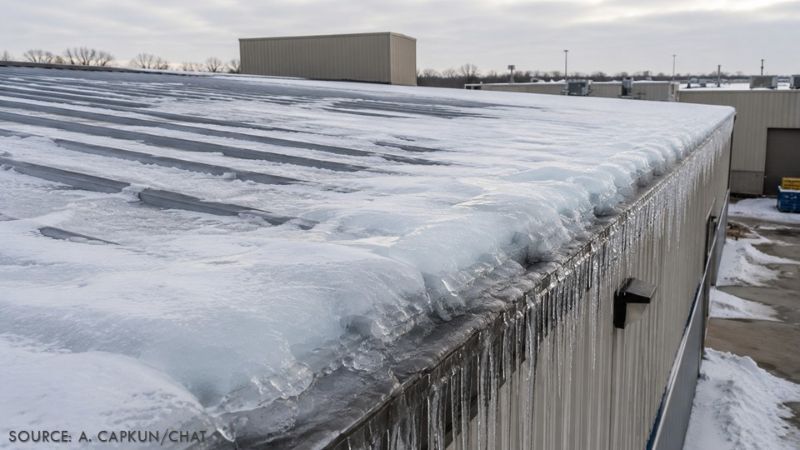
Ice buildup at the eave of a metal roof is more than just a seasonal inconvenience; it signals significant heat loss through the building envelope. For facility managers in the Midwest Industrial Corridor, this thermal inefficiency presents a substantial threat to operations and profitability.
What Happened
Ice damming, often misdiagnosed as a simple leak, is a thermodynamic failure affecting many industrial buildings, particularly those with metal roofs. Recent audits across 1.2 million square feet of industrial roofing revealed that post-storm moisture intrusion frequently stems from internal heat loss, not direct weather effects. The phenomenon begins when heat escapes through the roof deck of older industrial buildings. Snow acts as an insulator, causing the heat to melt the snow's bottom layer, leading to meltwater that refreezes at the colder roof edges, forming ice dams. This process is exacerbated in metal constructions due to their high thermal conductivity, which accelerates the melt cycle and overwhelms drainage systems.
What This Means for Your Business
The implications of ice damming are profound for industrial tenants and owners. Beyond the immediate cost of roof repairs, ice dams can severely impact net operating income (NOI). Operational disruptions occur when water leaks halt production lines, costing facilities thousands per hour. Safety risks increase as ice sheets and icicles pose slip-and-fall hazards, especially around loading docks. Insurance claims may be denied if damage is attributed to unaddressed thermal inefficiencies rather than storm events. Addressing these issues requires proactive measures, such as enhancing insulation and maintaining thermal barriers, to mitigate potential losses.
What US Operators Should Watch
Facility managers should prioritize thermal assessments and upgrades to their roofing systems, particularly before the onset of winter. Regular inspections and maintenance can prevent heat loss and the resultant ice damming. Additionally, staying informed about insurance policy details regarding maintenance and thermal efficiency is crucial to ensure coverage in the event of damage. Monitoring advancements in roofing materials and insulation technology can provide competitive advantages by reducing operational risks and enhancing building performance.
Source: https://www.metalconstructionnews.com/articles/ice-damming-is-not-just-a-leak-its-an-outright-thermal-failure/. Read the original story ->
Partner Insight · VisioneerIT
As industrial facilities increasingly rely on advanced materials and technologies, ensuring cybersecurity is paramount to protect sensitive operational data. VisioneerIT's services can help safeguard your infrastructure against cyber threats while you focus on enhancing building performance.
Explore VisioneerIT Cybersecurity →
Is your firm ready for what’s next?
VisioneerIT helps AECM and government contractors modernize operations, achieve compliance, and implement AI.
Explore VisioneerIT Solutions →