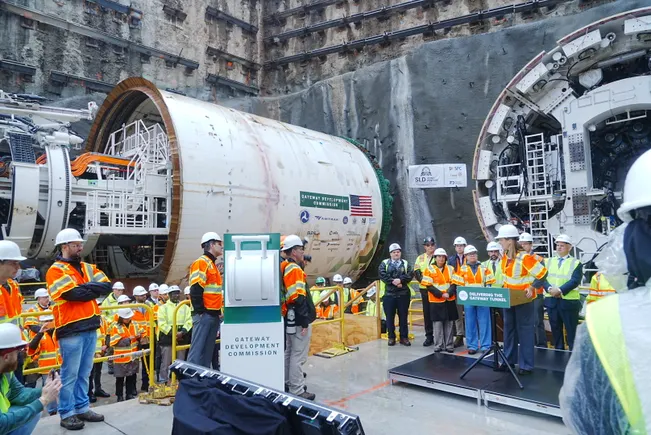
The $16 billion Hudson Tunnel Project has officially commenced its tunneling phase, marking a significant milestone in one of the most ambitious infrastructure endeavors in the United States. This development is crucial for AECM professionals as it underscores the complexities of large-scale construction projects and the opportunities they present.
What Happened
The Hudson Tunnel Project, a key component of the Gateway Program, has begun its tunnel boring operations beneath the Palisades Cliffs in New Jersey. The initiative, overseen by the Gateway Development Commission (GDC), aims to enhance rail connectivity between New Jersey and New York City. On September 28, 2026, New Jersey Governor Mikie Sherrill and U.S. Senate Minority Leader Chuck Schumer attended a ceremonial event marking the start of this critical phase. The project employs state-of-the-art tunnel boring machines, each weighing over 1,680 tons and equipped with cutterheads measuring 28 feet, 8 inches in diameter. These machines will bore parallel tubes from North Bergen to the Hudson County Access Shaft, a distance of 5,100 feet.
The project faced significant hurdles, including a federal funding dispute that temporarily halted work. However, a recent judicial decision prevented the Department of Transportation from withholding funds, allowing construction to resume. In April 2026, a $1.29 billion contract was awarded to a joint venture of Traylor Bros., Walsh Construction, and Skanska, signaling the transition of all construction packages into active phases.
What This Means for Your Business
For businesses operating in the AECM sector, the Hudson Tunnel Project presents both challenges and opportunities. The involvement of major contractors like Schiavone Construction, Lane Construction, and Dragados highlights the competitive landscape and the caliber of expertise required. Companies positioned to offer specialized services or innovative solutions in tunneling technology stand to benefit significantly. Furthermore, the project's reliance on federal funding underscores the importance of navigating government procurement processes and compliance requirements effectively.
With the resurgence of infrastructure spending, firms should explore potential partnerships and subcontracting opportunities within large-scale projects like this. The project's scale and complexity demand adherence to stringent compliance standards, including NIST and Zero Trust frameworks, which could impact bidding processes and contract management.
What US Operators Should Watch
Decision-makers should closely monitor the Hudson Tunnel Project's timelines and procurement windows. The phased approach to construction and the strategic awarding of contracts suggest ongoing opportunities for engagement. Keeping abreast of federal funding allocations and potential policy shifts will be crucial for securing future contracts. Additionally, understanding the technological requirements and compliance standards associated with such projects could provide a competitive edge.
Source: https://www.constructiondive.com/news/hudson-tunnel-project-begins-boring/831600/. Read the original story ->
Is your firm ready for what’s next?
VisioneerIT helps AECM and government contractors modernize operations, achieve compliance, and implement AI.
Explore VisioneerIT Solutions →