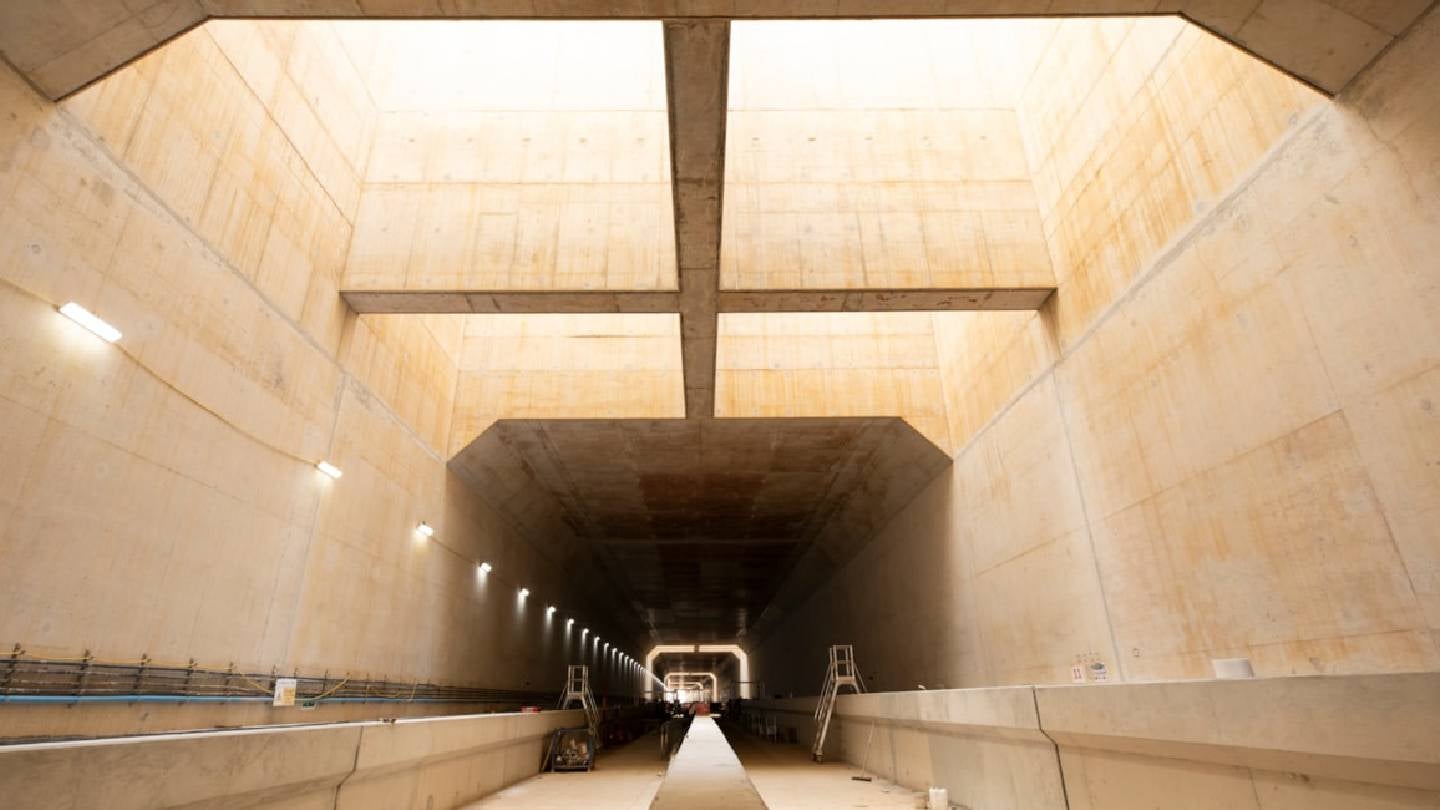
HS2, the UK's ambitious high-speed railway project, has marked a significant milestone with the completion of its first cut-and-cover 'green' tunnel at Copthall near West Ruislip, London. This development is crucial for the project's progress and sustainability efforts, as it highlights innovative construction methods that reduce environmental impact.
What Happened
The Copthall tunnel, stretching 880 meters, is the first of five such structures planned along the HS2 route from London to the West Midlands. Constructed by the SCS joint venture of Skanska, Costain, and Strabag, the tunnel was built using 1.2 million cubic meters of material excavated from the nearby Northolt tunnel. This approach significantly reduced the need for heavy goods vehicle journeys—approximately 100,000 trips were avoided by reusing materials on-site. The tunnel, which can accommodate trains traveling at speeds up to 200 mph, is notable for its single-bore design and five natural ventilation shafts.
James Leeming, HS2's delivery head, emphasized the achievement, noting the dedication of the workforce since early 2021 in overcoming challenges to deliver this key component of HS2's infrastructure. The construction also involved rerouting Harvil Road with a new bridge to allow the high-speed line to pass underneath.
What This Means for Your Business
For businesses in the AECM and government contracting sectors, HS2's approach to the Copthall tunnel offers several takeaways. The reuse of excavated material can serve as a model for reducing logistics costs and environmental impact in infrastructure projects. With HS2 aiming to align train speeds with those in Japan and Europe, potentially saving up to £2.5 billion, there's a clear emphasis on cost-effective delivery. This operational reset, led by CEO Mark Wild, indicates potential shifts in procurement practices and opportunities for contractors who can offer innovative, sustainable solutions.
What US Operators Should Watch
US operators should monitor the progress of HS2's remaining green tunnels and the overall project's alignment with revised delivery timelines. The Department for Transport's updated cost estimates and timelines could influence future infrastructure projects worldwide, including federal funding opportunities and competitive positioning. Staying informed about such developments will be crucial for stakeholders looking to engage in similar high-speed rail projects in the US.
Source: https://www.worldconstructionnetwork.com/news/hs2-copthall-tunnel-construction/. Read the original story ->
Is your firm ready for what’s next?
VisioneerIT helps AECM and government contractors modernize operations, achieve compliance, and implement AI.
Explore VisioneerIT Solutions →