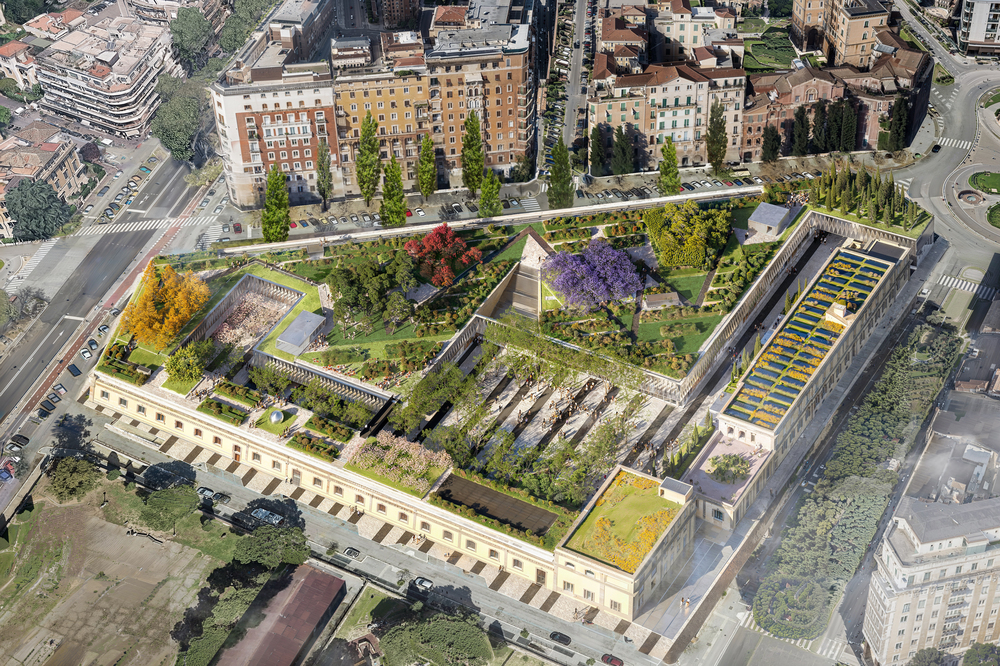
An early 20th-century rail and tram depot in Rome, unused for nearly two decades, is set to undergo a transformation into a vibrant mixed-use development. This ambitious project in Piazza Bainsizza, led by Stefano Boeri Architetti, aims to create a "virtuous example of urban regeneration" by integrating cultural, educational, and commercial spaces into the historic neighborhood.
What Happened
The Depositi delle Vittorie, a 16,000-square-meter site, will be repurposed into a dynamic urban hub featuring an 8,000-square-meter rooftop garden 15 meters above ground. This garden will not only serve as a green oasis but also host exhibitions of sculptures, blending art with nature. The development will include a public courtyard at ground level, connecting seamlessly with the surrounding urban fabric. The site will also feature spaces dedicated to culture, education, commerce, co-working, and leisure.
Stefano Boeri, the architect behind the project, emphasizes the balance achieved between revitalizing the decommissioned infrastructure and serving the collective interests of the local residents. Pietro Chiodi, director at Stefano Boeri Architetti, highlighted that the project focuses exclusively on non-residential uses, which strengthens its public character and creates a new urban polarity. Additionally, the underground levels of the development are designed to improve accessibility and alleviate historical congestion in the area.
Why It Matters for the AECM Industry
This project exemplifies a growing trend in urban development where the focus is on sustainable regeneration rather than new construction. For professionals in the AECM industry, the Depot's transformation offers insights into how disused urban spaces can be revitalized to meet contemporary needs while preserving historical elements. The emphasis on non-residential use and public accessibility could set a precedent for future projects aiming to enhance urban life quality without contributing to residential saturation. Moreover, the integration of green spaces and art installations aligns with sustainability goals, offering a model for reducing urban heat and improving air quality.
What's Next
As the project progresses, industry professionals should watch for how the design and construction phases unfold, particularly the integration of green infrastructure and public spaces. The success of this project could influence urban policy and inspire similar initiatives globally. Key milestones to monitor will include the completion of design phases, commencement of construction phases, and the impact on local communities. Additionally, the collaboration between Hitachi and Volvo on zero-emission construction technologies could offer valuable insights for this project.
Is your firm ready for what’s next?
VisioneerIT helps AECM and government contractors modernize operations, achieve compliance, and implement AI.
Explore VisioneerIT Solutions →