Harvard University's Grinham Research Group has unveiled an innovative cladding tile made from waste wool, marking a significant advancement in sustainable building materials. Showcased at the Oslo Architecture Triennale under the installation titled Upcycling Wool Ecologies, this development could revolutionize the way the architecture, engineering, construction, and manufacturing (AECM) sectors approach retrofitting projects.
What Happened
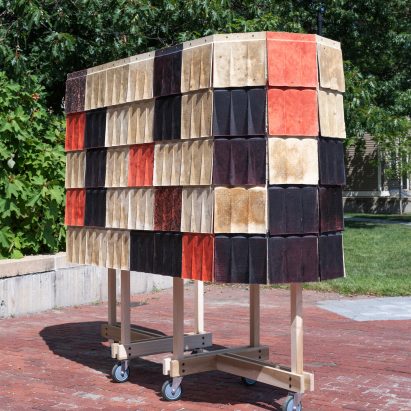
Harvard's Grinham Research Group has transformed waste wool into an insulating cladding tile, which was prominently featured at the Oslo Architecture Triennale. The showcase took place at Oslo's Sofienberg Church, where the tiles were installed on a timber frame as part of the triennale's main exhibition. This exhibition, focusing on innovative ecological practices, provided a platform for Grinham Research Group to highlight the potential of waste wool as a versatile, sustainable building material. The cladding tiles not only offer the ecological benefit of repurposing waste wool but also promise improved insulation properties, making them an attractive option for retrofitting older buildings.
What This Means for Your Business
For AECM professionals, this innovation opens new avenues for sustainable construction practices. The waste wool cladding tiles present a dual benefit: they reduce environmental impact by repurposing a common waste product and enhance building energy efficiency through superior insulation. This could lead to cost savings in heating and cooling, ultimately improving the return on investment for retrofitting projects. Additionally, embracing such sustainable materials may enhance competitive positioning, as government contracts increasingly prioritize eco-friendly solutions. Businesses should consider integrating such materials into their portfolios to align with emerging sustainability mandates and consumer demands.
What US Operators Should Watch
Operators in the AECM sectors should monitor developments in sustainable building materials like waste wool cladding. With the increasing emphasis on sustainability in federal procurement processes, staying ahead of such innovations could provide a competitive edge. Additionally, keeping track of any government incentives or funding opportunities for projects that incorporate sustainable materials will be crucial. As the industry moves towards greener practices, maintaining compliance with evolving environmental regulations will also be paramount.
Source: Dezeen. Read the original story ->
Is your firm ready for what’s next?
VisioneerIT helps AECM and government contractors modernize operations, achieve compliance, and implement AI.
Explore VisioneerIT Solutions →