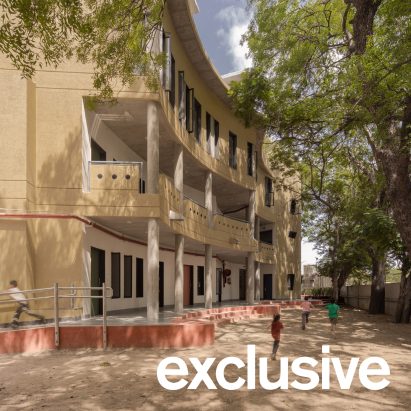
A triple-height skylit atrium with a sandpit at its base sits at the heart of New Horizon, a school in Vadodara, India, designed by local architecture studio Habitat Collaborative. Commissioned by a local chapter of non-profit Round Table India, the 1,442-square-metre building provides additional space for middle and secondary pupils at the Dr Shyama Prasad Mukherjee School. The project not only represents cutting-edge architectural design but also emphasizes the growing trend of sustainable and nature-integrated educational facilities.
What Happened
Habitat Collaborative, a Vadodara-based architecture firm, has recently completed the New Horizon school. This innovative design features a curved structure that weaves through a tree-filled site, maintaining the natural landscape's integrity while offering modern educational spaces. The design includes a triple-height atrium that floods the interior with natural light, creating an inviting environment for learning. The sandpit at the base of the atrium serves as a recreational area, blending play with education. Commissioned by Round Table India's local chapter, the project aims to enhance educational infrastructure in the region by providing advanced facilities for middle and secondary students.
What This Means for Your Business
For US-based AECM professionals, the New Horizon project underscores the importance of integrating environmental considerations into architectural design. As sustainability becomes increasingly critical, firms that incorporate natural elements into their projects can gain a competitive edge. This approach not only aligns with global sustainability goals but also appeals to clients seeking modern, eco-friendly solutions. Moreover, the project exemplifies the potential for collaboration with non-profit organizations, opening avenues for funding and partnership opportunities that can reduce financial burdens and enhance project scope.
What US Operators Should Watch
US operators should monitor developments in sustainable architecture and educational facility design, as these areas are poised for growth. Federal and state incentives for green building projects may provide funding opportunities, and staying abreast of these can offer financial advantages. Additionally, as zero-energy buildings gain traction, maintaining compliance with evolving standards such as the Leadership in Energy and Environmental Design (LEED) certification will be crucial for securing future contracts.
Source: https://www.dezeen.com/2026/08/10/habitat-collaborative-new-horizon/. Read the original story ->
Is your firm ready for what’s next?
VisioneerIT helps AECM and government contractors modernize operations, achieve compliance, and implement AI.
Explore VisioneerIT Solutions →