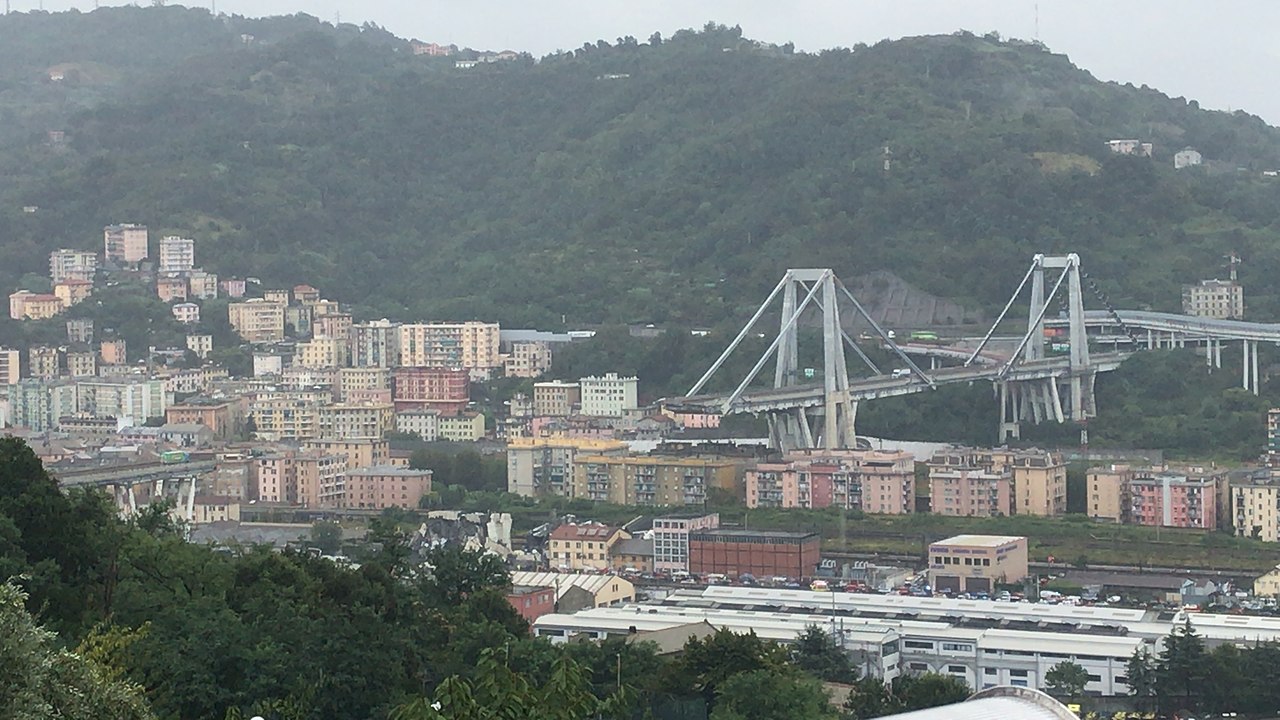
The recent sentencing of 32 officials in connection with the 2018 Genoa bridge collapse underscores a significant shift in accountability within the global construction industry. With the Morandi Bridge tragedy claiming 43 lives, the judicial outcomes signal a heightened focus on safety and responsibility, setting a precedent that resonates well beyond Italy.
What Happened
The collapse of Genoa's Morandi Bridge in August 2018 led to the deaths of 43 people, prompting an extensive legal investigation. Italian courts have now sentenced 32 individuals, including prominent figures such as Giovanni Castellucci, former CEO of Atlantia, and Michele Donferri, a former employee of Autostrade per l’Italia, to prison terms. Castellucci received a 12-year sentence, while Donferri was sentenced to 11 years. The collapse was attributed to ignored maintenance warnings, though defense argued it resulted from structural failures involving a cable encased in concrete. A new bridge, designed by Renzo Piano and constructed by Webuild and Fincantieri, was completed in August 2020, just 15 months after construction began.
What This Means for Your Business
For executives and decision-makers in the AECM sector, these developments highlight the critical importance of compliance with safety standards and rigorous maintenance protocols. The implications for procurement and contract management are profound: ensuring robust oversight and adherence to evolving safety regulations will be paramount. This case emphasizes the necessity for transparency and accountability in all phases of infrastructure projects. Furthermore, as federal and state governments in the U.S. continue to allocate significant funding to infrastructure projects, the Genoa case serves as a reminder of the reputational and operational risks associated with non-compliance.
What US Operators Should Watch
U.S. operators should closely monitor evolving international standards and legal precedents that could influence domestic regulatory frameworks. With increased federal funding opportunities for infrastructure, the focus on compliance and safety is likely to intensify. Decision-makers should be prepared for potential updates to compliance requirements, such as CMMC and NIST standards, and consider implementing Zero Trust architectures to mitigate risks. Additionally, keeping an eye on procurement windows and federal deadlines for infrastructure projects will be crucial in maintaining competitive positioning.
Source: https://www.globalconstructionreview.com/prison-terms-handed-to-italian-officials-over-2018-genoa-bridge-collapse/. Read the original story ->
Is your firm ready for what’s next?
VisioneerIT helps AECM and government contractors modernize operations, achieve compliance, and implement AI.
Explore VisioneerIT Solutions →