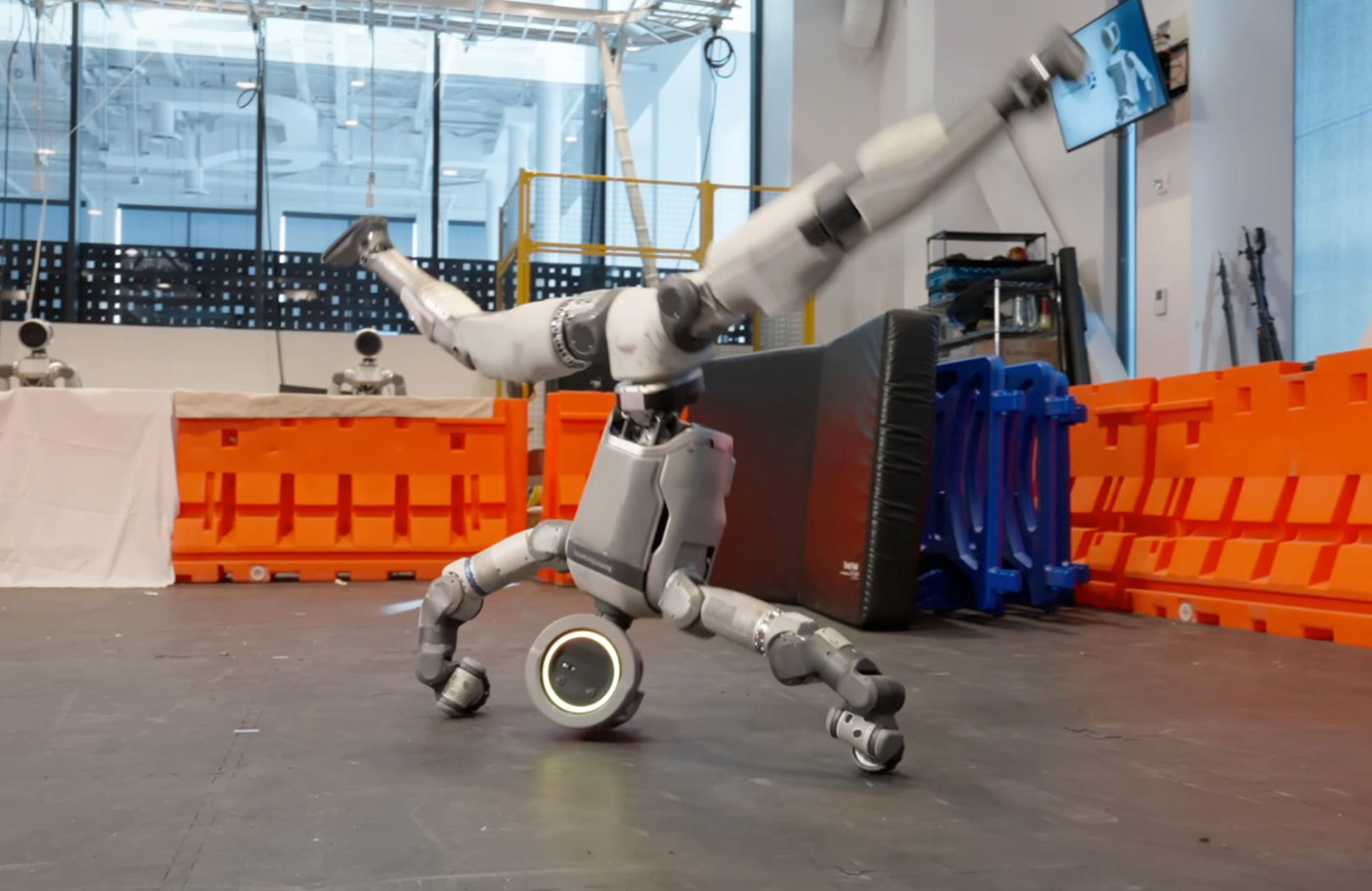
General Intuition’s recent success in raising $320 million in Series A funding marks a significant milestone in the realm of physical AI training. The New York-based company aims to revolutionize how robots learn by leveraging the vast amounts of data from video game clips rather than traditional real-world datasets. This approach could redefine AI development strategies in the architecture, engineering, construction, and manufacturing (AECM) sectors.
What Happened
General Intuition US Inc., founded by Pim de Witte, has secured substantial investment to propel its innovative AI models, which utilize gameplay footage to train robotic systems. Unlike conventional methods that rely heavily on real-world data or simulated environments, General Intuition taps into billions of gaming clips from Medal, a platform also co-founded by de Witte. These clips offer a rich dataset of human interactions, complete with embedded action labels detailing specific player movements and decisions. This unique dataset enables the development of AI that can perceive and anticipate actions in both virtual and physical realms.
The Series A funding, led by General Catalyst with contributions from high-profile investors such as Jeff Bezos and Eric Schmidt, has elevated General Intuition’s valuation to $2.3 billion. This financial boost follows the company’s $134 million fundraising effort in October, bringing its total funding to $454 million. The investment will be used to expand the company's computing capabilities and pretrain the next iteration of its model, which is expected to have wider API availability by summer.
What This Means for Your Business
For AECM professionals, General Intuition’s method of using video game data to train robots could offer a new frontier in AI application and development. The approach promises to deliver more adaptable and intuitive machines capable of operating in diverse environments. This can lead to more efficient construction processes, enhanced precision in engineering tasks, and innovative manufacturing solutions.
The implications for government contractors are equally significant. The ability to train AI with diverse, action-based datasets could streamline compliance with evolving cybersecurity standards such as CMMC and NIST, as AI systems become more adept at identifying and responding to threats. Furthermore, as AI models become more intuitive, they can potentially reduce operational costs and increase ROI by optimizing resource allocation and minimizing human error.
What US Operators Should Watch
Businesses and government contractors should monitor the rollout of General Intuition’s API, expected this summer, which could offer new tools for integrating AI into existing systems. Additionally, keeping an eye on federal funding opportunities for AI development and deployment will be crucial as the government continues to invest in advanced technology solutions. Decision-makers should also track developments in AI regulatory frameworks to ensure compliance and capitalize on the competitive advantages offered by cutting-edge AI technologies.
Source: The Robot Report. Read the original story ->
Partner Insight · VisioneerIT
The integration of AI in robotics is transforming industries, particularly in AECM, where innovative training methods can enhance operational efficiency. VisioneerIT can help organizations navigate the complexities of AI adoption and governance to ensure responsible and effective implementation.
Explore VisioneerIT Cybersecurity →
Is your firm ready for what’s next?
VisioneerIT helps AECM and government contractors modernize operations, achieve compliance, and implement AI.
Explore VisioneerIT Solutions →