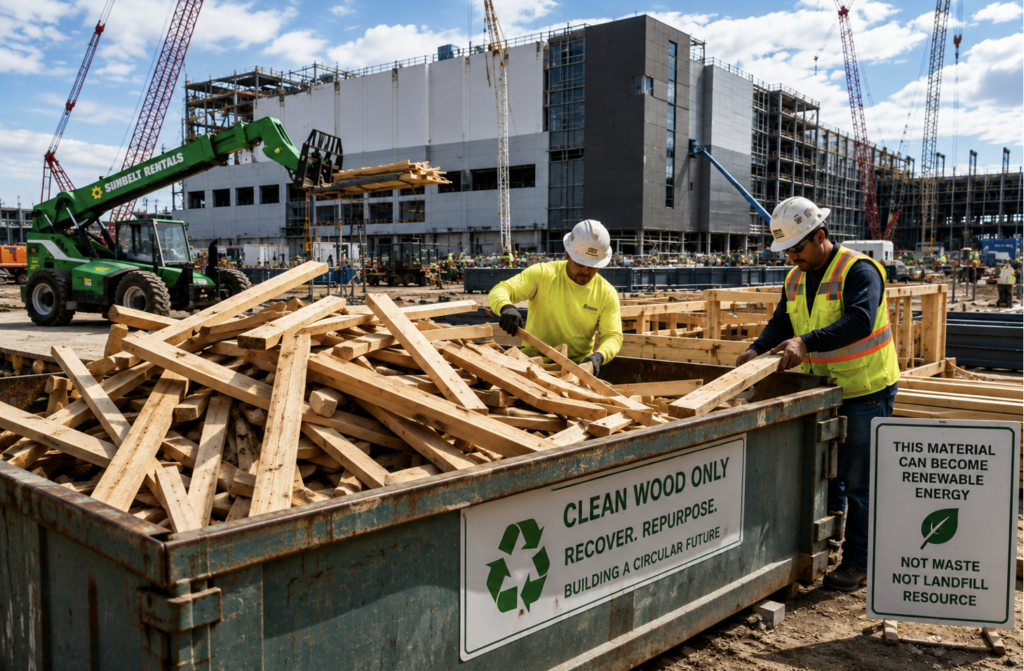
America's infrastructure boom has brought attention to the need for sustainable energy solutions, yet a significant opportunity remains overlooked: construction waste. With data centers, battery plants, and renewable energy projects proliferating, the construction industry generates massive quantities of waste material. This waste, often seen purely as a disposal issue, could be a valuable energy resource.
What Happened
The U.S. is experiencing one of the largest infrastructure expansions in recent history. This surge in construction activity generates a substantial amount of waste, including pallets, crates, dimensional lumber, and other materials. Traditionally, these materials end up in landfills, contributing to environmental issues such as methane emissions. However, if properly identified and processed, clean, untreated wood can be repurposed as biomass fuel. This approach not only supports biomass power generation and industrial heating but also aligns with broader goals of resource efficiency and regional energy resilience.
What This Means for Your Business
For AECM professionals, integrating construction waste into energy strategies presents a dual opportunity: reducing disposal costs and contributing to renewable energy solutions. By adopting a circular materials strategy, companies can prioritize the highest and best use of materials. Clean wood, for instance, can be reused, remanufactured, or converted into biomass energy. This shift not only reduces landfill reliance but also offers potential cost savings and aligns with sustainability goals. Furthermore, embracing this approach could enhance competitive positioning as federal and state governments increasingly favor projects with sustainable practices.
What US Operators Should Watch
Decision-makers should monitor upcoming federal and state regulations that could incentivize or mandate the reuse of construction waste. Keeping abreast of developments in biomass energy markets and regional infrastructure for processing construction waste will be crucial. Additionally, companies should prepare for potential changes in compliance requirements related to sustainability and waste management, which could impact procurement processes and project timelines.
Source: Power Magazine. Read the original story ->
Is your firm ready for what’s next?
VisioneerIT helps AECM and government contractors modernize operations, achieve compliance, and implement AI.
Explore VisioneerIT Solutions →