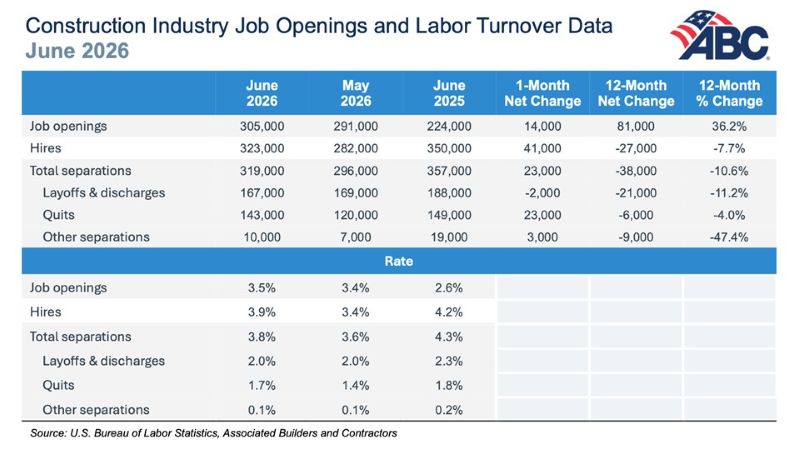
The construction industry faces significant workforce challenges as job openings hit 305,000 in June, according to the latest data from the U.S. Bureau of Labor Statistics' Job Openings and Labor Turnover Survey (JOLTS). This increase of 14,000 openings since May suggests a labor demand surge, yet an underlying complexity clouds the picture.
What Happened
The Associated Builders and Contractors (ABC) highlighted a notable rise in construction job openings, marking an increase of 81,000 positions compared to the previous year. Despite this, hiring in the construction sector fell to 323,000 in June 2026, down 7.7% from June 2025. ABC’s chief economist, Anirban Basu, warns against a simplistic interpretation of these figures. While the numbers may suggest a booming industry, construction spending reports show a decline in both residential and nonresidential projects. Basu attributes the rise in job openings to a structural shortfall of skilled labor, as many experienced workers retire and are replaced by less skilled individuals. Moreover, undocumented workers previously filling these roles have left, exacerbating the need for replacements.
What This Means for Your Business
For AECM professionals, the current labor landscape underscores the urgency of addressing workforce shortages. Companies may need to invest in training programs to upskill new workers to meet project demands effectively. The shortage of skilled labor could lead to increased labor costs, affecting project budgets and timelines. For contractors, this might mean revisiting recruitment strategies, possibly expanding outreach to attract a diverse pool of candidates.
Moreover, businesses should be mindful of compliance requirements related to labor practices, ensuring that all workers are properly documented, which could prevent potential legal issues and project delays. Companies might also consider leveraging technology and automation to mitigate the impacts of labor shortages, thereby enhancing productivity and reducing dependency on manual labor.
What US Operators Should Watch
As the construction industry navigates these challenges, businesses should stay informed about federal regulations and potential policy changes that could affect labor markets. Monitoring developments in immigration policy and labor laws will be crucial, as these can influence workforce availability and hiring practices. Additionally, keeping an eye on economic indicators related to construction spending can help businesses anticipate market shifts and adjust their strategies accordingly.
Contractors and procurement directors should also track any federal funding opportunities that may arise to support workforce development initiatives, which could provide financial relief and resources to bolster their labor force.
Is your firm ready for what’s next?
VisioneerIT helps AECM and government contractors modernize operations, achieve compliance, and implement AI.
Explore VisioneerIT Solutions →